Showing posts with label School. Show all posts

Thursday, March 31, 2011

Sign The Petition to Save our Schools


NAACP Units throughout the State of Kansas will be collecting signatures on a petition calling upon the Governor and the Legislature to respect and honor their sworn oath to "support the Constitution of the United States and the Constitution of the State of Kansas" by allocating 'suitable provisions for finance of the educational interests of the state' as required.

To add your name to the petition, CLICK HERE to be taken to the online form

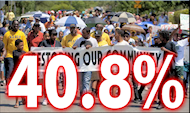
Scan the code in the featured graphic to access the mobile form

OR if you would be willing to collect signatures, CLICK HERE to download a copy of the petition form.

Completed forms should be mailed to the Kansas State Conference on the NAACP at 829 N Market St, Wichita KS, 67214...

Read more...

Why the School funding fight is "THE" fight!


Kansas, like most States, is now dealing with a profound revenue shortfall with some estimating the gap as wide as $550 million dollars. To close that funding gap, the Kansas Legislature proposes that we 'shrink the size of Government' by cutting staff, services, and increasing privatization. Proponents of this approach argue that the worsening economic conditions necessitate this approach, and we simply can no longer afford to provide the level of services that we have become accustomed to. Proponents of this approach argue that as we begin to 'shrink the size of Government', and 'decrease the tax burden', businesses will rebound, new businesses will be attracted to our State, bringing new jobs and thereby expanding the tax base, and our State economy will rebound. And proponents of this approach argue that to solve the problem, we need to reduce funding to public schools...

What these proponents WON'T tell you is that we created this revenue shortfall by pushing corporate and business tax cuts thorough our legislature every successive year since 1997. What they won't tell you is the legislature has passed more than $668 million dollars in tax cuts since 2008! There's even a bill in our legislature RIGHT NOW (SB95) that would phase out ALL corporate income taxes over the next five years and reduce revenues even further. But they would ask that we ignore this totally reckless fiscal policy, treat these tax-cuts as sacrosanct, and allow them to make up the shortfall by de-funding our children's education.

We have fought for years in favor of reforms and programs shown to improve educational outcomes for children. We have fought for smaller class sizes - Just like the private schools and affluent districts maintain for their children. We have fought for highly qualified teachers - Just like the private schools and affluent districts maintain for their children. We have fought for up-to-date books and equipment - Just like the private schools and affluent districts maintain for their children. And now, under the guise of solving a revenue shortfall that we created through irresponsible and unaffordable business and corporate tax-cuts that have produced NO stimulative affect here in Kansas, we are now witness to our legislature acting to de-fund those reforms and do irreparable damage to our public school system. 

- And if any of you feel that last statement was hyperbolic, I would ask you to remember that for all the talk about running the schools more like a business - Public schools are NOT BUSINESSES. The students within them are not commodities or products - their progress is not tied to an assembly line that can be stopped and restarted. If in response to our current budget challenges, we diminish the quality of education that we provide to our children for the next year, or two, or five - Those are years that those children will not get back! They will move forward in an increasingly competitive economy with limited skills and abilities courtesy of our supply-side fetishes and real-world myopia. - 

In response to the proposed actions of the State, school districts around Kansas are making plans to increase class sizes, limit transportation, close down schools, limit access to extra-curricular and enrichment type activities to families with enough disposable income to pay for them, use older books and materials, etc. My friends on the other side of this issue say that we MUST do this so that we don't pass this crippling debt on to our children. 

But I've said, and I'll say again: It is immoral for us to pay our debts for services that we've enjoyed with money that we've taken away from our children's education.  It is wrong and we can not remain silent while our children's ability to compete in a global world economy is traded for short term corporate profits. 


Read more...

Sunday, March 13, 2011

Let's tell the Truth about Kansas' budget shortfall


Gov. Sam Brownback announced his plan to cut $50 million from public schools. His proposed cut to base state aid to education will reduce annual school spending per pupil by $22, from $4,012 to $3,990. In fact the Governor's proposed Education cuts total nearly 90% of the $56.5 million in overall reductions that have been announced thus far.

The legislators and even the press have chimed in stating that while these are difficult cuts, they are in fact necessary due to our current fiscal condition.

The only problem with this is that we all seem to act as though our current fiscal condition was magically imposed on us and that we are merely reacting to circumstance... When the Truth is, many of the very same Legislators who are now looking to take an ax to public schools, created or at least exacerbated our fiscal tsunami by going to Topeka and voting to reduce revenues year after year through irresponsible tax cuts.

Our Legislature has passed some form of tax cut in EVERY successive session since 1997.

In fact, if you just look at the tax cuts passed since 2005, to include the Corporate rate cut in the Omnibus Tax bill of 2008, the phase out of the Franchise tax, the phasing out of Estate taxes, the various sales tax exemptions, and others included in the 18 tax cutting bills we've passed during this period, the cumulative reduction in State revenues that can be DIRECTLY ATTRIBUTED to the passage of these bills is $668,086,000.00 as of 2011.

668 Million dollars in tax cuts since 2005 and now we're faced with a 550 million dollar revenue shortfall...

And each time business taxes are cut we are told that this is good for us, because by cutting business taxes, we'll entice more businesses to come to Kansas and our tax base will actually grow as jobs and revenue floods the State. We're told that by cutting business and corporate taxes, Corporations and business leaders will reinvest their windfall profits into their companies and expand, creating more and more jobs... But the economic Shangri-La we've all been promised never actually materializes. Our Corporate and Business leaders increase their handsome portfolio's while the rest of us trod along with frozen pay scales and worsening benefits, while trying not to get sick.

We've invested 668 million dollars in State Revenues since 2005. Where are the jobs that money was supposed to generate?

But of course, the answer to this question is - we simply need to cut more... Like SB95, now in the Committee on Assements and Taxation, that calls for a 5 year phase out of ALL income taxes for Corporations, or HB2284 which would make it a misdemeanor for any lobbyist paid with public funds to even ask for a tax increase.

So how do we dig ourselves out of this hole? - Well the legislature's answer seems to be that Step 1. we keep digging, and Step 2. we attempt to plug the hole on the fly by undermining the public schools.

Now I'm sure my friends on the other side of this argument will sharply disagree with my assessment. I'm sure they would all argue that these cuts are absolutely necessary so as to protect our children from inheriting a crippling debt.

But it is intellectually inconsistent to claim you are protecting the children's future by paying your bills with money you've taken from their schools. It is also morally wrong.

Bills like HCR5010 which would amend the State's constitution, eliminating the requirement for providing the necessary funding to offer a "suitable" education to all children, along with HB2193 to redefine At-Risk and redistribute Title I funds aways from the youth who need it most, reductions to Supplemental State Aid, and reductions of weighting factors are shortsighted and will ultimately prove destructive. And they are even less palatable when we consider that the money saved will be used to fill the shortfall caused by an irresponsible tax cut policy which our legislature has yet to abandon.


We've got to do more than just be angry...

We've got to put down our petty divisions and disagreements, stand together, and go up there and say HELL NO.

Now who's with me?


Selected Tax Cuts since 2000

Sales tax exemption for grain storage extended – SB 59 (2000);
“Telephonestead” income tax credits – SB 226 (2000);
Use of farm net operating loss carrybacks expanded – SB 226 (2000);
“Integrated plant” sales tax exemption codified, refunds provided – HB 2011 (2000);
Tax incentives for independent power producers – HB 2266 (2001);
Tax exemption for eligible electric generation facilities – HB 2245 (2001);
Income tax credit for abandoned-well plugging made permanent – SB 45 (2001);
Property tax exemption expansion for farm storage and drying equipment – SB 138 (2001);
Expansion of Job Investment Credit Act – SB 146 (2001);
Income tax credit for business research and development – HB 2055 (2001);
Income tax credit for historic preservation – HB 2128 (2001);
Certified capital formation company tax credits – HB 2505 (2002);
Business machinery and equipment tax credits expanded – SB 39 (2002);
Tax credits made available to railroads for first time – SB 39 (2002);
Special apportionment formula for investment funds service corporations – SB 39 (2002);
Diversion of tire manufacturer employee withholding tax – SB 39 (2002);
Low cost ($250 to $400) exemption expansion for business machinery – SB 39 (2002);
Agricultural land capitalization rate change lowers property tax value – SB 39 (2002);
Increase in sales tax from 4.9 to 5.3 percent – SB 39 (2002);
Increase in cigarette tax from 24 to 79 cents per pack – SB 39 (2002);
Reimposition of succession/inheritance tax on certain heirs – SB 39 (2002);
Historic preservation credits expanded – SB 39 (2002);
Various taxpayer fairness provisions – SB 39 (2002);
IMPACT program expanded yet again – SB 565 (2002);
Tax credit for port authority debt retirement – HB 2586 (2002);
Motor fuel tax increase 2 cents per gallon – HB 3011 (2002);
Sales tax rate of 5.3 made permanent – SB 265 (2003);
Statewide STAR bond (sales tax diversion) authority expansion – Sub HB 2208 (2003);
Employee withholding tax diversion (bonds) for major manufacturers – SB 281 (2003);
Tax amnesty – HB 2005 (2003);
Streamlined sales tax compliance provisions – HB 2005 (2003);
Succession tax repealed retroactive to enactment – HB 2005 (2003);
Estate tax filing exemption threshold to mirror federal in 2007 – HB 2005 (2003);
Retailers given temporary choice re sourcing (streamlined) – Sub SB 147 (2004);
Increase in franchise tax – Sub SB 147 (2004);
Imposition of presumptive sales tax on certain private car sales – Sub SB 147 (2004);
Diversion of revenues authorized for biosciences industry – HB 2647 (2004);
Further expansion of IMPACT program – HB 2647 (2004);
Rural business development tax credit – HB 2647 (2004);
Angel investor tax credit – HB 2647 (2004);
Sales tax exemption for computer software customization services – Sub SB 147 (2004);
Decelerated sales tax remittance schedule for certain retailers – Sub SB 147 (2004);
Repeal of presumptive sales tax on private care sales – SB 23 (2005);
Tax credits for employment of math/science teachers – SB 138 (2005);
Qualified manufacturer act authorizes diversion/return of withholding tax – HB 2265 (2005);
Further expansion of IMPACT program – HB 2265 (2005);
Six-year extension of sales tax exemption associated with enterprise zones – HB 2164 (2005);
Expansion of rural business and community entrepreneurship tax credits – SB 324 (2006);
Reaffirming phase-out of estate tax – SB 365 (2006);
Tax credit for employment of ex-military personnel – SB 432 (2006);
Property tax exemption for business machinery and equipment – HB 2583 (2006);
Extend rural business development tax credit sunset by five years– HB 2004 (2007);
Tax credit for certain film production activities – HB 2004 (2007);
Expansion of angel investor tax credit act – HB 2004 (2007);
Extend sunset on STAR bond authority by five years – HB 2005 (2007);
Phase out and ultimate repeal of corporation franchise tax – HB 2264 and SB 215 (2007)
Income tax exemption for certain social security benefits – HB 2031 (2007);
Single-factor apportionment formula for certain manufacturers – SB 240 (2007) ;
Homestead program expansion – Sub HB 2476 (2007);
Earned income tax credit expansion – HB 2031 (2007);
Property tax exemption for nuclear generation facilities – HB 2038 (2007)
Income tax incentives for biofuels – HB 2038 (2007)
Income tax incentives for renewable electric cogeneration – HB 2038 (2007)
Property and income tax incentives for waste heat utilization systems – HB 2038 (2007)
Expansion of certain incentives to all biomass-to-energy plants – HB 2038 (2007)
Sales tax exemption for certain storm-damaged business purchases – HB 2240 (2007)
Corporate rate cut and various apportionment provisions – S Sub HB 2434 (2008)
Disaster relief income tax credits for business investments – S Sub HB 2434 (2008)
Safe Senior Property Tax Credits – S Sub HB 2434 (2008)
Disaster-related sales tax exemptions – S Sub HB 2434 (2008)

Read more...

Coalition of Kansas Civic Organizations to March for Civil Rights Protections on 3/19


On Saturday, March 19th, at 12:00pm, the Kansas NAACP, the Topeka Center for Peace and Social Justice, Kansas Equality Coalition, the ACLU of Kansas and Western Missouri, Kansas National Organization for Women, and the Kansas League of Women Voters will stand together in an historic alliance to oppose the systematic dismantling of civil and equal rights protections in Kansas.

These organizations, their members, allies, and supporters, will meet at Monroe Elementary School in Topeka (the Brown Vs Board Historic site), and we will march to the Capitol Building. Put on your walking shoes and meet us at the Capitol!!!

Contacts:
Reverend Ben Scott, President, Topeka NAACP
785-266-5688 / naacptopeka1@att.net

Jim McCullough, Director, Topeka Center for Peace and Social Justice
785-232-4388 / topekacpj@aol.com

Thomas Witt, Chair, Kansas Equality Coalition
316-683-1706 / chair@kansasequalitycoalition.org

Holly Weatherford, Program Director, ACLU of Kansas and Western Missouri
816-756-3113 x 234 / hweatherford@aclukswmo.org

Kari Ann Rinker, State Coordinate, Kansas NOW
620-245-4904 / coordinator@ksnow.org

Ernestine Krehbiel, President, Kansas League of Women Voters
316-652-9229 / ekrehbiel@cox.net

Read more...

Friday, February 18, 2011

Kansas HB2193 would change the definition of "At-Risk" students - Here's what that means to you!


House Bill 2193 would change the State’s definition of “At-Risk” and allow for the redistribution of scarce Title I Funds. Federal Title I Funds are allocated to the States and are intended to help school districts address the issues associated with urban poverty. They are distributed to the States based on the number of children within the districts who qualify for free or reduced lunches.

Title I funds are intended to compensate for the fact that children who grow up in poverty are far less likely to have an educational support system at home as parents who are struggling to provide basic necessities are often unable to spend much quality time with their children. Children who grow up in poverty are also far more likely to spend large amounts of time in poor quality daycare, a situation which is known to have a negative impact on a child's emotional health. Children who grow up in poverty also move more frequently and are far more likely to attend under-funded schools. And teenagers who live in poverty are significantly more likely to experiment with drugs, alcohol, and risky sexual behavior. Poor teens are also more likely to engage in unlawful acts, ranging from minor shoplifting to serious gang activity.

HB2193 would honor the intent of “At-Risk” funding only until the fourth grade. After the fourth grade, the bill would change the State’s definition of “At-Risk” to include any students who failed standardized tests. This would be a windfall for rural districts and districts without a significant number of poor or minority students, as they would be able to divert some of the federal dollars, that had been earmarked for combating the insidious effects of urban poverty, for use in their own facilities.

But a far greater concern is what this proposal could do to efforts to eliminate the academic achievement gap. This proposal, under the guise of distributing federal dollars to all students who need help, would directly tie school funding to the number of students who fail to meet proficiency standards on standardized tests. This legislation would de-incentivize efforts to eliminate the academic achievement gap by penalizing schools for improved outcomes. Why would districts continue to invest in improving minority student outcomes, if better test scores would lead to concomitant reductions in school funding?

The Kansas State Conference of NAACP Branches supports the original language and intent of Title I funding and we are fighting to defeat this bill.

Read more...

Wednesday, January 5, 2011

What does the term "Highly Qualified" mean to you?


The federal definition of a "Highly Qualified" teacher has been one who is: fully certified and/or licensed by the state; holds at least a bachelor's degree from a four-year institution; and demonstrates competence in each core academic subject area in which the teacher teaches.

That is important to note because the NCLB Act required that all teachers of core academic subjects working in Title I schools or programs hired after the first day of the 2002-03 school year be "Highly Qualified" by the end of the 2005/2006 school year.

The goal was to move us away from the all too common phenomena where the children with the greatest academic needs were taught by those with the least experience and conversely those with the greatest academic advantages were taught by the most senior and most seasoned teachers. It was supposed to end the era of concentrating new and inexperienced teachers in high minority and low SES schools.

But an obscure bit of language was inserted into last weeks Omnibus Spending bill... You know the one that extended unemployment and tax cuts that everyone heralded as some great compromise...

This language, not germane to the spending bill itself and seriously under-reported... This language changes the definition of a Highly Qualified Teacher to now include INTERNS!!!

excerpted from HR3082

“Sec. 163. (a) A ‘highly qualified teacher’ includes a teacher who meets the requirements in 34 CFR 200.56(a)(2)(ii), as published in the Federal Register on December 2, 2002.

“(b) This provision is effective on the date of enactment of this provision through the end of the 2012–2013 academic year.

Forgive me for going out into the weeds, but you need to understand what just happened...

 CFR 200.56 defines the term "Highly Qualified Teacher" as used in Federal Legislation. It reads:

200.56 - Definition of “highly qualified teacher.”
To be a highly qualified teacher, a teacher covered under 200.55 must meet the requirements in paragraph (a) and either paragraph (b) or (c) of this section.

(a) In general. (1) Except as provided in paragraph (a)(3) of this section, a teacher covered under 200.55 must (i) Have obtained full State certification as a teacher, which may include certification obtained through alternative routes to certification; or (ii)(A) Have passed the State teacher licensing examination; and (B) Hold a license to teach in the State.

(2) A teacher meets the requirement in paragraph (a)(1) of this section if the teacher (i) Has fulfilled the State's certification and licensure requirements applicable to the years of experience the teacher possesses; or (ii) Is participating in an alternative route to certification program under which (A) The teacher (1) Receives high-quality professional development that is sustained, intensive, and classroom-focused in order to have a positive and lasting impact on classroom instruction, before and while teaching; (2) Participates in a program of intensive supervision that consists of structured guidance and regular ongoing support for teachers or a teacher mentoring program; (3) Assumes functions as a teacher only for a specified period of time not to exceed three years; and (4) Demonstrates satisfactory progress toward full certification as prescribed by the State; and (B) The State ensures, through its certification and licensure process, that the provisions in paragraph (a)(2)(ii) of this section are met.

(3) A teacher teaching in a public charter school in a State must meet the certification and licensure requirements, if any, contained in the State's charter school law.

(4) If a teacher has had certification or licensure requirements waived on an emergency, temporary, or provisional basis, the teacher is not highly qualified.

(b) Teachers new to the profession. A teacher covered under 200.55 who is new to the profession also must (1) Hold at least a bachelor's degree; and (2) At the public elementary school level, demonstrate, by passing a rigorous State test (which may consist of passing a State certification or licensing test), subject knowledge and teaching skills in reading/language arts, writing, mathematics, and other areas of the basic elementary school curriculum; or (3) At the public middle and high school levels, demonstrate a high level of competency by (i) Passing a rigorous State test in each academic subject in which the teacher teaches (which may consist of passing a State certification or licensing test in each of these subjects); or (ii) Successfully completing in each academic subject in which the teacher teaches (A) An undergraduate major; (B) A graduate degree; (C) Coursework equivalent to an undergraduate major; or (D) Advanced certification or credentialing.

(c) Teachers not new to the profession. A teacher covered under 200.55 who is not new to the profession also must (1) Hold at least a bachelor's degree; and (2)(i) Meet the applicable requirements in paragraph (b)(2) or (3) of this section; or (ii) Based on a high, objective, uniform State standard of evaluation in accordance with section 9101(23)(C)(ii) of the ESEA, demonstrate competency in each academic subject in which the teacher teaches.


For simplicity, the full 2002 Federal definition is presented in red. The Highlighted area is the small subparagraph that NOW constitutes a "Highly Qualified Teacher". So when you read through the text, take note of the fact that the RED text contains the requirements that can now be waived when determining who is "Highly Qualified".

WHAT THIS MEANS is that the same inexperienced and under-qualified teachers that have been concentrated in high minority and low SES schools around the country, CAN NOW STAY in those schools, because rather than actually placing highly qualified teachers in there to help those children most in need, the Government has simply changed the definition of "Highly Qualified" to now include folks who are still IN TRAINING.

This is SHAMEFUL and APPALLING, and every activist and organization that is serious about Education should say so.

Read more...

Sunday, November 28, 2010

USD259 Public Budget meeting scheduled for Tuesday 11-30


On Tuesday at 6:30pm, a committee made up of district staff, parents and business representatives will meet to hear preliminary budget projections and set a course for gathering input from the public. The meeting is open to the public.

Despite a new 1 percent increase in the state sales tax, the State is expected to face a $450 million dollar financial shortfall this session which will have a serious impact on school funding. Kansas lawmakers will also have to find ways to replace about $200 million in federal funds that expire in June. Absent those dollars, schools could see state aid reduced by as much as $300 per child.

This will be the third year of serious cuts to the district's budget. USD259 cut about $14 million from its budget last year. The district eliminated 117 positions, cut the driver's education program in high schools, closed Metro-Midtown Alternative High School, consolidated bus routes, suspended the Grow Your Own Teacher program and did away with school resource officers at middle schools. And those reductions followed $34 million in cuts that the district made in 2009.

"It was hard this past year," said school board president Connie Dietz. "But depending on what the extent (of state-aid cuts) is, it could be devastating."

At Tuesday's meeting, which is open to the public, the committee will get "a first look at what the budget reality looks like and what our plans are for moving forward," Allison said.

What: School Budget Meeting featuring a discussion on current budget projections and possible cuts for the coming school year.
Where: School Service Center training room, 3850 N. Hydraulic
When: 6:30 p.m. Tuesday

Read more...

Sunday, November 14, 2010

Sobering report highlights need for a NEW conversation on the achievement gap

On Tuesday  November 9th, the Council of the Great City Schools released an alarming new report (Link: A Call for Change), on the academic achievement gap. The data is not entirely new to those who have been following issues surrounding the gap and the need for reforms, but the report does a masterful job of compiling the relevant statistics into a single document, amplifying them and making them increasingly difficult to ignore...

The report focuses on six areas of the lives of African American males. Highlights of the report's findings show:

  • In readiness to learn, black children were twice as likely to live in a household where no parent had fulltime or year round employment in 2008. And in 2007, one out of every three black children lived in poverty compared with one out of every 10 white children.
  • In black male achievement at the national level, first time analysis of the National Assessment for Educational Progress (NAEP) reveals that on the 2009 fourth grade reading assessment only 12 percent of black male students nationally and 11 percent of those living in large central cities performed at or above proficient levels, compared with 38 percent of white males nationwide. In eighth grade, only 9 percent of black males across the country and 8 percent living in large cities performed at or above the proficient level in reading, compared with 33 percent of white males nationwide. Math results were similar in both grades. Moreover, the average African American fourth and eighth grade male who is not poor does no better in reading and math on NAEP than white males who are poor; and black males without disabilities do no better than white males with disabilities.
  • In black male achievement in selected big city school districts, 50 percent of fourth and eighth grade black males in most urban districts and nationwide scored below Basic levels.
  • In college and career preparedness, black males were nearly twice as likely to drop out of high school as white males. In 2008, 9 percent of black males dropped out of high school compared with 5 percent of white males. In addition, black male students nationally scored an average 104 points lower than white males on the SAT college entrance examination in reading. And black students generally were about one third as likely to meet ACT college readiness benchmarks as white students.
  • In school experience, black students were less likely to participate in academic clubs, more likely to be suspended from school, and more likely to be retained in grade than their white peers.
  • In postsecondary experience, the unemployment rate among black males ages 20 and over (17.3 percent) was twice as high as the unemployment rate among white males of the same age (8.6 percent) earlier this year. In 2008, black males ages 18 and over accounted for 5 percent of the college population, while black males accounted for 36 percent of the nation’s prison population.

But one of the thing I found most promising about the report, was its break from common wisdom when examining the root causes. Most discussions around the academic achievement gap end up ascribing the gap to poverty or issues related to poverty. And while there is certainly some correlation between household income and achievement, the idea that the correlation was the cause was always tenuous at best. There was always too much conflicting and contradictory information in the margins to accept this simple explanation.  This report examines that claim and refutes it plainly, detailing the fact that African American youth who are not in poverty score no better than their White counterparts who are.

I found this distinction to be promising because if we are going to eliminate the academic achievement gap we must first be willing to confront it openly and without flinching. Poverty is too convenient an excuse; a large, complex issue that is perhaps beyond our collective capacity to solve. If poverty is the culprit then the gap is the product of societal inequities, not a reflection of our failures; and we are not accountable. I believe that the academic achievement gap is the the complex result of shifts in values and expectations within the African American community (please read: The Crisis of Aspiration), which are exacerbated by poverty, which are further exacerbated by a legacy of low expectations, and even further exacerbated by subsequently formulaic approaches to pedagogy. And while each issue has a synergistic effect on  the others, they are entirely severable (please read: Mixing Metaphors)

Of course this is only my theory; one of perhaps a thousand that have been conceived. Solving the problem and ending the gap will require that we be willing to consider them all, and that we avoid the easy answers... I think this report is a good start... Now let's start talking

Read more...

Tuesday, November 2, 2010

Many years in the making, Gordon Parks Academy achieves IB Status

Gordon Parks Academy is officially an International Baccalaureate World School — the only public IB middle school in Kansas — and officials say the achievement could increase its appeal to families across the district. ~Wichita Eagle, Sat 10/30/10
In June of 2006 when it was announced that USD259 would be looking at building a new K-8 Magnet school in Northeast Wichita, within the predominantly African American Community, the Wichita NAACP Education Committee and Branch President Kevin Myles attended a meeting with then Superintendent Brooks to discuss the planned school's program and curriculum.

The school at that time had been envisioned by District officials as a 'Performing Arts' Magnet. The Branch proposed and advanced the argument that the new Magnet school should be opened as an IB school. We argued that 'IF' we really have high expectations for all children, and believe that all children are capable of achieving great things... If we believe in all of our children's potential for academic success, then we should invest in that idea. We should meet the achievement gap and scholastic shortcomings with high standards, academic rigor, and high quality teachers. We should raise the bar and give our children the needed support to help them reach it. - An IB School would provide that. And the program itself would require additional teacher training and certifications that would also serve to ensure that the students of the new school would always be taught by high quality and highly experienced teachers.

We also advanced the argument that as the district looked for ways to maintain diversity without a formal busing for desegregation program, a challenging and attractive curriculum was perhaps the lowest hanging fruit. This high quality, high rigor, academic program (the first of it's kind in Kansas) could attract students from all races, all ethnicities, and all socio-economic backgrounds to a school in the heart of the African American community.

Thankfully the District responded, and in 2008, Gordon Parks Academy opened as an "IB Candidate" school.

Even after the school opened, there was still a healthy dose of skepticism in the community as to whether or not the school would ever truly be awarded its IB status. To become a part of the IB program, schools and teachers must undergo a series of trainings and certifications which can be costly and take years to complete. But the Wichita Eagle reported on Saturday that the middle school component of the Gordon Parks Academy has now officially received its IB designation and the district is hopeful that the Elementary program will receive its designation soon as well - just two years since it's opening.

On behalf of the Wichita Branch of the NAACP, I'd like say thank you to the district, both staff and administrators, for really 'putting our money where our mouths are' and taking this incredible leap for children; particularly those in the high minority/low SES areas of the city. This is an investment in the potential of children that will pay great dividends, and we are happy to partner with you to ensure its success.

Read more...

Sunday, August 29, 2010

More Educational success stories: The "Ready to Impact" Program

The Ready to Impact program was implemented as a pilot, here in Wichita, at Southeast High School in November 2006. The project has since expanded to include Heights High and West High schools. It's purpose is to provide targeted services to students to help get them on track for graduation and post-secondary options. In 2008-2009, the program served students at Southeast, Heights, and West High schools and successfully graduated 86% of the Seniors involved, who would not have graduated without the assistance this program provided. In 2009-2010, of the 73 students served, 86.6% successfully graduated with West high graduating 12 out of 12 for a 100% success rate.

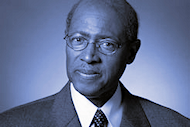
The program is led by Ms. Rhonda Hicks (pictured above); a truly dynamic and committed educator. USD259 has since entered into an contract with Ms. Hicks to expand her program to reach even more of the District's at-risk youth.

We would like to offer our sincere appreciation and our congratulations to Rhonda Hicks. Yours is an excellent program, and we thanks you for all that you do to improve the educational outcomes for children.

Read more...

Monday, August 23, 2010

Educational Excellence: Two local schools that are getting it right...


Just last week, the Schott Foundation released a 50 State report on Public Education and Black males. According to the report, the National Graduation rate for Black males averages out to a dismal 47%. And while my home State of Kansas faired a bit better, there is clearly a considerable amount of work to be done.

But even as we acknowledge that, we mustn't lose sight of the fact that scattered throughout our respective cities, there are still teachers, administrators, and schools that are doing amazing things.

Earlier this evening, I attended the school board meeting for USD259 here in Wichita. While there I heard a presentation on two local elementary schools, each that had been placed "on improvement" in NCLB parlance for failing to meet AYP for two consecutive years. The Principals from these schools, Pam Stead (from Enterprise Elementary) and Judy Wright (from Clark Elementary), were then recognized for their successful efforts to improve their student outcomes and for each leading their schools OFF of "improvement".

At Enterprise, a school with a significant Latino and ELL enrollment, they were able to achieve a 17.2% increase in reading scores on State Assessments over 2 years, while narrowing the achievement gap by 21.4 points, and still showing improvement for all groups. They had similar success in Math where their Assessment scores increased by 6.8%, and their achievement gap was narrowed by 17.5%.

At Clark Elementary, a school with a significant African American enrollment, they were able to improve their State Reading assessment scores over the same 2 year period by 31.8% while also improving their State Math Assessment scores by 35%.

Both schools have now met AYP for two consecutive years, and now neither school remains 'on improvement'.

As an NAACP unit, but more specifically as people who advocate for educational equity, innovation, and reform, we would just like to tip our hats and recognize these two outstanding Principals for a job well done...

Read more...

Tuesday, August 17, 2010

National Graduation Rate for Black Males 47% according to new Schott Foundation Report


A new report released from the Schott Foundation details graduation rates for Black males on State and District levels throughout the Country. It reveals that in the 2007/2008 school year the National Graduation rate for Black Males was only 47%. It also describes the achievement gaps between Black males and their counterparts, the conditions which lead to success or failure, school discipline rates, and the economic consequences...


Here's video of NAACP President Ben Jealous speaking on MSNBC about the report...


Read more...

Saturday, July 31, 2010

NAACP and Civil Rights coalition release Framework of Priorities for ESEA Reauthorization


A coalition of Civil Rights Organizations including the NAACP and the NAACP Legal Defense and Educational Fund (LDF)have released a new Framework for Providing All Students an Opportunity to Learn through Reauthorization of ESEA, listing the groups' top educational priorities for the reauthorization of the Act.

Click HERE for a copy of the Report

Read more...

Tuesday, June 15, 2010

The Wichita NAACP to launch a new "Black History is American History" initiative

Weekly Black History Presentations dealing with various under-reported areas of American History will be Free and open to the Public


Last Friday marked 47 years since the infamous "stand in the schoolhouse door" of then Governor George Wallace. He had pledged to fight any effort to integrate the University of Alabama, even if that meant that he'd have to stand and block the doorway. June 11th, 1963, was that day. Two young African Americans, James Hood and Vivian Malone, were set to enroll... Governor Wallace called up the State Troopers and had them provide a perimeter to keep the Black students out. President Kennedy responded by federalizing the Alabama National Guard to provide security and to escort the two young students; thus staging the only stand-off of American Forces outside of the Civil War. 

Here was the President of the United States and the Governor of a large State squaring off, each under arms with their own branch of law enforcement, wrestling over the implementation of a Supreme Court Decision. By ANY objective measure, this was a pivotal moment in our Democracy. Yet, this, and a thousand other moments that deal with our Nation's troubled history on Race are largely omitted from public school history/social studies curricula. You see, Vivian Malone and James Hood were both Black, therefore this isn't "History", this is "Black History" - relegated to a special "Black History Quiz" question in February, or a 'Saturday school', or church play...

We say NO MORE...

Beginning July 1st and running every Thursday evening through August 26th, the Wichita Branch NAACP and the Wichita NAACP Youth Council will host a series of weekly presentations on Black History. These presentations are intended to shed light on critical and pivitol moments in history and also to clearly demonstrate that "Black History" IS "American History".

Presenters will come from various fields and areas of expertise, each detailing the history, role, or siginificance of our History-makers or institutions.

Want to learn more about the Dockum Sit-In? Or maybe learn more about the history of Blacks and Education here in Kansas? Or perhaps you'd be interested in hearing more about the founding of the Divine 9 Black sororities and fraternities? Or maybe you'd like to learn more about Tulsa, or Tuskegee, or Nicodemus... Whatever your curiosity, this summer initiative is designed to educate and inspire.

So please come out and join us, beginning July 1st as we unveil our newest initiative. We welcome and encourage participants of all ages to come, learn, and dialolgue with us...

We are also accepting proposals for new presentations as well. If you have a piece of History you'd like to share, please Click HERE to contact us...

This initiative is a companion project to a full length presentation of the same name, currently being developed by the Wichita Branch NAACP Youth Council, to challenge school social studies curriculums to teach the fullness of our history in a comprehensive and chronological manner. So fasten you seatbelts... it's going to get exciting!

Read more...

Thursday, March 18, 2010

Yesterday 2.0: Texas Department of Education approves a new Conservative History curriculum


Back in July of 2009, I began writing about the Texas Department of Education's efforts to rewrite the history of the United States. While that may sound preposterous, it is actually quite feasible because you see, Texas is in a privileged position. As the Nation's single largest purchaser of Textbooks, no publisher wants to release a text book that they can't sell in Texas. So the standards that the Texas Department of Education agrees on, tend to make their way into the textbooks and schools all around the Country.

Generally the work of determining standards had been left to educators and historians, but fairly recently Texas began to politicize the process. This was done when the Texas Department of Education appointed a panel of 6 "experts" to help guide the process; 3 of whom were political and social conservative activists.

Not surprisingly, one of their first targets for re-visioning was the history of the Civil Rights movement. Evangelical Minister Peter Marshall, one of the 6 special appointees, questioned whether Thurgood Marshall, who argued the landmark case that resulted in school desegregation and was the first black U.S. Supreme Court justice, should be presented to Texas students as an important historical figure. He wrote that the late justice is "not a strong enough example" of such a figure. But while Thurgood Marshall did finally make the cut, the Board went on to approve an amendment saying students should study “the unintended consequences” of the Great Society legislation, affirmative action and Title IX legislation. More specifically that the text should mirror their belief that the Civil Rights Movement and these types of programs created an "unrealistic expectation of equal outcomes."

Along with deemphasizing the role and influence of the Civil Rights movement, the board also seeks to dilute and discredit the moral rectitude of the movement by expanding it's teaching to include what they refer to as the "violent philosophy" of the Black Panthers. Apparently the board doesn't see the need to distinguish between the Civil Rights Movement, Nationalist Movements, or Religious Movements... all "black social-movementy stuff" will be abridged into a general section on 'Civil Rights' which will now be taught as a jumbled mess of conflicting goals and strategies that had questionable outcomes.

They also included a plank to ensure that students learn about "the conservative resurgence of the 1980s and 1990s", including the Heritage Foundation, the "Moral Majority", the NRA, and the Contract with America. Yes, the Contract with America; more than half of which was taken right from Ronald Reagan's 1985 State of the Union speech, will now be taught as a foundational moment in American History -- unlike Thomas Jefferson and his 1802 letter to the Dansbury Baptists...

Thomas Jefferson, the wonderfully conflicted slave-owning founder and idealist who once remarked, "I tremble for my nation when I reflect that God is just, and that justice can not sleep forever", will be removed from the cannon of American philosophers and replaced with the French theologian John Calvin. Calvin who once remarked, "Yet consider now, whether women are not quite past sense and reason, when they want to rule over men."

This is a PIVOTAL shift in the teaching of American History because it was Thomas Jefferson in that letter to the Dansbury Baptists who actually authored the phrase and advanced the argument that the First Amendment of the Constitution created "a wall of Separation between Church and State". For THIS reason, he is being excised from the history of American Philosophy and replaced with a 14th Century French Theologian.

I had an opportunity to read through a draft of the new standards and noted these items of interest: Figures like Ida B Wells and WEB DuBois are now to be discussed in a conversation about the impact of "Muckrakers" in history. President Truman's decision to drop an Atomic Bomb on Japan will no longer be taught. Instead students will now learn only about the development of Atomic weapons. General Benjamin O. Davis has been scratched from the list of WWII Military Leaders of consequence. Students will be offered a tacit defense of McCarthyism in a discussion about the "confirmed suspicions about Communist infiltration in US Government." Shirley Chislom and Franklin Roosevelt have been scratched from the discussion on significant political and social leaders. And most amazingly, they will teach students how "interpretations of History may change over time" and that thinking critically means that they should evaluate the validity of a historical source by considering, among other factors, the author's point of view

Efforts by Hispanic board members to include more Latino figures as role models for the state’s large Hispanic population were also frustrated, prompting one member, Mary Helen Berlanga, to storm out of a meeting late Thursday night, saying, “They can just pretend this is a white America and Hispanics don’t exist.”

Board member Mary Helen Berlanga attempted but failed to gain recognition for Tejanos (original Texas-born Mexicans) who fell at the Alamo. She said the standards also ignore the Ku Klux Klan in Texas, Texas Rangers killing innocent Mexican-Americans, and the army’s role in annihilating the American Indian.

Even more foundational and telling is the fact that the new standards will no longer refer to America as a Democracy (too close to the word Democratic -- as in 'party'). America will now be referred to only as a Constitutional Republic (much closer to the word Republican -- as in 'party') -- don't fool yourself; it really IS that political and that shallow...

Now don't misunderstand me, I have NO problem with adding facts to our telling and teaching of history. History at its best is history at its most comprehensive. But when we engage in omissions, re-visioning, and the insertions of opinions as facts, then what is produced can no longer be referred to as History.

History is not 'yours' or 'mine', it is not black or white, and it is neither conservative nor liberal. History is simply the unbiased record of what happened. How you feel about it is not a part of the 'History'. Who you respect or disagree with is not a part of the "History". You can not elevate your position in the story and still call it History. You can not diminish your opponents in the story and still call it History. This is the Unmaking of history; what they're offering is just a story...

Here are just a few of the things they're NOT teaching (right from the top of my head):

  • The establishment of the 'Black Codes' and the Origin of Jim Crow - which were Major legislative movements in the country.
  • The History of Lynching in America which was foundational to the American Civil Rights movement.
  • The rise of the Ku Klux Klan as a National fraternal organization in 1915 and their prominent membership throughout governmental and law enforcement agencies.
  • The destruction of 'Black Wall Street' - Tulsa OK, 1921 -- which was the single largest act of domestic terrorism in American History until the Oklahoma City bombing.
  • The American Eugenics movement, Medical Experimentation such as the Tuskegee Syphilis Experiment, forced sterilizations, and the foundational relationship and multiple connections between the American Eugenics movement and the German Nazi party. 
  • How America's racial attitudes led to German Prisoners of War being afforded meals and accommodations that were denied to Black soldiers.
  • The omission of the accomplishments and innovations of Blacks, such as Charles Drew who invented the methods of preserving Blood plasma, invented the refrigerated "blood mobiles" used in times of war, supervised the "Blood for Britain" campaign, and even headed the American Red Cross Blood Drive for the Army and Navy, until he refused to segregate blood by the race of the donors. At which time he was fired and subsequently written out of the history books.
  • The 'King Alfred plan', Cointelpro, and the FBI's long and documented history of surveilling, infiltrating, undermining, disrupting, and destabilizing black organizations. 
  • The South's decades long track record of never convicting whites for violence committed against blacks. 
  • Poll taxes, Literacy tests, or any of the many devices employed to prevent blacks from exercising the right to vote.
  • The Stand off over Segregation: Where Governor Wallace of Alabama stood in the doorway of the University of Alabama which he had surrounded with armed Alabama State Troopers, and faced off against the Alabama National Guard who President Kennedy had Federalized for the purposes of escorting Mr. James Meridith to school. This was the only armed stand-off of Uniformed American forces since the Civil War.
  • The Birmingham Church bombings and the murder of the four little girls at the 16th Street Baptist Church just three weeks after the Children's March (which was the largest single collective protest conducted by youth in America's history)
  • The "Zoot Suit Riots" of the 1940's
  • The Sit-In's of the 1950's and 1960's, beginning right here in Wichita Kansas (July 1958),  then spreading to Oklahoma City, Tulsa, and throughout the Midwest. A sit-in was conducted in Greensboro in 1960 and from there they spread throughout the South. 
  • Affirmative Action; its origins, its intents, and its function.
  • The Sandinistas, the Contras, or any of our covert "non-Wars" of recent history


The GOOD news is a document containing the extensive revisions will be posted on the Texas Education Agency website and posted in the Texas register by mid-April. Once posted, the official 30-day public comment period will begin. At that time, comments with suggested changes to the document can be sent to rules@tea.state.tx.us.

PLEASE let them hear your voices and your concerns.  History IS a weapon, and it should not be wielded so...

Read more...

Sunday, December 27, 2009

No child left behind... well, except for those over there


I've never been a big fan of the No Child Left Behind Act. The goal of holding schools and districts accountable for teaching all of their students, is wonderful. But the method; namely tying school funding to the outcome of high stakes tests, is sorely lacking. For starters, high stakes testing is no substitute for educational reform. Trying to close the Achievement Gap with high stakes testing is like trying to cure a fever with a thermometer. But more significantly, we've argued consistently here on the blog that the high stakes testing model is fraught with unintended consequences. Foremost among these being #1. that lower performing Title I schools 'protect' themselves against economic sanctions through the implementation of adapted curriculums (more block hours on NCLB testable disciplines to the exclusion of civics, the humanities, and some science courses). #2 lower performing title I schools tend towards an increased focus on basic proficiency and a decreased focus on high achievement. And #3 - that the cumulative effect of both #1 and #2 is that we would actually see a 'hardening' of the achievement gap even in schools that met their goals for AYP (Annual Yearly Progress).

Well...

Last week, the Journal of Blacks in Higher Education reported that the Racial scoring gap on SAT II subject tests has Widened significantly! They report:
On the 11 most popular SAT II tests listed in the accompanying table, the racial scoring gap has increased over the past decade. In most cases the scoring gap has significantly increased unfavorably for African Americans. The only exception is the physics test, where the racial gap over the past 10 years has increased by only two points.


The largest increase in the racial scoring gap has been on the Spanish SAT II subject test. On this test in 1999 the racial gap was 47 points. It has now opened up to 83 points. The scoring gap has increased by a large margin on tests for French, chemistry, biology, Latin, mathematics, and American history.
Educational Activists around the country need to hold Secretary of Education Arne Duncan and President Obama's feet to the fire to implement the educational reforms we heard so much about during the campaign. Between the myopic push to eliminate deseg programs and return to neighborhood schools, the failure to seriously explore the charter school concept as an incubator for educational reform, and the woefully inadequate NCLB act, we are losing ground with regard to the academic achievement gap. The gap that began to narrow in the 70's and 80's as schools around the country even half-heartedly desegregated is now widening once more...

If you'd like to read more on the subject... HERE is an interesting report on the discrepancies between the high stakes NCLB reported test scores and the independent NAEP (National Assessment of Educational Progress) test scores.

Read more...

Tuesday, December 22, 2009

The 2010 Gates Millennium Scholarship Program has launched; application deadline is January 11th!

This program, funded by a grant from the Bill and Melinda Gates Foundation, was established to provide outstanding low income minority students with an opportunity to complete an undergraduate college education in any discipline area of interest.

Continuing scholars may request funding for a graduate degree program in one of the following discipline areas: education, engineering, library science, mathematics, public health or science.

In addition to increasing access to higher education for these underrepresented groups, GMS also provides leadership training. Through participation in a comprehensive leadership development program, Scholars enhance academic and leadership skills, which prepare them to assume important roles in their professions and in their communities.

Students are eligible to be considered for a GMS scholarship if they:

  • Are African American, American Indian/Alaska Native, Asian and Pacific Islander American, or Hispanic American;
  • Are a citizen/legal permanent resident or nationals of the United States;
  • Have attained a cumulative GPA of 3.3 on a 4.0 scale (un-weighted);
  • Will be enrolling for the first-time at a U.S. accredited* college or university as a full-time, degree-seeking, first-year student in the fall of 2010; or GED
  • Have demonstrated leadership abilities through participation in community service, extracurricular or other activities;
  • Meet the Federal Pell Grant* eligibility criteria; and
  • Have all three forms (Nominee Personal Information Form completed by the student, Nominator Form completed by an educator familiar with the student’s academic record and a Recommender Form completed by a person familiar with the student’s leadership and community service) submitted by the deadline
In order to be eligible to be considered for the GMS scholarship, all three forms must be submitted by the deadline.
  1. Nominee Form (student application)
  2. Nominator Form
  3. Recommender Form

CLICK HERE to access the GMS Scholarship Application

CLICK HERE for more information about the Gates Millenium Scholars Program


Read more...

Monday, December 21, 2009

The Wichita Branch NAACP 2009 Year-End report is now available


The 2009 Year End report for the Wichita Branch NAACP, detailing branch activities in the areas of Education, Civil Rights Enforcement, Legislative Advocacy, Youth Development, Legal Redress, Health, Branch Administration, and Advocacy Training, is now available to the public.

Read more...

Friday, November 6, 2009

Be Heard: US Department of Education proposes changes to Civil Rights Data Collection - accepting Public Comment through November 10th!


The U.S. Department of Education Office for Civil Rights has proposed significant changes in Civil Rights Data Collection. The Department's proposal includes a biennial survey of roughly half the nation's schools (over 7,000 districts), with new requests for data on:

  • Bullying/harassment of students in violation of civil rights laws
  • Use of seclusion and restraint
  • School-related arrests and referrals to law enforcement
  • Expulsions under zero-tolerance school disciplinary policies
  • Student retention
  • College-preparatory courses, International Baccalaureate programs, and SAT and ACT test participation
  • Pre-kindergarten programs
  • School counselors
  • School finance
  • Teaching experience

The proposed changes provide that the data collected be disaggregated by race and ethnicity, gender, special education status (pursuant to IDEA and Section 504), and LEP status.

The Department of Education will accept comments on the Civil Rights Data Collection submitted on or before Tuesday, November 10, 2009. We urge you to submit recommendations and comments; your input is essential to securing collection of this critical data. The DOE has already received comments in opposition to the breadth of the proposed changes.

Materials on the proposed modifications can be found on the web at: http://edicsweb.ed.gov. Click "browse pending collections" and choose #4127. The most relevant documents are labeled "B-4" and "B-5."

Comments should be submitted by e-mail to ICDocketMgr@ed.gov.

By way of example, the Dignity in Schools Campaign has drafted comments addressing the disciplinary changes in the proposed Civil Rights Data Collection; a Word version of the comments is available at http://dignityinschools.org.

Thank you for your input, and your continued work and leadership in providing high quality, inclusive schools for all the nation's schoolchildren.

Read more...

Tuesday, June 2, 2009

USD259 releases its list of proposed budget cuts


USD259, facing a 27 million dollar shortfall, released its list of proposed budget cuts at the school board meeting last night. There are 127 items under consideration; several of which would directly affect the minority, low SES, and/or otherwise under-served communities. It is critically important that we take the time to carefully review these proposals and make our opinions and voices known.

Click HERE for an annotated copy of the proposed budget cuts...

Once you've taken the time to review the proposed cuts, please take a an additional moment and send an email to the members of the Board of Education and share your thoughts, questions, or concerns.

Lynn Rodgers: lynnwrogers@sbcglobal.net
Connie Dietz: connie.dietz@wichita.edu
Lanora Nolan: lnolan@bnolan.com
Barb Fuller: barbfuller259@yahoo.com
Betty Arnold: betty.arnold@dol.ks.gov
Jeff Davis: jdavis101@cox.net
Kevass Harding: revkevass@aol.com

Read more...

wibiya widget


About This Blog

About This Blog

Jung/Myers Briggs

INTJ - "Mastermind". Introverted intellectual with a preference for finding certainty. A builder of systems and the applier of theoretical models. 2.1% of total population.
Free Jung Personality Test (similar to Myers-Briggs/MBTI)

  © Blogger templates Newspaper III by Ourblogtemplates.com 2008

Back to TOP