
Showing posts with label Civil Rights. Show all posts

Sunday, March 13, 2011

Let's tell the Truth about Kansas' budget shortfall


Gov. Sam Brownback announced his plan to cut $50 million from public schools. His proposed cut to base state aid to education will reduce annual school spending per pupil by $22, from $4,012 to $3,990. In fact the Governor's proposed Education cuts total nearly 90% of the $56.5 million in overall reductions that have been announced thus far.

The legislators and even the press have chimed in stating that while these are difficult cuts, they are in fact necessary due to our current fiscal condition.

The only problem with this is that we all seem to act as though our current fiscal condition was magically imposed on us and that we are merely reacting to circumstance... When the Truth is, many of the very same Legislators who are now looking to take an ax to public schools, created or at least exacerbated our fiscal tsunami by going to Topeka and voting to reduce revenues year after year through irresponsible tax cuts.

Our Legislature has passed some form of tax cut in EVERY successive session since 1997.

In fact, if you just look at the tax cuts passed since 2005, to include the Corporate rate cut in the Omnibus Tax bill of 2008, the phase out of the Franchise tax, the phasing out of Estate taxes, the various sales tax exemptions, and others included in the 18 tax cutting bills we've passed during this period, the cumulative reduction in State revenues that can be DIRECTLY ATTRIBUTED to the passage of these bills is $668,086,000.00 as of 2011.

668 Million dollars in tax cuts since 2005 and now we're faced with a 550 million dollar revenue shortfall...

And each time business taxes are cut we are told that this is good for us, because by cutting business taxes, we'll entice more businesses to come to Kansas and our tax base will actually grow as jobs and revenue floods the State. We're told that by cutting business and corporate taxes, Corporations and business leaders will reinvest their windfall profits into their companies and expand, creating more and more jobs... But the economic Shangri-La we've all been promised never actually materializes. Our Corporate and Business leaders increase their handsome portfolio's while the rest of us trod along with frozen pay scales and worsening benefits, while trying not to get sick.

We've invested 668 million dollars in State Revenues since 2005. Where are the jobs that money was supposed to generate?

But of course, the answer to this question is - we simply need to cut more... Like SB95, now in the Committee on Assements and Taxation, that calls for a 5 year phase out of ALL income taxes for Corporations, or HB2284 which would make it a misdemeanor for any lobbyist paid with public funds to even ask for a tax increase.

So how do we dig ourselves out of this hole? - Well the legislature's answer seems to be that Step 1. we keep digging, and Step 2. we attempt to plug the hole on the fly by undermining the public schools.

Now I'm sure my friends on the other side of this argument will sharply disagree with my assessment. I'm sure they would all argue that these cuts are absolutely necessary so as to protect our children from inheriting a crippling debt.

But it is intellectually inconsistent to claim you are protecting the children's future by paying your bills with money you've taken from their schools. It is also morally wrong.

Bills like HCR5010 which would amend the State's constitution, eliminating the requirement for providing the necessary funding to offer a "suitable" education to all children, along with HB2193 to redefine At-Risk and redistribute Title I funds aways from the youth who need it most, reductions to Supplemental State Aid, and reductions of weighting factors are shortsighted and will ultimately prove destructive. And they are even less palatable when we consider that the money saved will be used to fill the shortfall caused by an irresponsible tax cut policy which our legislature has yet to abandon.


We've got to do more than just be angry...

We've got to put down our petty divisions and disagreements, stand together, and go up there and say HELL NO.

Now who's with me?


Selected Tax Cuts since 2000

Sales tax exemption for grain storage extended – SB 59 (2000);
“Telephonestead” income tax credits – SB 226 (2000);
Use of farm net operating loss carrybacks expanded – SB 226 (2000);
“Integrated plant” sales tax exemption codified, refunds provided – HB 2011 (2000);
Tax incentives for independent power producers – HB 2266 (2001);
Tax exemption for eligible electric generation facilities – HB 2245 (2001);
Income tax credit for abandoned-well plugging made permanent – SB 45 (2001);
Property tax exemption expansion for farm storage and drying equipment – SB 138 (2001);
Expansion of Job Investment Credit Act – SB 146 (2001);
Income tax credit for business research and development – HB 2055 (2001);
Income tax credit for historic preservation – HB 2128 (2001);
Certified capital formation company tax credits – HB 2505 (2002);
Business machinery and equipment tax credits expanded – SB 39 (2002);
Tax credits made available to railroads for first time – SB 39 (2002);
Special apportionment formula for investment funds service corporations – SB 39 (2002);
Diversion of tire manufacturer employee withholding tax – SB 39 (2002);
Low cost ($250 to $400) exemption expansion for business machinery – SB 39 (2002);
Agricultural land capitalization rate change lowers property tax value – SB 39 (2002);
Increase in sales tax from 4.9 to 5.3 percent – SB 39 (2002);
Increase in cigarette tax from 24 to 79 cents per pack – SB 39 (2002);
Reimposition of succession/inheritance tax on certain heirs – SB 39 (2002);
Historic preservation credits expanded – SB 39 (2002);
Various taxpayer fairness provisions – SB 39 (2002);
IMPACT program expanded yet again – SB 565 (2002);
Tax credit for port authority debt retirement – HB 2586 (2002);
Motor fuel tax increase 2 cents per gallon – HB 3011 (2002);
Sales tax rate of 5.3 made permanent – SB 265 (2003);
Statewide STAR bond (sales tax diversion) authority expansion – Sub HB 2208 (2003);
Employee withholding tax diversion (bonds) for major manufacturers – SB 281 (2003);
Tax amnesty – HB 2005 (2003);
Streamlined sales tax compliance provisions – HB 2005 (2003);
Succession tax repealed retroactive to enactment – HB 2005 (2003);
Estate tax filing exemption threshold to mirror federal in 2007 – HB 2005 (2003);
Retailers given temporary choice re sourcing (streamlined) – Sub SB 147 (2004);
Increase in franchise tax – Sub SB 147 (2004);
Imposition of presumptive sales tax on certain private car sales – Sub SB 147 (2004);
Diversion of revenues authorized for biosciences industry – HB 2647 (2004);
Further expansion of IMPACT program – HB 2647 (2004);
Rural business development tax credit – HB 2647 (2004);
Angel investor tax credit – HB 2647 (2004);
Sales tax exemption for computer software customization services – Sub SB 147 (2004);
Decelerated sales tax remittance schedule for certain retailers – Sub SB 147 (2004);
Repeal of presumptive sales tax on private care sales – SB 23 (2005);
Tax credits for employment of math/science teachers – SB 138 (2005);
Qualified manufacturer act authorizes diversion/return of withholding tax – HB 2265 (2005);
Further expansion of IMPACT program – HB 2265 (2005);
Six-year extension of sales tax exemption associated with enterprise zones – HB 2164 (2005);
Expansion of rural business and community entrepreneurship tax credits – SB 324 (2006);
Reaffirming phase-out of estate tax – SB 365 (2006);
Tax credit for employment of ex-military personnel – SB 432 (2006);
Property tax exemption for business machinery and equipment – HB 2583 (2006);
Extend rural business development tax credit sunset by five years– HB 2004 (2007);
Tax credit for certain film production activities – HB 2004 (2007);
Expansion of angel investor tax credit act – HB 2004 (2007);
Extend sunset on STAR bond authority by five years – HB 2005 (2007);
Phase out and ultimate repeal of corporation franchise tax – HB 2264 and SB 215 (2007)
Income tax exemption for certain social security benefits – HB 2031 (2007);
Single-factor apportionment formula for certain manufacturers – SB 240 (2007) ;
Homestead program expansion – Sub HB 2476 (2007);
Earned income tax credit expansion – HB 2031 (2007);
Property tax exemption for nuclear generation facilities – HB 2038 (2007)
Income tax incentives for biofuels – HB 2038 (2007)
Income tax incentives for renewable electric cogeneration – HB 2038 (2007)
Property and income tax incentives for waste heat utilization systems – HB 2038 (2007)
Expansion of certain incentives to all biomass-to-energy plants – HB 2038 (2007)
Sales tax exemption for certain storm-damaged business purchases – HB 2240 (2007)
Corporate rate cut and various apportionment provisions – S Sub HB 2434 (2008)
Disaster relief income tax credits for business investments – S Sub HB 2434 (2008)
Safe Senior Property Tax Credits – S Sub HB 2434 (2008)
Disaster-related sales tax exemptions – S Sub HB 2434 (2008)

Read more...

Coalition of Kansas Civic Organizations to March for Civil Rights Protections on 3/19


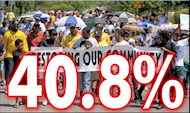
On Saturday, March 19th, at 12:00pm, the Kansas NAACP, the Topeka Center for Peace and Social Justice, Kansas Equality Coalition, the ACLU of Kansas and Western Missouri, Kansas National Organization for Women, and the Kansas League of Women Voters will stand together in an historic alliance to oppose the systematic dismantling of civil and equal rights protections in Kansas.

These organizations, their members, allies, and supporters, will meet at Monroe Elementary School in Topeka (the Brown Vs Board Historic site), and we will march to the Capitol Building. Put on your walking shoes and meet us at the Capitol!!!

Contacts:
Reverend Ben Scott, President, Topeka NAACP
785-266-5688 / naacptopeka1@att.net

Jim McCullough, Director, Topeka Center for Peace and Social Justice
785-232-4388 / topekacpj@aol.com

Thomas Witt, Chair, Kansas Equality Coalition
316-683-1706 / chair@kansasequalitycoalition.org

Holly Weatherford, Program Director, ACLU of Kansas and Western Missouri
816-756-3113 x 234 / hweatherford@aclukswmo.org

Kari Ann Rinker, State Coordinate, Kansas NOW
620-245-4904 / coordinator@ksnow.org

Ernestine Krehbiel, President, Kansas League of Women Voters
316-652-9229 / ekrehbiel@cox.net

Read more...

Friday, December 24, 2010

The Wichita Branch NAACP 2010 Year End Report is now available


The 2010 Year End report for the Wichita Branch NAACP, detailing branch activities in the areas of Education, Civil Rights Enforcement, Legislative Advocacy, Youth Development, Legal Redress, Branch Administration, and Advocacy Training, is now available to the public.

CLICK HERE to download a copy of the report


SCAN HERE with your Smartphone to download a mobile copy

Read more...

Wednesday, November 17, 2010

Senate filibuster kills the Paycheck Fairness Act (S.3772)

The Paycheck Fairness Act (S.3772) was designed to update and strengthen the Equal Pay Act of 1963, which made it illegal for employers to pay unequal wages to men and women who perform substantially the same work. An identical measure was passed in the House of Representatives as HR12 back in March of 2009.

The Act would have revised the remedies for, enforcement of, and exceptions to prohibitions against sex discrimination in the payment of wages. Wage Rate Differentials (differing pay rates for persons performing essentially the same job) are generally prohibited but with some exceptions. The Paycheck Fairness Act would have limited the exceptions to the prohibition against wage rate differentials to bona fide factors, such as education, training, or experience. It would have made employers who violated sex discrimination prohibitions liable in a civil action for either compensatory or (except for the federal government) punitive damages. And lastly, it also would have partially closed the loophole in discrimination cases caused by the Courts allowance of alternate definitions of the term "similarly situated" when determining whether disparate treatment and actions rise to the legal standard of Discrimination. And it would have pushed back against the trend in discrimination cases to so limit considerations and to require such specific evidence as to place an unreachable burden on plaintiffs. The Act stated:

(b) The Director of the Office of Federal Contract Compliance Programs shall ensure that employees of the Office--
(1)(A) shall use the full range of investigatory tools at the Office’s disposal, including pay grade methodology;
(B) in considering evidence of possible compensation discrimination--
(i) shall not limit its consideration to a small number of types of evidence; and
(ii) shall not limit its evaluation of the evidence to a small number of methods of evaluating the evidence; and
(C) shall not require a multiple regression analysis or anecdotal evidence for a compensation discrimination case;
(2) for purposes of its investigative, compliance, and enforcement activities, shall define ‘similarly situated employees’ in a way that is consistent with and not more stringent than the definition provided in item 1 of subsection A of section 10-III of the Equal Employment Opportunity Commission Compliance Manual (2000)

In addition to strengthening the language and penalties of the original Equal Pay Act, this bill would have also made grant funding available to provide negotiation skills training programs for girls and women. It also called for the convening of a national summit to discuss, and consider approaches for rectifying pay disparities.

Opponents of the act argue that the status quo is just fine. They falsely claim that the current system for determining pay discrimination (known as the Interpretative Standards for Systemic Compensation Discrimination) has been hugely successful and therefore need not be altered. They further claim that any alteration of the system would likely result in additional claims being ruled in favor of plaintiffs (alleging discrimination) and that THAT would be "bad for business"...

But the truth is, it is NEVER good business to discriminate.

We here at the Wichita NAACP Blog have been sounding the alarm for years now that the Civil Rights that we take for granted are under real threat. Laws are dynamic; once passed, they must be protected. No victory is permanent and every gain, if taken for granted, can be lost. This bill was an offensive salvo; a bill intended to push us back in the direction of level playing fields and fundamental fairness... this bill was killed today - but the fight must go on.

Read more...

Friday, September 17, 2010

The American Constitution Society releases new brief on SCOTUS decisions that undermine Civil Rights Enforcement

Over the last three years, this blog has attempted to sound the alarm about the Supreme Courts shift away from the enforcement and the intent of Civil Rights Legislation. With a series of subsequent decisions, the Courts have continuously raised the legal thresholds and pleading standards until we now have a system where litigants in Civil Rights cases must meet a nearly insurmountable burden of proof just to avoid dismissal or summary judgement.

By requiring plaintiffs in Civil Rights or discrimination cases to essentially prove the plausibility of their claims at the time of pleading and PRIOR to discovery, the courts have created a standard in which only the most egregious, most obvious, and least sophisticated acts could successfully be prosecuted.
It has become easier to coat various forms of discrimination with the appearance of propriety, or to ascribe some other less odious intention to what is in reality discriminatory behavior. In other words, while discriminatory conduct persists, violators have learned not to leave the proverbial “smoking gun” behind. ~ Third Circuit Court

The American Constitution Society has released a brief which details the Supreme Courts construction of new and onerous legal standards in the Twombly and Iqbal cases which undermine Civil Rights enforcement by limiting plaintiffs access to the courts.

Read more...

Friday, August 20, 2010

The Civil Rights Commission, the New Black Panther Party, and the dogged pursuit of Selective Justice


Long time readers of the blog will note that I am no fan of the US Commission on Civil Rights. I have been very critical of the Commission and have been writing about its dysfunction since 2007 (See HERE, and HERE, and HERE, and HERE).

But the recent Black Panther Party investigation is perhaps instructive, because when viewed in context, it says far more about the commission itself than its commitment to justice. Consider the following recent cases:

Albuquerque New Mexico - 2008: State Representative Justine Fox-Young held a press conference in which she claimed to have proof that a number of citizens had voted illegally in the primary elections. She then proceeded to release the names of those people (all minorities) to the press. After the citizens (who had been registered to vote by ACORN) were later found to be legal voters, some of them were then visited in their homes by private investigators who interrogated them.
The Civil Rights Commission took NO action, filed no charges, and did not call for an investigation.

Craven County, North Carolina - 2008: A man by the name of William Harper placed a real casket by an active polling station in Craven County, NC. The casket featured two photos of then candidate Barack Obama. The pictures also had what some described as a red noose-like shape around the Senator's head and the pictures were titled "O' No!"
The Civil Rights Commission took NO action, filed no charges, and did not call for an investigation.

Philadelphia, Pennsylvania - 2008: A flier was distributed in some largely African American Philadelphia neighborhoods. It stated that people with legal troubles or unpaid traffic violations would be arrested by undercover cops when they showed up to vote. It also said that cars with unpaid tickets would be towed.
The Civil Rights Commission took NO action, filed no charges, and did not call for an investigation.

Fayetteville, North Carolina - 2008: After a rally, supporters of the Candidate Barack Obama went to an early polling center where they were literally harassed and heckled by a group of protesters as they went in to vote.
The Civil Rights Commission took NO action, filed no charges, and did not call for an investigation.

Virginia Tech University - 2008: Students were told that if the registered to vote in Virginia that they could lose their scholarship or tax dependency status, and that they would have to re-register their cars and obtain new drivers licenses.
The Civil Rights Commission took NO action, filed no charges, and did not investigate.

Pittsburgh, Pennsylvania - 2008: Voters reported receiving robocalls telling them that Election Day was November 5th.
The Civil Rights Commission took NO action, filed no charges, and did not call for an investigation.

Cleveland, Ohio - 2008: Voters were falsely told that they could send in absentee ballots as late as November 14th.
The Civil Rights Commission took NO action, filed no charges, and did not call for an investigation.

North Carolina - 2008: Fliers were left on cars at a shopping mall instructing Republicans to vote on Tuesday, Nov. 4th (actual Election Day) and Democrats to vote on Wednesday Nov. 5th.
The Civil Rights Commission took NO action, filed no charges, and did not call for an investigation.

Kansas City, Missouri - 2008: Reports from voters at a largely African American polling location, indicated they were being warned of a 6-8 hour wait to vote (despite the line being short) and being forced to put their names on a list while in line to vote.
The Civil Rights Commission took NO action, filed no charges, and did not call for an investigation.

Dearborn, Michigan - 2008: Voters reported seeing uniformed police officers scanning the lines to look for voters with outstanding warrants.
The Civil Rights Commission took NO action, filed no charges, and did not call for an investigation.


Colorado - 2010: In US District Court, a coalition of voting rights groups came together and sued Colorado's Secretary of State Mike Coffman for illegally removing over 27,000 mostly minority voters from the rolls. They filed a temporary restraining order to get those names reinstated and to ensure additional names cannot be removed before Election Day.
The Civil Rights Commission took NO action, filed no charges, and did not call for an investigation.

Philadelphia, Pennsylvania - 2008: A reporter videotaped two young African American men wearing black military type outfits pacing in front of a polling place with one of the young men carrying a nightstick. The young men were both members of a group calling itself the New Black Panther Party and the reporter alleged that the pair was intimidating White voters.
The Civil Rights Commission called for a full investigation and prosecution of the two young men and the entire New Black Panther Party organization. 

The Justice Department investigated the case, filed voter intimidation charges and won an injunction against King Samir Shabazz, who was the young man brandishing the nightstick.

To sustain a Civil Rights charge against the organization as a whole, you would have to be able to prove that the organization was actively engaged in a "campaign of intimidation". In this case, the Philadelphia polling place where King Samir Shabazz was pacing was the only one where an incident occurred, and the incident was publicly disavowed on the New Black panther Party's website prior to any civil action being initiated. Their site read: "Specifically, in the case of Philadelphia, the New Black Panther Party wishes to express that the actions of people purported to be members do not represent the official views of the New Black Panther Party and are not connected nor in keeping with our official position as a party." For that reason, and that there were no actual calls or complaints filed by any voters at the precinct, and no witnesses who could provide any insight or evidence of any broader conspiracy, the charges against the organization were dropped due to insufficient evidence.

The Civil Rights Commission has now requested the authority from Congress to file a lawsuit against the Department of Justice. On the Civil Rights Commissions website, the only hearings they've held since December of 2009 (save one briefing on age discrimination) all pertain to this case.

Two dissenting members of the Commission spoke about the continuing investigation during a hearing in May:

Abigail Thernstrom, a long-time Republican member of the commission, said she was not happy that the investigation has taken up so much of their time. She called the New Black Panther Party "nothing in my view but a lunatic fringe view." She added that in her view, the November 2008 incident was an isolated event with no analogy to the history of voter intimidation in the South.

"Far too much of our time has been consumed on this seemingly unnecessary investigation," said Commissioner Arlan Menendez, who was appointed by Democrats. "No citizen has even alleged that he or she was intimidated. This absence of voter intimidation was clear to the Justice Department last spring," and should be clear to the members of this commission as well, he said.

Read more...

Tuesday, June 29, 2010

Statement from the NAACP LDF on Senate attacks on Thurgood Marshall


(Washington, DC) – During the Senate confirmation hearings of Elena Kagan to be Associate Justice of the U.S. Supreme Court, several Senators have disparaged Justice Thurgood Marshall, his judicial philosophy, and his connection to Elena Kagan, who once clerked for Justice Marshall. In response to these attacks, NAACP LDF President and Director-Counsel John Payton issues the following statement:

“Thurgood Marshall changed our country dramatically for the better. Astonishingly, Elena Kagan is being attacked by certain members of the Senate Judiciary Committee because she says her mentor was Thurgood Marshall. She could not have had a better mentor.

Here is what is undisputed: In the middle decades of the twentieth century, Thurgood Marshall was a leader of those forces whose faith in the Constitution and the American Dream dismantled the perverse empire of Jim Crow – with its separate and unequal schools and colleges, its rigidly segregated neighborhoods, and its profoundly unequal opportunity in every sector of American life. As the founder of LDF, Thurgood Marshall helped America understand what democracy really means; and he continued to expound that exalted vision as a Justice of the Supreme Court.

It is a disservice to the Senate and to the nation to have some, for the sake of hollow posturing, distort Thurgood Marshall’s beliefs and his extraordinary contribution to our understanding of justice and equality. Simply put, Thurgood Marshall helped make our union more perfect, and that legacy illuminates the highest possibilities for all Americans yesterday, today and tomorrow.”

#

Read more...

Saturday, June 19, 2010

Full text of Senator Franken's remarks on the Supreme Court's shift away from civil rights and legal protections


Thank you, Judy, for that introduction, and for your work on behalf of working Americans. Thank you to Caroline Fredrickson for your leadership and for inviting me to speak here tonight. Thank you all for being here tonight, and for the good work you do to defend the Constitution and the American values it represents. It is an honor to address this convention.

Speakers at past ACS gatherings have included Supreme Court Justices, Attorneys General, other cabinet secretaries, federal judges, and distinguished legal scholars. So tonight I guess we'll finally get an answer to the question: "What do Stephen Breyer, Laurence Tribe, and Al Franken have in common?" Other than: "They were all in the front row when the Dead played the Garden back in '71."

Tonight, we celebrate the rise of a new generation of progressive legal scholars and jurists. Look to your left. Look to your right. Odds are, at least one of the three of you will someday be filibustered by Senate Republicans. Speaking of which, I'd like to give a special shout-out to all the filibustered nominees we have here with us tonight.

The Republican obstruction that is standing between you and the work you've agreed to do for your country is unacceptable. And we will continue to fight it. In particular, I want to recognize Dawn Johnsen, who should be the head of the Office of Legal Counsel at the Department of Justice. What Republicans have done to keep you from doing that important job is flat out wrong. And I want to recognize Goodwin Liu, who should be sitting on the 9th Circuit Court of Appeals right now, and who deserves an up-or-down vote.

When I joined the Senate, I was thrown right into the fire as a member of the Judiciary Committee, where, by the way, I enthusiastically voted for Goodwin. On my fifth day in office, I found myself taking part in the confirmation hearings for now-Justice Sonia Sotomayor. Just like I am tonight, I was one of the few non-lawyers in the room, but I didn't mind. You see, I did some research, and it turns out that most Minnesotans aren't lawyers, either. But that doesn't mean they aren't directly affected every day by what happens on the Supreme Court, and in our legal system.

I don't think you need to be a lawyer to recognize that the Roberts Court has, consistently and intentionally, protected and promoted the interests of the powerful over those of individual Americans. And you certainly don't need to be a lawyer to understand what that means for the working people who are losing their rights, one 5-4 decision at a time.

Tonight, I'd like to talk about how we got to this sad moment in American legal history - because it didn't happen by accident.

Conservative activists - led by the Federalist Society - have waged a remarkably successful battle to re-shape our legal discourse, and thus our legal system. And they're not done yet. I should acknowledge up front that this story is kind of a downer.

But there's good news: the ending has not yet been written. And I really believe that, if we pay attention to how things got so bad, we'll learn how to make them better.

---
Federalist Society members have long believed that, if you change the way you talk about the law, you can change the law.

They are right.

If you listen to the U.S. Senate talk about judicial nominees, you'd be forgiven for thinking that originalism was a time-honored American value, one of the things we fought the British to protect. But ironically enough, originalism - like the designated hitter - only dates back a few decades. Indeed, as Cass Sunstein has pointed out, it was Robert Bork who first popularized the notion that the Constitution should be interpreted according to what we believe was the "original understanding" of its authors. Just to clarify: That's not Robert Bork the Founding Father. That's Robert Bork the 20th century conservative legal activist.

Originalism isn't a pillar of our Constitutional history. It's a talking point.

During his confirmation hearing, John Roberts broke out another conservative talking point. He said: "Judges are like umpires. Umpires don't make the rules; they apply them." And he promised: "I will remember that it's my job to call balls and strikes and not to pitch or bat."

How ridiculous. Judges are nothing like umpires.

You know who agrees that judges are nothing like umpires? The guy who came up with the umpire analogy in the first place. In 1886, in State v. Crittenden, a Louisiana Supreme Court Justice ruled that "a trial is not a mere lutte" - lutte is a French term for a wrestling match, as this analogy dates back to when baseball was a just a cult phenomenon - "a trial is not a mere lutte between counsel, in which the judge sits merely as an umpire to decide disputes which may arise between them." So, when it comes to this analogy, I guess I'm an originalist.

But this kind of bamboozlement is effective. You hear Senators of both parties rush to condemn judges who might "legislate from the bench." The end result is that people like Goodwin Liu - a brilliant, thoughtful, passionate young legal mind with a terrific life story and character references from the likes of Ken Starr - get tagged as dangerous radicals. Look, say what you will about Ken Starr, but he's not the sort of guy who pals around with dangerous radicals. Well. Not left-wing radicals.

---
The Federalist Society has changed the way we talk about judges - and the way we talk about justice. Justice Souter once said: "The first lesson, simple as it is, is that whatever court we're in, whatever we are doing, at the end of our task some human being is going to be affected." Conservatives would like us to forget this lesson.

They've distorted our constitutional discourse to make it sound like the Court's rulings don't matter to ordinary people, but only to the undeserving riff-raff at the margins of society. So unless you want to get a late-term abortion, burn a flag in the town square, or get federal funding for your pornographic artwork, you really don't need to worry about what the Supreme Court is up to.

The ACLU has a long and proud history of defending the First Amendment, and while I haven't seen polling on this, I'd bet that most Americans are fairly pro-First Amendment. But, thanks to a generation of conservative activism, the ACLU is now best known as "those guys who hate Christmas."

By defining the terms of constitutional debate such that it doesn't involve the lives of ordinary people, conservatives have disconnected Americans from their legal system. And that leaves room for lots of shenanigans.

---
By controlling the conversation, the Federalist Society has moved the Supreme Court sharply to the right. "Including myself," Justice Stevens said in an interview with the New York Times, "every judge who's been appointed to the court since Lewis Powell has been more conservative than his or her predecessor. Except maybe Justice Ginsburg. That's bound to have an effect on the court." And, indeed, the Roberts Court has overturned two principles I believe are deeply ingrained in our Constitution, in our legal tradition, and in our American values.

First: Judicial restraint.

As I have noted repeatedly - and in an increasingly exasperated tone of voice - over the last few years, Justice Thomas has voted to overturn federal laws more often than Justice Stevens and Justice Breyer combined. They haven't just been activists in their decisions, but also in their process.

In both Citizens United and Gross, the Court answered questions it wasn't asked, reaching beyond the scope of what they accepted for appeal to overturn federal laws the conservative wing didn't like. I mean, I don't speak Latin. But unless stare decisis means "overturn stuff," then maybe it's time for conservatives to stop calling other people "dangerous radicals."

Second, and more importantly: They've overturned the principle that the law should be a place where ordinary people can turn for relief when wronged by the powerful.

At the front entrance to the Supreme Court building here in Washington, beneath the words "EQUAL JUSTICE UNDER LAW," there's a set of 1,300-pound bronze doors. Countless Americans have flowed through those doors to see the place where that principle is protected. Now those doors have been locked to the public. Things have changed.

---
Supreme Court jurisprudence involves weighing competing interests. Most Americans are familiar with cases in which the Court has had to balance individual rights against some compelling state interest. It's easy to feel disconnected from these cases. Even though the government has awesome power - enough to take away your freedom, or even your life - the degree to which that power is deemed to supersede your individual rights doesn't really enter into the daily lives of most Americans.

But there's more than one kind of power.

If you have a credit card, if you watch TV, if you file insurance claims, if you work - in other words, if you participate in American daily life at all - then you interact with corporations that are more powerful than you are. The degree to which those corporations' rights are protected over yours, well, that's extremely relevant to your life. And in case after case after case, the Roberts Court has put not just a thumb, but a fist, on the scale in favor of those corporations. A fist with brass knuckles. Which weigh a lot. Because they're brass.

It's important to recognize that, for some conservative legal activists, this is the whole point. Do they want to undercut abortion and immigration and Miranda rights? Sure. But those are just cherries on the sundae. What conservative legal activists are really interested in is this question: What individual rights are so basic and so important that they should be protected above a corporation's right to profit? And their preferred answer is: None of them. Zero.

More than a century ago, in Lochner, the Court held that a state cannot intervene to protect the interests of an individual entering into a work relationship with an employer. In other words, the Court held that employees should have to fend for themselves against the same powerful corporations they rely on for a paycheck.

Last month, Rand Paul, the Republican Senate candidate down in Kentucky, got into some hot water for suggesting that we really shouldn't have used the law to force private businesses to stop discriminating against African-Americans, that the market would have eventually handled it. My question was: In what year would the market have gotten around to doing that? 1965? 1967? 1987? 1997? Title VII of the 1964 Civil Rights Act deals with the workplace, because your rights at work are civil rights.

And without legal protection, workers would have no leverage to secure those basic rights: the right to organize and bargain for better wages, the right to a safe work environment, the right not to get fired because of who you are. It's a nightmare for progressives, but a dream for powerful economic elites and their legal activist allies: a return to Lochner, to a system of corporate authoritarianism where business giants hold all the cards and workers have to hope that the market will someday provide them with basic rights.

---
Those elites are well on their way. The Roberts Court has systematically dismantled the legal protections that help ordinary people find justice when wronged by the economically powerful.

In Stoneridge, it stripped shareholders of their ability to get their money back from the firms that helped defraud them.

In Conkright, it gave employers more leeway to deny workers their pension benefits.

In Leegin, it made it harder for small business owners to stop price fixing under the Sherman Act. Now, the burden is on them--small business owners--to show that price fixing will hurt competition.

In Iqbal, it made it harder for everybody to get their day in court.

In Exxon, it capped punitive damages resulting from the Exxon Valdez oil spill because, get this, having to own up to your mistakes creates "unpredictability" for corporations. Which, by the way, means that BP's liability may be capped because the Court doesn't want to cause an unpredictable impact on its future profitability.

In Rapanos, it cut huge swaths of wetlands out of the Clean Water Act. Wetlands that had been covered for 30 years.

You know what has a lot of wetlands? Minnesota. No, really. You know what else has a lot of wetlands? The Gulf Coast. I could spend a long time talking about how these cases were wrongly decided. But I'm not an academic - and these aren't academic issues. These decisions affect real people. They hurt real people.

Jamie Leigh Jones is a real person who went to work for KBR, then a Halliburton subsidiary. When she arrived in Iraq in July of 2005, she immediately complained to her supervisors about sexual harassment in her barracks, which housed over 400 men and only a handful of women.

KBR just mocked her. Then, four days after she got to Iraq, she was drugged and gang-raped by several of her co-workers. When she woke up, she struggled to the infirmary and had a doctor administer a rape kit, which KBR promptly lost.

Then, Jamie was locked in a shipping container under armed guard and prohibited from any contact with the outside world.

Because of the Court's decision in Circuit City, KBR had been able to force new employees like Jamie to sign a contract requiring that any future disputes be arbitrated in secret and not in open court. So Jamie Leigh Jones spent four years fighting for her right just to get her day in court after her employer put her in a dangerous situation, ignored her concerns, and kept her hostage in a shipping container after she was gang-raped.

Lilly Ledbetter is a real person who worked as a manager at a Goodyear tire plant in Gadsden, Alabama. Towards the end of 20 years of service there, she noticed that her male co-workers had gotten more and better raises. By 1998, when she took early retirement, she was earning several hundred dollars less per month than her male counterparts. So she sued.

But the Court decided to give Goodyear maximum leeway to avoid responsibility for pay discrimination, thanks to the most unbelievable loophole you can imagine. The law requires that discrimination claims be brought within 180 days. The Court decided that this meant within 180 days - from the time Goodyear started discriminating against Lilly, not the most recent discriminatory check. And Lilly lost out on a chance to recoup years of wage increases that were illegally withheld just because she's a woman.

---
Now, the judiciary is just one branch of our system. I was proud to pass legislation giving victims like Jamie Leigh Jones their day in court. And I was thrilled to see that the very first bill President Obama signed into law was the Lilly Ledbetter Fair Pay Act. But even as it has closed the door on ordinary Americans looking for justice in the legal system, this Court has made it harder for the political system to address these injustices.


In Citizens United, the Roberts Court overstepped its procedural bounds so that it could graciously provide corporations with First Amendment rights and, by the way, open the door to foreign entities deciding our elections. But, again, as bad a piece of jurisprudence as that decision was, even worse could be the ramifications it will have on the lives of real people.

Well into the 1960s, oil companies didn't want to stop putting lead in gasoline despite the fact that they knew how dangerous it was. But Congress passed the Clean Air Act anyway. And the percentage of children with elevated levels of lead in their blood dropped 84 per cent over the next quarter century. And around that same time, our car companies still didn't want to put seat belts in cars, even though they knew it would save lives. But Congress passed the Motor Vehicle Safety Act anyway. And by the year 2000, the fatality rate from car accidents had dropped 71 per cent. Both laws passed just a couple of months before midterm elections.

Does anybody think either would have stood a chance if Standard Oil and GM had been able to spend millions of dollars in those campaigns?

In Citizens United, the Court didn't just abdicate its duty to subject efforts to impair our political process to strict scrutiny. It served as an accomplice to such an effort. Not satisfied with giving corporations a leg up on individuals under the law, the Roberts Court is trying to prevent the American people from fighting back.

---
Bummed out yet? Well, we're finally in a good position to fight back.

It took the conservative legal movement decades to produce this activist Supreme Court. We're still in our first decade. But already the American Constitution Society has established itself as a major force in our legal system. And while we often continue to struggle to get our nominees confirmed and our message heard, we have a President who understands that our legal system is broken when it favors the powerful over the powerless, and I know for a fact that I'm not the only Senator ready to take action.

So let's talk about what we can do.

Right now, I'm co-sponsoring legislation called the DISCLOSE Act that would force the heads of corporate-sponsored advocacy groups to appear in their ads, require corporations to tell their shareholders what they're spending political dollars on, prohibit corporations from who receive taxpayer dollars from telling taxpayers how to vote, and keep foreign-controlled corporations out of our elections.

It's a start.

But it's important to recognize that Citizens United is really the first major shot fired in a coming battle over information, a battle that extends beyond paid political advertising.

For instance, I'm very concerned about media consolidation. If we care about public debate, then it matters who runs our media companies.

The trend is towards vertical integration of the companies who produce the programs Americans rely on for information, and the companies who run the pipes through which Americans receive those programs. Executives at both Comcast and NBC Universal swear that they're not interested in corporate control of programming. I used to work at NBC; I know better. And I'm very worried about this merger.

We should also be very worried about efforts to undermine the free flow of information on the Internet.

Right now, a blog loads just as quickly as a corporate webpage. An email from your mother comes through just as smoothly as a bill notification from your bank. An independent bookstore can process your order as quickly as Barnes and Noble. But top telecommunications companies have declared their interest in offering "prioritized" Internet service for companies who can pay for it. This could lead to the creation of a high-speed lane for wealthy corporations and transform the Internet from an open playing field into yet another place where powerful economic elites have a bigger megaphone than the rest of us.

Some of the same people who were instrumental in the Federalist Society's effort to change our legal system are now working to help corporations increase their control over the flow of information. If you control the flow of information, you can control the conversation around important issues. If you can control the conversation, you can change this country.

---
But we can't be satisfied with stopping conservatives and their corporate clients from controlling the narrative when it comes to our legal system. We have to fight back with our own.

In our narrative, the legal system doesn't exist to help the powerful grow more powerful - it exists to guarantee that every American is entitled to justice. In our narrative, we defend our individual rights and liberties against corporate encroachment just as fiercely as we defend them against government overreach. In our narrative, judicial restraint actually means something - for starters, how about ruling only on the case you're presented? In our narrative, even if those big bronze doors have to remain closed for security reasons, the door to our legal system should be open to everyone, because what happens in our legal system matters to everyone.

If you followed my career before I got to the Senate, you know that I'm a big believer in speaking truth to power, and in the power of telling the truth. To legal scholars and lovers of our constitution, the truth about what's happened over the last 30 years is at the heart of our struggle to restore balance to our courts and wisdom to our laws. But I gotta be honest with you: That's not why I'm here tonight. And I think you know that, or you would have invited a lawyer.

I'm here tonight because, for the people I represent in Minnesota and for regular working people all over the country, that truth is at the heart of their struggle, too. Their struggle to earn a fair wage at a job that treats them well. Their struggle to live their lives free of corporate intrusions into their privacy. Their struggle to breathe clean air and drink clean water. Their struggle to find justice when they're wronged. I know how important it is that our legal system support individuals in that struggle. And so do you. But most people don't. And we have to change that.

The American Constitution Society has a role to play in the national conversation around our Constitution and our laws. And not just within the walls of a debating society. Ordinary Americans have to understand what's at stake for them in all this. And that means someone has to bring them into the debate. It is my hope that you will. And it is my great honor to stand with you in that fight.

Thank you.

Read more...

Thursday, May 20, 2010

The Constitution vs The Civil Rights Act: Is Racial Discrimination protected free speech or a violation of law?


Congressional Candidate Rand Paul recently ignited a firestorm when he suggested that while he personally opposes racism and discrimination, he believes that private clubs, restaurants, and businesses should be allowed to make their own decisions about whether or not they would discriminate [Link to Video]. He went further to suggest that outlawing discrimination restricts the freedom of speech provided by the constitution and that if we say that that private business owners must serve people of all races, then we must also require that they serve patrons who are armed as well.

*Sidenote* Candidate Paul was NOT insinuating that the black or minority patrons would be armed, rather he was making an abstract and somewhat hyperbolic argument that if minorities have the "right" to attend any facility then gun owners should as well...

As the news cycle progressed, a cry came from conservative side of the spectrum that the claim that Dr. Paul offered a tacit defense of racial discrimination was overblown and politically motivated. Rand Paul himself has described the charges as a "red herring". However, the charges are firmly supported by Dr. Paul's previous statements. For example: in 2002, Dr. Paul wrote a letter expressing his opposition to the 'Fair Housing Act' which read in part, "A free society will abide unofficial, private discrimination even when that means allowing hate-filled groups to exclude people based on the color of their skin." He has also come out in opposition to the Americans with Disabilities Act during an interview with NPR in which he opined that issues of discrimination should be handled "locally".

But it would be a mistake to treat these arguments as an extreme position. In fact, Rand Paul has merely demonstrated his firm commitment to the libertarian philosophy. And while Libertarianism is certainly too small of a political movement to significantly impact American Policy on its own terms, the "Freedom from Government" philosophy at its core has certainly become more mainstream with the ascendancy of the Tea-Party groups and the Republican Party's anti-establishment push to the Right. A thread of this line of thinking can even be seen in the Supreme Court where the court recently used the equal protections clause of the 4th amendment to challenge the disparate outcome protections of the Civil Rights Act in Ricci v DeStephano. Shortly after the ruling, Justice Scalia reportedly said that he wished he could review the Civil Rights Act itself. Seen through this lens,  we should be clear that Rand Paul is not the issue, nor is he a monster or an anachronism, he is just someone who was willing to publicly defend and articulate the Libertarian philosophy out to its logical conclusions.

Rather than attacking him, we should challenge his argument. He has articulated the libertarian belief that the rights of private ownership should not be abridged. He has also argued that discrimination in a private business or enterprise is an act of free speech and therefore should be protected. In stating his personal disdain for racism and discrimination and his claim that he personally would not frequent a business that practiced discrimination, he alluded to the libertarian belief that the Free-Market system can and will self correct against racism and discrimination without Government intervention: That good and decent people will simply refuse to do business with people who discriminate and that combined with the cost incentive to serve minorities and others will simply 'drive the racists out of business'.

It is a sound and coherent argument, but it is simply wrong. It is perfectly logical in its abstract form. But the weakness of the argument is that it does not consider a critical and fundamental fact; Racism is irrational.

You can not craft successful social policy based solely on theoretical models because Racism is not bound by the laws of reason. Simply put, there are enough people who ARE willing to frequent those shops and businesses to provide a livable wage to the owners, and racial bias is sufficiently strong in some to lead them to forgo even the promise of higher profits through increased business. When discrimination was treated as a local issue, discrimination was commonplace. For as long as discrimination was not treated as a matter of law, discrimination flourished. The markets did NOT correct it. The markets Could not correct it. It was corrected mitigated only by the law.  To argue otherwise is to demonstrate a historical myopia and perhaps some degree of insensitivity to the real-life consequences of such a nonchalant social acceptance of racism and inequity.

If racism and discrimination are abhorrent as Dr. Paul has stated, then it's simply not enough to decry the practice when prompted. It's simply not enough to promise a symbolic solidarity that you might personally choose to avoid a business or institution that YOU had the right to frequent unfettered and without limitation, while they literally barred others from their door. If racism and discrimination are abhorrent, if you find them evil, if they are a blight on our society, then commit to stopping them. These are not theoretical issues. We can not wish them away. There is no scholarly or philosophical middle-ground. We either tolerate them or we don't.

Read more...

Monday, March 22, 2010

Remembering Selma...


"Truth forever on the scaffold, Wrong forever on the throne.
But the scaffold sways the future and behind the dim unknown
Standeth God within the shadows, keeping watch above His own"

45 years ago today, thousands were engaged in a 5 day and 4 night march, covering 54 miles between Selma and Montgomery Alabama. This was their third attempt. The first attempt, on March 7th, is now remembered as "Bloody Sunday", when Alabama State Troopers attacked the marchers with billy clubs and tear gas on the Edmund Pettis Bridge. The second attempt was on March 9th, but the marchers then went only as far as the Edmund Pettis Bridge where they held a prayer service before turning back. Their third attempt began on March 21st at the Brown Chapel in Selma and ended on March 25th on the steps of the State Capitol in Montgomery... Once there, Dr. Martin Luther King delivered this speech, "God's truth is marching on"...

Read more...

Friday, February 5, 2010

Do you know how YOUR members of Congress voted in the past year?


The NAACP has just released its Congressional Report Card for the first session of the 111th Congress, which illustrates how your Senators and Representatives voted on key civil rights, economic justice, health care and criminal justice issues - to name just a few.

Click here to see how your representatives voted on crucial civil rights issues and hold them accountable.

According to the latest report card, 59% of Senators and 47% of House Members received an "A" by the NAACP, a significant step up from last year. We applaud the members who continue to uphold the importance of basic civil rights for all Americans, as demonstrated by the passage of the Hate Crimes Prevention Act, the Lilly Ledbetter Fair Pay Act, and the State Children's Health Insurance Program (SCHIP).

However, there are many that have yet to show their commitment to fundamental civil and human rights. In fact, 29% of Senators and 34% of House Members received the failing grade of "F" on the report card.

Is your representative one of them?

Be sure to download the NAACP's Legislative Report Card to find out how effectively your members of House and Senate are advocating for the civil rights of all Americans. Together, we can hold them accountable for their voting practices and the advancement of good public policy.

Read more...

Friday, January 22, 2010

Citizens United Vs. the FEC and how the Nation changed today...


George Orwell got it backward. Big Brother isn't watching. He's singing and dancing. He's pulling rabbits out of a hat. Big Brother's holding your attention every moment you're awake. He's making sure you're always distracted. He's making sure you're fully absorbed... and this being fed, it's worse than being watched. With the world always filling you, no one has to worry about what's in your mind. ~Palahniuk

Last week, I was invited onto the campus of Wichita State University to speak to the youth in the Upward Bound Math/Science program on the subject of 'Civil Rights'. We began by asking the youth about their perceptions of the relevance of Civil Rights. Unfortunately but not surprisingly, they each indicated that they felt that 'Civil Rights' issues were things of the past having little if any relevance to their day to day lives.

I spoke to the youth and staff for an hour and fifteen minutes and then held a brief question and answer session about Civil Rights; the history, the meaning, the law, the politics, and how civil rights decisions are being handed down on a regular basis while our attention is focused on Tiger Woods and the 'Jersey Shore'. I spoke of how ironic and frightening it is that we have somehow reached a point in this nation where many if not most believe that "Civil Rights" is merely a historical reference, when in reality Civil Rights issues are contemporary legal issues and civil rights protections are fluid, dynamic, and tenuous.

I spoke to them about Gross Vs. FBL Financial Services, Ricci Vs. DeStephano, Iqbal Vs. Ashcroft, Whren Vs. the United States, Philip Vs. Ford Motor Company, and perhaps the most onerous and consequential of them all, Citizens United Vs. the FEC. I pointed out that all of these fairly recent cases were in fact Civil Rights cases and that each of the students in that room were directly impacted. As the lecture was nearly a week ago, I indicated then that the Citizens Vs. the FEC case was soon to be decided, but that if the decision broke along ideological and partisan lines within the Supreme Court, we could see the death of true participatory politics in America.

The students seemed genuinely surprised to learn of these current, consequential, and terribly relevant civil rights decisions. I told them, reminded them, and implored them all in the same presentation to never forget this fundamental truism: America is not governed by its people, America is governed by its laws. When we lose sight of that; when we abdicate our responsibility to exercise public oversight of the Judiciary system, when we ignore the Judges and their decisions, and when we begin to judge our relative progress by the measure of our personal interactions, our rights may be stripped away with us none the wiser...

The same has happened to us all today. The Supreme Court issued a 5-4 decision in favor of Citizens United. There ruling means that for all intents and purposes, Corporations shall be considered as "persons" under the law. Therefore, corporations have now been freed from all campaign financing limitations and restrictions. Whereas the Obama campaign literally changed politics and campaign financing by receiving small donations from millions of ordinary americans, the Supreme Court has now given permission for a small number of Corporations to contribute tens of millions of dollars thereby providing them the ability to cancel out our collective voices.

If the Insurance Companies don't want Health Care reform, then they are now free to pour hundreds of millions of dollars into campaigns to defeat candidates who support reform. If Big Oil Companies oppose regulatory shifts to encourage the development of green technologies, now they can funnel their profits into making sure environmentally minded legislators are never seated. But this doesn't just affect us on the National  level, it affects us on the State and Local levels as well. Issues such as School Desegregation, Racial Profiling, Employment discrimination, and Minority Contracting may all be much more difficult to fight in an environment where Corporate interests can freely and openly purchase representation on City Councils, School Boards, and within State Legislatures.

THIS is Civil Rights... This is why it matters.... This is your wake up call...

Read more...

Thursday, December 31, 2009

...but was it a "Hate Crime"?


Few pieces of legislation are as misunderstood as the Federal Law which designates and prohibits 'Hate Crimes'. As a result, almost anytime there is a violent crime involving persons of different races, someone on one side or the other generally calls for the issue to be designated as a 'Hate Crime'. I decided to pen this column to hopefully shed a little light and provide some guidance for activists unsure of when to pursue a 'Hate Crime' designation.

The current confusion over what is or isn't a 'Hate Crime' obfuscates the real intent of the legislation. Each time a high-profile incident with a racial component is determined not to be a hate crime, it plays into the narrative that 'Hate Crime' designations are governed by a needlessly complex and somewhat arbitrary standard. Conversely, the very existence of hate crimes legislation has served to enflame some on the Right who view the designation as an attack on politically incorrect thought and free speech. Neither position is correct. The legal standard for a Hate Crime designation is neither complex nor arbitrary, and the Federal law governing Hate Crimes does not criminalize speech, thought, or membership in groups or associations organized around hate speech or ideology.


Examples of recent descriptions of Hate Crime Legislation

The real purpose of hate-crime laws is to reassure politically significant groups -- blacks, Hispanics, Jews, gays, etc. -- that someone cares about them and takes their fears seriously. That's nice. It does not change the fact, though, that what's being punished is thought or speech. – Richard Cohen, Washington Post
Wrong
~~~
The views of millions of religious Americans will be violated if this legislation passes. It punishes the thoughts of a person! – Traditional Values Coalition
Wrong Again
~~~
" Hate crimes legislation is antithetical to the First Amendment, unnecessary and will have a chilling effect on religious freedom," - Rep. Mike Pence, R-Indiana
Wrong and duplicitous
~~~

The Matthew Shepard and James Byrd Jr Hate Crimes Prevention Act states that a Hate Crime has occurred when:

Whoever, whether or not acting under color of law, willfully causes bodily injury to any person or, through the use of fire, a firearm, a dangerous weapon, or an explosive or incendiary device, attempts to cause bodily injury to any person, because of the actual or perceived race, color, religion, or national origin of any person—
Or because of the actual or perceived religion, national origin, gender, sexual orientation, gender identity, or disability of any person—

In layman’s terms: To understand when a Hate Crime designation should be applied, you must first identify the ‘intended’ victim. It is necessary to differentiate between a victim chosen because of some real or perceived relationship with the attacker and a victim who is ‘symbolic’; chosen as a proxy because they are in someway representative of a group or class. Understood in this context, a Hate Crime is the physiognomic equivalent of terrorism.

This critical distinction between related and symbolic victimization is the reason we don’t charge terrorists with 1st or 2nd degree murder charges. A terrorist's intended target is not the person or persons they kill, rather their intent is to strike out at the group of people that the victim(s) represent. In order to cause injury or send a message to members of a nationalistic or ideological cohort, they single out and attack otherwise random citizens from those respective groups. In the same way, a Hate Crime is one where the intended victim is not necessarily the person or persons who were attacked, but rather their intent is to strike out at the group of people that the victim(s) represent. In order to cause injury or send a message to members of a social or physiological cohort (be it ethnic, religious, sexual orientation or gender-based) they single out and attack otherwise random citizens from those respective groups. And it is the essentially random nature of these attacks that elevates them to a higher degree of culpability.

The Matthew Shepard and James Byrd Jr Hate Crimes Prevention Act does NOT criminalize hate speech, hateful expressions, or membership in groups based upon such beliefs. Those who argue to the contrary clearly have not read the Act. The act states:

Section 4710: subparagraph 4, 5, and 6

(4) FREE EXPRESSION
Nothing in this division shall be construed to allow prosecution based solely upon an individual's expression of racial, religious, political, or other beliefs or solely upon an individual's membership in a group advocating or espousing such beliefs.

(5) FIRST AMENDMENT
Nothing in this division, or an amendment made by this division, shall be construed to diminish any rights under the first amendment to the Constitution of the United States.

(6) CONSTITUTIONAL PROTECTIONS
Nothing in this division shall be construed to prohibit any constitutionally protected speech, expressive conduct or activities (regardless of whether compelled by, or central to, a system of religious belief), including the exercise of religion protected by the first amendment to the Constitution of the United States and peaceful picketing or demonstration. The Constitution of the United States does not protect speech, conduct or activities consisting of planning for, conspiring to commit, or committing an act of violence.

Read more...

Monday, December 21, 2009

The Wichita Branch NAACP 2009 Year-End report is now available


The 2009 Year End report for the Wichita Branch NAACP, detailing branch activities in the areas of Education, Civil Rights Enforcement, Legislative Advocacy, Youth Development, Legal Redress, Health, Branch Administration, and Advocacy Training, is now available to the public.

Read more...

Thursday, December 10, 2009

The NAACP LDF calls on Congress to restore American's full and unfettered access to the Courts


NAACP LDF Director of Litigation, Debo Adegbile, testified before the House Committee on the Judiciary's Subcommittee on the Constitution, Civil Rights, and Civil Liberties. While John Payton, the President and Director Counsel of the NAACP LDF testified before the Senate Judiciary committee. In each presentation, the NAACP LDF called attention to the fact that the recent 5-4 Supreme Court decision in Ashcroft v. Iqbal will dramatically limit citizens access to the courts in Civil Rights cases. The Court ruled that a plaintiff must come to the court with 'plausible evidence' of a defendant's liability to prevent their case from being thrown out with a summary judgement.

This is a new legal standard...

Typically in a Civil Rights case; particularly one alleging an act of bias or discrimination, much of the evidence needed to prove culpability is with the defendant. The bulk of this evidence is only obtainable through the discovery process. However, this NEW legal standard articulated by the court says that unless the plaintiff can produce this evidence upon filing, their case may be thrown out and they may not make to the discovery phase.

CLICK HERE to read Debo Adegbile's testimony to the House Committee on the Judiciary's Subcommittee on the Constitution, Civil Rights, and Civil Liberties

CLICK HERE to read John Payton's testimony to the Senate Judiciary Committee "Has the Supreme Court Limited American's access to the Courts?"

Read more...

Monday, November 30, 2009

What you don't know about Civil Rights CAN hurt you


"Civil Rights" is not the name of a movement...
"Civil Rights" is not a type of organization...
"Civil Rights" is not a method of protest...

Civil 'Rights' are the rights and privileges guaranteed by law to all citizens of the United States. The Civil Rights movement was an organized and protracted effort to ensure that the rights guaranteed by law were equally extended to all Americans. Civil Rights Organizations were those groups who worked to ensure the fair and equal application of the laws, foremost among them being the 14th amendment to the Constitution which reads in part,
"No State shall make or enforce any law which shall abridge the privileges or immunities of citizens of the United States; nor shall any State deprive any person of life, liberty, or property, without due process of law; nor deny to any person within its jurisdiction the equal protection of the laws."

In its truest sense, the struggle over civil rights has never really abated. Because Civil 'Rights' are, in essence, matters of law; and the laws from which they derive are dynamic.  Their meanings and applications are subject to change with each interpretation. By Stare Decisis - as courts render new decisions, their precedent becomes the new practice, so a law that you wrote or read yesterday, could be interpreted to mean something completely different next year. When you factor in the role of politics and how federal appointments to District Courts are often made along political and ideological lines, you come to realize that our Civil 'Rights' are extremely fragile. We as activists must not only concern ourselves with securing Civil Rights for all Americans, but we must be equally focused upon protecting those Civil Rights that now exist. Because on any given Monday a court decision, a ballot initiative, or a legal appeal could change the law or its application and strip away a right you had previously taken for granted.

Which brings me to Gross vs FBL Financial Services Inc

Jack Gross went to work at FBL Financial Services back in 1987. He worked his way through the ranks, and by 1999 he had been named the Claims Administration Vice President. A couple years later, Jack's job title and duties began to change. He noticed that the duties and responsibilities that he once had, were being shifted to a younger employee. In 2003 Jack noted that his position as "Claims Project Coordinator" lacked a real job description or clearly defined duties, but his younger co-worker had all but assumed the functional equivalent of his old position.

In 2004 Jack Gross sued FBL Financial Services for Age Discrimination. The trial lasted a mere 5 days and Jack Gross prevailed. The jury found that Jack Gross proved, by a preponderance of the evidence, that he was demoted and his age was a motivating factor in the demotion decision. They awarded him $46,945.00 for lost compensation.

Not surprisingly, FBL appealed... They filed a Petition for Writ of Certiorari, informally referred to as a "Cert Petition" with the Supreme Court. A Cert Petition is a formal request for the Supreme Court to review the decision of a lower court. The Supreme Court granted the Writ of Certiorari and on June 18th, Justice Thomas rendered the 5-4 decision of the court which held that: A plaintiff bringing an Age Discrimination in Employment Act (ADEA) disparate-treatment claim must prove, by a preponderance of the evidence, that age was the "but-for" cause of the challenged adverse employment action. The burden of persuasion does not shift to the employer to show that it would have taken the action regardless of age, even when a plaintiff has produced some evidence that age was one motivating factor in that decision.

In a nutshell, the Supreme Court reversed the lower courts decision in favor of Jack Gross, and also put forward a new legal standard for ruling in Age Discrimination cases. The conservative majority on the court (Thomas, Scalia, Alito, Roberts, and Kennedy) ruled that a plaintiff in an age discrimination case must not only prove that age was "A" motivating factor in an adverse employment action or decision; they must prove that age was "THE" motivating factor. And unless or until the plaintiff can present direct evidence of the employer's primary personal motivations, the employer should not be required to prove anything.

The case was remanded back to the 8th Circuit Court of Appeals for retrial. And earlier today, the 8th Circuit Court issued a new ruling in favor of FBL Financial Services... The preponderance of the evidence still shows that FBL Services was considering Jack Gross' age when deciding to demote him, but as of this morning, that no longer meets the legal standard of an Age Discrimination Claim. You see, protection from discrimination or adverse employment actions on the basis of ones age is still a 'Civil Right', but is is now a right guaranteed in a law that is virtually impossible to assert.

I said all of that to say this... Civil Rights are fragile. Like the picture above, these Rights are like a candle in the wind. If we are not vigilant, if we do not safeguard and protect them, they will be lost...The courts have been busy chipping away at them, bit by bit, for a number of years. We must remember that the protections and safeguards that we fought so hard to secure in the 50's and 60's are not promised to our children. Whether or not they are passed on to the next generation will depend on what we do today. Because on any given Monday, things can change... just like this morning.

Read more...

Friday, November 27, 2009

The ACLU and the Leadership Conference on Civil Rights call for reform at the US Commission on Civil Rights


Long time readers of the blog will note that we've been talking about the ideological shift and politicization of the US Commission on Civil Rights for the last couple years. (See HERE, and HERE, and HERE, and HERE). Through a series of Bush-era politically motivated appointments, the 8-member Commission is now composed of 4 staunch conservatives who are absolutely ideologically opposed to the goals and precepts of the American Civil Rights movement and 2 right-leaning 'quasi-independents'.

But at long last, the call for reform is now picking up steam. On November 18th, the Leadership Conference on Civil Rights and the ACLU went to the Congress to call for dramatic reform within the agency.

The groups called for reforms that would broaden the commission's mandate so that it can better investigate and address civil rights issues and work to strengthen U.S. commitments on human rights. In particular, they are seeking a change in the way that members are appointed to the commission to ensure that commissioners remain independent. Currently, members are appointed by Congress and the president and are not required to undergo a confirmation process.

The commission was created with the passage of the Civil Rights Act of 1957 as an independent fact-finding body charged with investigating and reporting on civil rights and making recommendations to the federal government on how to fix the problems it uncovered. Through its fact-finding work, it helped lay the foundation for the passage of the Civil Rights Act of 1964 and the Voting Rights Act of 1965.

Over the past few years, however, the commission has taken positions hostile to civil rights issues, such as opposing the reauthorization of the Voting Rights Act in 2006, urging the Senate to vote against the Matthew Shepard Hate Crimes bill, encouraging the elimination of school desegregation programs, and opposing the Employee Free Choice Act.

Read more...

Friday, November 20, 2009

Civil Rights Organizations come together to call for a stronger Federal response to the jobs crisis


With unemployment among blacks at more than 15 percent, and in light of new unemployment data released for October 2009, the NAACP joined with several other groups this week to call on President Obama to do more to create jobs.

The organizations, including the Leadership Council on Civil Rights, the AFL-CIO, the Center for Community Change, the National Council of La Raza, and the Economic Policy Institute, stated that they believe the president’s $787 billion stimulus program has not gone far enough to fight unemployment. In response to the crisis, the groups held a panel discussion this week to raise awareness and suggest potential solutions for policymakers. They also issued a joint statement advocating for strong congressional action to address the crisis, starting with extending unemployment benefits, food stamps, and COBRA to meet the needs of the significant number of unemployed people facing a long road to recovery.

“It’s time for us to really stoke this issue up,” said Hilary O. Shelton; NAACP Senior VP for Advocacy and Policy. “We’re not so much trying to convince him to do something he doesn’t want to do, but urging him to move forward on an issue we have agreement on.”

Currently, nearly 16 million Americans are unable to find employment and another nine million are only able to find part-time employment, according to the EPI. And finding jobs is increasingly difficult – there are over six job seekers for each available job opening. The situation is even more difficult for workers of color. The unemployment rate for blacks has jumped to 15.7 percent, from 8.9 percent when the recession started 23 months ago. That compares with 13.1 percent for Hispanics and 9.5 percent for whites. The black unemployment rate has climbed above 20 percent in several states, reaching 23.9 percent in Michigan and 20.4 percent in South Carolina.

"Make no mistake – this is the civil rights issue of the moment," said LCCR President and CEO Wade Henderson. "Unless we resolve our national job crisis, all of our other priorities – from reforming health care and fixing our broken immigration system, to stemming home foreclosures and expanding economic opportunity for all Americans – are in real jeopardy."

Read more...

wibiya widget


About This Blog

About This Blog

Jung/Myers Briggs

INTJ - "Mastermind". Introverted intellectual with a preference for finding certainty. A builder of systems and the applier of theoretical models. 2.1% of total population.
Free Jung Personality Test (similar to Myers-Briggs/MBTI)

  © Blogger templates Newspaper III by Ourblogtemplates.com 2008

Back to TOP