Showing posts with label Action Alerts. Show all posts

Monday, August 2, 2010

The NAACP urges the US Senate to provide FULL FUNDING in the Pigford II discrimination lawsuit


The Bill also contains repayment under the Cobell settlement of lost royalty funds for the mismanagement of natural resources on American Indian Land

THE ISSUE:
As early as TODAY, August 2, 2010, the United States Senate is expected to take up legislation to provide the $1.25 billion necessary to fund the Pigford II settlement. This settlement, which was announced by the US Department of Agriculture and the US Department of Justice in February of this year, would provide as many as 70,000 African American farmers, many of whom suffered blatant discrimination at the hands of the U.S. Department of Agriculture for decades, with cash damage awards and debt relief. These claims cannot even begin to be investigated, let alone settled, until after Congress has appropriated the funding. Funding for the Pigford settlement had been approved by the US House on July 1, 2010, but the money was stripped by the U.S. Senate on June 22, 2010.

The legislation to be considered also contains $1.41 billion to provide for the Cobell settlement, which involves lost royalty funds flowing from the mismanagement of natural resources on Indian land by the U.S. Department of the Interior for more than a century.

There is an urgency to pass this appropriation to settle the class action lawsuits of African-American farmers and Native Americans. Many of the farmers who would qualify for monies under the settlement have waited as long as 10 years to be compensated; some have already died or lost their farms. After years of discriminatory treatment by USDA credit and program agencies, these farm families have already waited almost a decade for compensation for these well-established claims. It is time to allow these farmers to focus on the future, and move forward unencumbered by the racial discrimination of the past.

CLICK HERE for the Action we need you to take...

Read more...

Saturday, June 12, 2010

NAACP supports legislation to help States reduce prison populations


THE ISSUE:
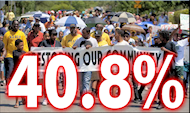
The United States is the world's leader in incarceration with 2.3 million people currently in the nation's prisons or jails -- a 500% increase over the past thirty years. These trends have resulted in prison overcrowding and state governments being overwhelmed by the burden of funding a rapidly expanding penal system, despite increasing evidence that large-scale incarceration is not the most effective means of achieving public safety. This over-reliance on incarceration has also had a disproportionately serious impact on communities of color: 57% of incarcerated inmates are racial or ethnic minorities and 88% of inmates are male. Specifically, as of mid-year 2009, whites represented 42.5% of all incarcerated inmates; African Americans, 39.2%; and Hispanics, 16.2%. These percents have remained nearly stable since midyear 2000. Furthermore, prisons aren't the only area within the criminal justice system that has seen a huge growth over the past three decades. Our society's increasing over-reliance on the criminal justice system is even more apparent when you add in the number of Americans on parole or probation: one in 31 adults in America is in prison or jail, or on probation or parole. Twenty-five years ago, the rate was 1 in 77.

In addition to the extreme human toll this is taking on our Nation, the financial costs are staggering: The National Association of State Budget Officers estimates that states spent a record $51.7 billion on corrections in FY2008, or 1 in every 15 general fund dollars. Adding local, federal and other funding brings the national correctional spending total to $68 billion. This is money that cannot be spent on education, health, transportation, or other projects that benefit society as a whole.

Clearly, we as a nation need to take some new approaches to effectively reduce the number of people we put into prison each year. We have found, however, is that incarceration reduction programs that are very successful in one state are sometimes much less so in another. The only true common factor in all 50 states right now is that they are all struggling under the weight of enormous burdens in terms of human as well as monetary resources as a result of a dysfunctional criminal justice system.

To help address the problem, Congressmen Adam Schiff (CA) and Dan Lungren (CA), along with Senators Sheldon Whitehouse (RI) and John Cornyn (TX) have introduced H.R. 4080 / S. 2772, the Criminal Justice Reinvestment Act. This legislation devotes grant funding for intensive analysis of criminal justice data, policies, and the cost-effectiveness of current spending on corrections, in order to develop data - driven policy options that can address this. The bill then provides resources for the implementation of solutions and for reinvesting averted prison costs to bolster such initiatives. The NAACP strongly supports H.R. 4080 / S. 2772, and urges its immediate enactment.

This is of particular importance here in Kansas where the Legislature's flat funding of alternatives to incarceration programs may lead to significant cuts in services and increases in recidivism. This is because while the funding for such programs remains flat, the number of people incarcerated who would qualify for these programs has increased. This is further compounded by the fact that the lagging job market makes it increasingly difficult to find stable employment for former inmates, so those who are in the programs tend to stay longer. Without adequate funding, many evidence based programs will either reduce the number of clients they serve (leading to increases in the prison and jail populations) or scale back the services and supervision they provide, which evidence suggests would lead to increased rates of recidivism.

Read more...

Thursday, April 29, 2010

NAACP supported bill creating a Blue-Ribbon Commission to review the Nation's Criminal Justice System is introduced in the U.S. House


If Passed, the new law would create a bi-partisan commission to evaluate every stage of the criminal justice process from initial contact, to sentencing, to the challenges facing those re-entering the community, and the disproportionate representation of racial and ethnic minorities in the system

The Issue: At every stage of the criminal justice process serious problems undermine basic tenets of fairness and equity, as well as the public's expectations for safety. Perhaps the most glaring problem inherent in today's system is the number of racial and ethnic minorities who are disproportionately treated more harshly and more often by our Nation's criminal justice system. At every stage of the criminal justice process - from initial contact to sentencing to the challenges facing those reentering the community after incarceration - racial and ethnic minorities are disproportionately represented in the number of people stopped, arrested, tried, convicted and incarcerated.

While people may argue about the reasons behind it, few would disagree that extensive racial and ethnic disparities exist today in the American criminal justice system. These disparities are particularly true for African American men and boys, who are grossly overrepresented at every stage of the judicial process. Initial contacts with police officers are often driven by racial profiling and other racially tainted practices, and the disparities exist through the sentencing phase: African Americans routinely receive more jail time and harsher punishments. Although African Americans make up just over 12% of the national population, 42% of Americans currently on death row are African American. Nearly a million African Americans today are incarcerated in prisons and in jails, and unless there is a change, a black male born today has a one-in-three chance of going to prison in his lifetime. Furthermore, African American women have the highest rate of incarceration among women in our nation, a rate that is four times higher than that of White women.

This is not just a problem among African Americans or racial and ethnic minorities. Our nation has 5 percent of the world's population. We have 25 percent of the world's known prison population. We have an incarceration rate in the United States that is five times the incarceration rate in the rest of the world. The bottom line is that under our current criminal justice system too many people are being incarcerated and otherwise caught up in the criminal justice system and we still have too many Americans who do not feel safe in the homes or their communities. Furthermore, because of the disparities that result from our current system, entire communities within our country do not have confidence in the criminal justice system.

The National Criminal Justice Act has been introduced in the Senate (S.714) and House (H.R. 5143) to create a national commission with an 18-month timeline to examine and review the myriad of problems that exist in our current criminal justice system. In doing so, the Commission would also be charged with looking at how we have arrived at this convoluted mess, how many of our problems are interrelated and often feed off of one another, and how we can correct a system that is badly in need of a new course. On January 21, 2010, the Senate Judiciary Committee approved of S. 714 by a strong bipartisan margin: the legislation is now awaiting action by the full Senate.

THE NAACP STRONGLY SUPPORTS THE NATIONAL CRIMINAL JUSTICE ACT, S. 714 / H.R. 5143

Read more...

Friday, March 19, 2010

Action Alert: The Kansas Healthcare "Freedom" Amendment is on the ropes, swift action is needed to knock it down


The Kansas Healthcare "Freedom" Amendment failed to pass out of the Senate Judiciary committee yesterday. If it fails again today the bill is DEAD!!! Proponents will bring it back for a re-hearing as early as 9:30 this morning. Please call the KS Legislative hotline THIS MORNING and urge them to vote AGAINST SCR1626. The number for the Kansas Legislative hotline is: (800) 432-3924

PLEASE make the calls -- there is a lot at stake
  • What's at stake is whether or not the State of Kansas will provide coverage for people with pre-existing conditions.
  • What's at stake is whether or not the State of Kansas will be able to provide coverage for the 300,000 Kansans who are currently uninsured.
  • What's at stake is whether or not the State of Kansas will be able to provide tax breaks to 65,000 small businesses so that they can provide Health Coverage to their employees
  • What's at stake is whether or not 44,000 Kansas seniors will be able to close the "doughnut hole" in Medicare Part D
  • What's at stake is whether or not we can provide some relief to the 4,100 Kansas families who declare bankruptcy every year due to medical bills
You can also contact the Senators directly. We especially need to reach out to the three Senators who did not vote yesterday. The members of the Senate Judiciary committee are:

Senator Owens (Did not vote on the bill)
Room: 559-S
Phone: 785-296-7353
Email: Tim.Owens@senate.ks.gov

Senator Donovan (Was absent and did not vote)
Room: 123-E
Phone: 785-296-7385
Email: Les.Donovan@senate.ks.gov

Senator Schodorf (Was absent and did not vote)
Room: 236-E
Phone: 785-296-7391
Email: Jean.Schodorf@senate.ks.gov

Senator Lynn (Voted for the bill)
Room: 234-E
Phone: 785-296-7382
Email: Julia.Lynn@senate.ks.gov

Senator Bruce (Voted for the bill)
Room: 135-E
Phone: 785-296-7300
Email: Terry.Bruce@senate.ks.gov

Senator Schmidt (Voted for the bill)
Room: 330-E
Phone: 785-296-2497
Email: Derek.Schmidt@senate.ks.gov

Senator Pilcher-Cook (Co-Sponsored and Voted for the bill)
Room: 237-E
Phone: 785-296-7362
Email: Mary.PilcherCook@senate.ks.gov

Senator Haley (Thank him for voting Against the bill)
Room: 424-E
Phone: 785-296-7376
Email: David.Haley@senate.ks.gov

Senator Kelly (Thank her for voting Against the bill)
Room: 125-E
Phone: 785-296-7365
Email: Laura.Kelly@senate.ks.gov

Senator Umbarger (Thank him for voting Against the bill)
Room: 441-E
Phone: 785-296-7389
Email: Dwayne.Umbarger@senate.ks.gov

Senator Vratil (Thank him for voting Against the bill)
Room: 341-E
Phone: 785-296-7361
Email: John.Vratil@senate.ks.gov

Read more...

Friday, November 6, 2009

This is it! - US House of Representatives set to vote on Health Care Reform TOMORROW 11-7-09


Tomorrow, Saturday, the U.S. House of Representatives will vote on health care reform. The future of health care for you, me, and every American hinges on this historic vote. So now is the time to make your voice heard.

Please send an e-mail to your representative today and ask him or her to support a health care reform bill with a strong public option.

Unless we pass a strong bill, the color of your skin, your ethnic background, and where you live will continue to influence your access to health care, as well as the quality and cost of your care.

Leaders of the Congressional Black Caucus came by the War Room today to urge us to help them pass real health care reform with a strong public option. With your help NOW, we can end discrimination in health care coverage and ensure access for every American.

Click here to send an e-mail to your representative in Congress and tell him or her to support health care legislation with a strong public option requiring all individuals to have insurance.

So, this is it. Let us ensure that Congress stops a system that delays, denies and defends the lack of care.

Click here to listen to a personal message from Congressional Black Caucus Chair Barbara Lee. Then, send a letter to your member of Congress now to urge him or her to support real health care reform with a strong public option when the vote takes place tomorrow.

Read more...

Wednesday, November 4, 2009

Action Alert on the Heather Ellis Case


We received this message from our good friends in the Mar-Saline Branch of the NAACP out of Marshall Missouri - Regarding the Heather Ellis case:

This is a call to action for ALL NAACP Units in the State of Missouri---we are taking it to the streets. There will be a protest demonstration November 16th beginning at 11 AM in Kennett, MO.--- Protest led by the Rev. Bonner, President of the Sikeston NAACP. Do not know the starting point. We will be under the direction of our State Conference President.

Be there and God Bless--- Safe travel.

For more information, contact Mary Ratliff; President of the Missouri State Conference of the NAACP

Read more...

Tuesday, October 27, 2009

"Can you hear us now?" - Congressional call-in for Health Care reform


Think Congress has heard enough about health care reform? Probably not, considering dozens of representatives and senators are still sitting on the fence.

They need to hear from you today!

Join the NAACP's "Can You Hear Us Now" Congressional call-in days. Our goal is to make 88,000 calls to Congress by Thursday, October 29.

Do not leave the future of your health care to chance — call your representatives today to make sure they are working to champion quality, affordable health care for all Americans.

It is easy to call. Just call the number below and you will be connected to your representative's office. We have provided a sample call script for you to follow, and once you are done, let us know what happened on the 880 site.

HOW TO CALL:
Call 1-800-577-1635 to be connected to your Members of Congress.

SCRIPT:
Hello, my name is ________. I live in [city or town] and I am a voter in your district. I am calling you today in conjunction with the NAACP to urge you to enact real health care reform that includes a public option.

We believe that a public option is the only way to keep insurance companies honest, ensure competition and provide quality, affordable health care for all Americans. Thank you.

Please, join the NAACP and call your representatives this week during our "Can You Hear Us Now" Congressional call-in days.

Read more...

Saturday, September 12, 2009

Message from NAACP National President Ben Jealous on the shooting death of Mark Anthony Barmore


Police shot and killed Mark Anthony Barmore, a 23-year-old black man, in a church day care center a few weeks ago in Rockford, Illinois. We have also learned that one officer involved in this killing has been accused of several other questionable police shootings. As you can imagine, tension is running high in the Rockford community and we are deeply concerned.

I thought you should know what the NAACP is doing about it.

Today I will be leading a delegation of NAACP leaders and staff to launch the NAACP's investigation of this police killing and the police department itself.

In Rockford today, we will address a rally of community leaders and report on NAACP's engagement with the Department of Justice to thoroughly investigate this awful tragedy.

We are also working with Congress to require the establishment of national standards for use of force, and training in use of force, for law enforcement officers. Currently, there are as many use-of-force policies as there are law enforcement agencies in our Nation today, and there are as many interpretations of those policies as there are law enforcement officers. This lack of uniformity is one of the core reasons behind the tragedy in Rockford and in too many other instances across the Nation.

We thank the Department of Justice for taking this case seriously through the outreach efforts its Community Relations Service. But to help re-establish trust in the community and to ensure that the Rockford police department is operating with integrity, we need a federal investigation into this case. Please, sign our petition urging the Department of Justice to conduct a full investigation of this shooting and the ongoing use of force by the Rockford police department.

So what actually happened in Rockford? Eyewitnesses say that outside a church day care center, Mr. Barmore encountered two police officers who apparently were looking for him on an allegation of domestic violence. He ran inside the church, and the officers followed him, guns drawn, without a warrant. After Mr. Barmore entered a small boiler room, the police demanded he come out. He slowly exited the room with his hands up. Then, witnesses say, police shot him -- in front of small children in the day care center.

While he lay face down, witnesses say, police shot him three more times in the back! Additionally, officers have been using intimidation tactics against witnesses, such as sitting outside their homes and slowly driving by their homes.

We all must act to stop this kind of police abuse, so I need your help now.

Please, sign the petition and help us promote smart and safe law enforcement policies. I will be keeping you updated on the killing in Rockford and our efforts to investigate it - and prevent future tragedies.


Read more...

Friday, September 11, 2009

NAACP calls for swift confirmation of Tom Perez to be Assistant Attorney General for Civil Rights

Nomination may come before the full Senate as early as Monday, September 14th

THE ISSUE:
Tom Perez was nominated by President Barack Obama to serve as Assistant Attorney General for Civil Rights in March 2009. On June 4, the Senate Judiciary Committee approved of this nominee and sent him to the full Senate for confirmation. Now, finally, it appears that the nomination of Tom Perez might come before the full Senate for confirmation as early as Monday, September 14, 2009.

Tom Perez has a breadth and depth of experience in public service, civil rights, management, and leadership that make him an exceptional candidate for this post, and the NAACP strongly supports his nomination. The mission of the Department of Justice's Civil Rights Division is to ensure equal treatment and equal justice under the law by enforcing and defending the civil rights of all Americans in areas such as education, employment, housing, voting, criminal justice, and public accommodations. Over the past 8 years, the civil rights division has been woefully misdirected, inactive, and has suffered from a high staff turn-over, combined with low morale, which has effectively decimated the division. As a result, the American people, and especially our nation's racial and ethnic minority communities, are clearly facing a crisis in confidence as a result of the sketchy civil rights enforcement. Tom Perez is the right person at this time to work with Attorney General Eric Holder to rebuild not only the Civil Rights Division, but also our country's reputation as a defender of the rights of all Americans to pursue the Constitutional promises of life, liberty and the pursuit of happiness.

With experience in the executive and legislative branches at both the federal and state levels, Tom Perez has a proven track record in the area of civil rights enforcement, understands the issues he will face, is committed to securing and defending civil rights, and has the proven management abilities necessary to effectively restore integrity to the Department of Justice's Civil Rights Division at this pivotal juncture. He has worked in practice at the Civil Rights Division, where he began as a federal prosecutor in the Criminal Section, and rose to become its Deputy Chief. In January 1998, Mr. Perez became Deputy Assistant Attorney General for Civil Rights. He is well versed in not only many of the issues facing the Civil Rights Division at this time, but he is also keenly aware of how the division should be operating, and the challenges he will face in the upcoming years.

THE NAACP STRONGLY SUPPORTS TOM PEREZ'S NOMINATION AND ENCOURAGES ALL SENATORS TO SUPPORT HIS SWIFT CONFIRMATION.

Read more...

Tuesday, September 8, 2009

The NAACP supports the creation of a new Consumer Mortgage and Financial Services Protection Agency

The new agency would address the flaws in the current regulatory system overseeing and helping to enforce consumer protection laws

THE ISSUE:
President Obama has proposed establishing a new Consumer Financial Protection Agency (CFPA), which would be charged with overseeing consumer protection in the home mortgages and financial services areas. Specifically, the President is proposing that we take all of the agencies that are currently meant to monitor and protect consumers' interests when it comes to financial products and put them under one agency, thereby consolidating authority in one place with a new emphasis on protecting mortgage loans and financial services for consumers.

Our current system of consumer protection fails to protect American families from the most basic abuses that can cost households hundreds of thousands of dollars, and even their homes. Current laws and enforcement allow a range of institutions to escape supervision because responsibility for consumer protection is fragmented across too many regulators and many finance companies are not regulated at all at the Federal level. Regulators have spent recent years asking "What's the effect on the financial firm?" without asking "What's the effect on consumers?" As a result, among other problems, regulators permitted inappropriate mortgages and abusive credit card practices. Sadly, many of the worst abusers targeted low-income families and racial and ethnic minorities.

In the recent crisis, many of the people who were targeted by unscrupulous lenders lost their savings, their financial security, and in too many cases their homes. Furthermore, millions of American families saw their retirement savings or even their children's college funds fall dramatically. Unregulated markets and over-reliance on the flawed judgments of credit rating agencies increased the instability of the financial system, which in turn exposed individual investors to tremendous risk. As proposed, the CFPA would focus on the core reforms that will address the causes of the current crisis, make the system more stable and resilient and give the government tools to better anticipate, avoid and address a potential future crisis.

The NAACP strongly supports this much needed consumer protection proposal and would in fact strengthen it by making civil rights an important component of the new agency's stated mission and create a Civil Rights/Fair Lending Compliance and Enforcement Office. This office should serve a dual function – first to insure that the CFPA itself operates in a manner that affirmatively furthers fair housing and second to insure that financial market players comply with fair lending statutes. The CFPA must have the appropriate power and resources to vigorously enforce the fair lending laws under its auspices - Equal Credit Opportunity Act (ECOA), Home Mortgage Disclosure Act, Community Reinvestment Act, and other appropriate fair lending statutes. It must have sufficient authority and resources to conduct fair lending examinations, engage in compliance activities, and write rules. This office must be headed by a senior level administrator who reports directly to the Director of the CFPA.

Read more...

Saturday, August 29, 2009

NAACP supports bill to outlaw financial exploitation of African and other nations by "Vulture Funds" which target highly indebted poor countries


THE ISSUE:
A "vulture fund" is a private company that buys up the debt of poor countries at a big discount from the original owner with the purpose of suing the indebted country in court once it has some money (often after debt cancellation). This practice comes at the expense of the citizens of these indebted countries — some of the most impoverished people in the world — as well as taxpayers in countries like the United States, who bear part of the cost.

There are a number of countries that continue to face crippling debt in Africa and throughout the world. For example, in Sub-Saharan Africa, the approximate number of people living on less than a dollar a day has actually increased since 1990. If current trends are not reversed, Africa will be the only region in the world where there will be more poor people in 2015 than there were in 1990. Debt cancellation gives impoverished countries a chance to start fresh and spend more money on health, education, and other essential social services. But while countries and international organizations have been giving some countries debt relief, "vulture funds", which make huge profits at the expense of the citizens of these indebted countries often undermine any benefits that debt relief may have brought.

The actions of several unethical vulture funds are threatening to undo some of the hard-won gains of the international campaign for impoverished country debt cancellation. In 2007 one such vulture fund won $15 million from Zambia, money that was freed up by debt relief and should have been used for the fight against HIV/AIDS and poverty. Zambia was not alone: a 2007 report on vulture funds by the International Monetary Fund showed that 11 out of 24 heavily indebted poor countries (HPIC) were involved in litigation worth a total of about $1 billion on original claims of $427 million. Now Liberia, a country emerging from decades of devastating civil war, faces the possible threat of vulture lawsuits as it tries to clear up its illegitimate debt with the international community. HIPCs are particularly vulnerable to vulture funds which purchase the defaulted debts of HIPC countries at much reduced prices and litigate against the debtor for inflated sums, often in U.S. or English courts, making huge profits on the backs of the world's poorest citizens.

The United States must work to help the world's poorest countries eliminate debilitating debt which undermines their ability to provide basic human needs such food, housing, education, health care and infrastructure development for their people. To assist in this struggle, Congresswoman Maxine Waters (CA) and others have introduced H.R. 2932, the "Stop Very Unscrupulous Loan Transfers from Underprivileged Countries to Rich, Exploitive Funds Act" or the "Stop VULTURE Funds Act". This legislation would prohibit any U.S. person from engaging in debt profiteering at the expense of another nation and would prohibit any U.S. Court from issuing a judgment which would further sovereign debt profiteering.


THANK YOU FOR YOUR ATTENTION TO THIS IMPORTANT MATTER!!!
If you have any questions, call Hilary Shelton at the Washington Bureau at (202) 463-2940.

Read more...

Monday, August 3, 2009

Action Alert: Final Senate Vote on confirmation of NAACP-supported nominee Sonia Sotomayor scheduled to begin tomorrow

THE ISSUE:
On Tuesday, July 28, 2009, the Senate Judiciary Committee, by a vote of 13 yeas to 6 nays, supported the nomination of Sonia Sotomayor to serve as an Associate Justice on the United States Supreme Court. The full senate is expected to begin debate on the nomination on Tuesday, August 4, with a final vote on her confirmation scheduled for the end of the week. If confirmed Judge Sotomayor will take a seat on the highest court of the land when it begins its next session in October.

Sonia Sotomayor is an excellent choice. The daughter of immigrant parents (her father, a tool-and-die worker with a third grade education, died when she was nine years old; her mother, a nurse, raised Judge Sotomayor and her brother on a very modest salary), she grew up in the housing projects in the Bronx. She went on to graduate from Princeton University summa cum laude in 1976, and then from Yale Law School (where she was the editor of the law journal) in 1979.

After law school she got a job as an assistant district attorney in New York City, where she prosecuted cases involving police brutality, murder, child pornography and assaults. After a time in private practice, she was nominated in 1991 by President George H. Bush to serve as a federal judge for the U.S. District Court, southern District of New York. Six years later, she was nominated by President Bill Clinton to serve as an appellate judge for the U.S. Court of Appeals for the Second Circuit, where she has served since 1998. She has been a prosecutor, private litigator, trial judge, and appellate judge. No one currently on the Court has that complete package of experience. If confirmed for the Supreme Court, Judge Sotomayor would bring more federal judicial experience to the Supreme Court than any justice in 100 years, and more overall judicial experience than anyone confirmed for the Court in the past 70 years. She has been a big-city prosecutor and a corporate litigator, a federal trial judge on the U.S. District Court, and an appellate judge on the Second Circuit Court of Appeals.

A thorough review of Judge Sotomayor's record shows that she is an intelligent jurist with mainstream values, a proven commitment to civil rights protection and an even temperament. Her 17 years on the federal bench show that she takes an impartial and balanced approach to the cases before her, and that she is above all fair.


Read more...

Friday, July 17, 2009

Action Alert: NAACP Opposes Discriminatory provisions in the Gang Abatement and Prevention Act

S. 132 COULD INSTITUTIONALIZE NEW RACIAL PROFILING PRACTICES BY LAW ENFORCEMENT


THE ISSUE:
Legislation has been introduced in the United States Senate, S. 132, the Gang Abatement and Prevention Act of 2009, which dramatically expands powers of law enforcement to try to address gang related activities and vastly increases punishments for those convicted of the same activities. While the NAACP agrees that gang violence is having a devastating effect on American lives, neighborhoods, and communities, and needs to be dealt with effectively, we respectfully disagree with the potentially discriminatory approach taken in S. 132. Specifically, the NAACP is concerned that provisions in S. 132 in its current form are destructive and counterproductive. We are opposed to the invariable increase in racial and ethnic disparities that will result from this bill's discriminatory enforcement, the bill's overly broad definition of "gang" and "gang crime," and its excessive penalties, including life without parole for youth as well as for adults. The legislation would also create "Gang member database" which would collect names of those identified as gang members. Because of problems with the "criminal intent" provision, as well as the lack of a common criminal purpose requirement in the bill, the potential for innocent young people and other to erroneously be added to this data base is high. There is also a lack of clarity in the bill about how one can be removed from this data base that is extremely problematic.

African American and Latino communities consistently bear the brunt and the cost of suppression and interdiction strategies, and S. 132 will not be an exception. The definitions in this bill are of particular concern because the lack of directives governing this bill's enforcement will invariably lead to an increase in the already troubling racial and ethnic disparity in the juvenile and criminal justice systems, criminalizing the conduct of many more people - particularly young men of color - whose conduct was never contemplated by this legislation. Of special concern is the expansion of the definition of a "gang" and "Gang Crime", which are so broad and vague in S. 132 that they will dramatically increase unwarranted federal prosecution of children and youth, especially low-income youth and youth of color. The definitions fail to include one of the most fundamental tenets of criminal law: criminal intent. As written, there is no "common criminal purpose" requirement in the bill. Thus, a group of young people who come together for any legal group activity and not for the purpose of committing gang crime will still be vulnerable to federal prosecution under this bill. The definitions of "gang" and "gang crime" in S. 132 are overbroad, vague, and will invite discriminatory enforcement.

Young men of color are disproportionately identified as gang members and targeted for surveillance, arrest and incarceration, while whites - who make up a significant share of gang members - rarely show up in law enforcement accounts of gang enforcement efforts. For instance, African American and Latinos are roughly 15 times more likely than whites to be identified by police as gang members, despite the fact that whites account for more than 40 percent of adolescent gang members.

The NAACP is committed to working with the supporters of S. 132 to amend and improve the bill to eliminate the potential for increased racial profiling and racial disparities by law enforcement and to include proven prevention strategies, especially for youth. Of special interest is the inclusion of the Youth Promise Act, introduced by Senators Casey (PA) and Snowe (ME) in the Senate and Congressman Scott (VA) in the House.

Click HERE for the Action we need you to take


Read more...

Sunday, July 5, 2009

The NAACP supports the "Democracy Restoration Act" Voter Re-Enfranchisement for rehabilitated felony offenders

The Democracy Restoration Act, expected to be introduced in the next few weeks, would allow ex-felony offenders to vote in Federal Elections once they are out of prison.

The Issue:
Almost 4 million Americans, or 1 in 50 American adults, are not allowed to vote because they have been convicted of a felony, regardless of the nature or seriousness of the offense. Three fourths of these Americans are no longer in jail. 13% of African American males – 1.4 million – are prohibited from voting.

Furthermore, state laws vary when it comes to defining a felony and in determining if people who are no longer incarcerated can vote. Thus it is possible that in some states, a person can lose their right to vote forever if he or she writes one bad check. Furthermore, the process to regain one’s right to vote in any state is often difficult and cumbersome. Most states require specific gubernatorial action, and in 16 states federal ex-felons need a presidential pardon to regain their voting rights.

The “war on drugs” has had a disproportionate impact on African Americans; between 1985 and 1995, there was a 707% increase in the number of African Americans in state prison for a drug offense, compared to a 306% increase for whites over the same period. Thus African Americans are disproportionately losing their right to vote, even after they have paid their debt to society.

Because voting is such an integral part of being a productive member of American society, the NAACP has worked closely with other like-minded groups to develop legislation that would allow felons who are no longer incarcerated to reintegrate themselves into society and vote in federal elections. Congressman John Conyers (MI) and Senator Russ Feingold (WI) are expected to reintroduce legislation (the “Democracy Restoration Act”) re-enfranchising ex-felony offenders once they are released from prison as early as July. Furthermore, re-enfranchisement for rehabilitated felony offenders may be part of the continuing election reform package also to be considered later in the 111th Congress.

Click HERE for the Action we need you to take


Read more...

Tuesday, June 16, 2009

Action Alert: NAACP calls on the US Senate for swift enactment of expanded Hate crime prevention and protection legislation


The ISSUE:
Hate crimes remain a festering and horrifying problem in the United States. This form of domestic terrorism is designed to intimidate whole communities on the basis of personal and immutable characteristics – and can spark widespread neighborhood conflicts, even damaging the very fabric of our society. Although there are laws on the books that help deter hate crimes and protect their victims, significant gaps remain unfilled. Sadly, the number of hate crimes in America continues to increase, and the number of "hate groups" (an organization that promotes hate or violence towards members of an entire class of people, based on characteristics such as race, religion, gender, or sexual orientation) in the United States increased to 926 in 2008, up 54 percent since 2000. Just last week, our nation was horrified to witness another hate crime at the Holocaust Museum in Washington, D.C.

Currently, the federal government is allowed to intervene in the investigation and prosecution of hate crimes only if they occur on federal property or if the victim was participating in one of six very specific activities, such as voting. The "Local Law Enforcement Hate Crimes Prevention Act" (H.R. 1913, introduced by Congressman John Conyers, MI) would expand existing hate crime prevention laws and allow the federal government to assist the local authorities in the investigation and prosecution of crimes motivated by hate, regardless of where or what the victim was doing at the time the crime occurred. It would also expand the definition of a hate crime to include those motivated by the victim's disability, gender or sexual orientation and it would provide money to states to develop hate crime prevention programs. H.R. 1913 passed the House of Representatives on April 29, 2009, by a vote of 249 yeas to 145 nays. We are now awaiting Senate action, where Senator Kennedy (MA) has introduced companion legislation, S. 909.

In short, this proposed hate crimes prevention legislation would allow the federal government to work with state and local authorities to prevent or, if necessary, punish hate crimes to the fullest extent possible. While the NAACP believes that states should continue to play the primary role in the prosecution of hate crime violence, a federal law is needed to compliment state statutes and assist the states in securing the very complicated and expensive cases through prosecution.


THANK YOU FOR YOUR ATTENTION TO THIS IMPORTANT MATTER!!!
If you have any questions, call Hilary Shelton at the Washington Bureau at (202) 463-2940.

Read more...

Monday, June 15, 2009

NCLB + Title I + The Stimulus package = a Loophole: Increased vigilance required in education


I’ve never been a big fan of the No Child Left Behind Act. I can certainly appreciate and even applaud the goals of the bill. But as a practical matter, its reliance on high-stakes testing as a catalyst for improvement is an ineffective means to increase educational attainment. In truth, the achievement gap can no more be closed by testing than a fever could be cured with a thermometer. Reform is a matter of methodology, not measurement, and in that respect NCLB falls short.

But one thing that NCLB Has done, and done quite effectively, is it has kept the achievement gap and the disparities between high poverty urban schools and their suburban counterparts at the forefront. Under NCLB, districts are forced to generate and respond to disaggregated data, to make that data available to parents, and to take deliberate and conscious steps towards improving student achievement and eliminating disparities. Title I schools (those being schools with high concentrations of economically disadvantaged students) face stiff sanctions under NCLB if they are not able to show that all sub-groups within the school are meeting established standards referred to as Adequate Yearly Progress (AYP).

Title I schools are subject to these penalties and sanctions because they receive allocations of Federal funds specifically intended to mitigate the challenges posed by urban poverty. Non-Title I schools are exempt from NCLB sanctions, but may be subject to guidance provided from the State.

NCLB Sanctions
First Year a school does not make Adequate Yearly Progress
No Sanction

Second Year a school does not make Adequate Yearly Progress
No Sanction

Third Year a school does not make Adequate Yearly Progress
“On Improvement”
The school must write a School Improvement Plan and must offer parents Choice

Fourth Year a school does not make Adequate Yearly Progress
“On Improvement”
The school must offer Choice and Supplementary Educational Services

Fifth Year a school does not make Adequate Yearly Progress
“Corrective Action”
The school must offer Choice, Supplementary Educational Services, and take at least one of the following Corrective Actions:
  • replace school staff relevant to the failure
  • institute and implement a new curriculum
  • significantly decrease management authority in the school
  • appoint outside experts to advise the school
  • extend school year or school day
  • restructure internal organization of the school


  • Sixth Year a school does not make Adequate Yearly Progress
    “Restructuring”
    The school must offer Choice, Supplementary Educational Services, and a plan to restructure that accomplishes at least one of the following:
  • Reopens school as a public charter school
  • Replaces all or most of school staff, including the principal
  • Enters into a contract with an entity, such as a private management company, with a demonstrated record of effectiveness to operate the school
  • Presents some alternative major restructuring of the school's governance arrangement


  • Seventh Year a school does not make Adequate Yearly Progress
    “Implement Restructuring Plan”
    The school begins operations under an alternative governance plan
    While the “Carrot and Stick” approach of Title I funding coupled with NCLB sanctions, is an ineffective means of improving educational attainment, it does provide additional measures of transparency and accountability, and a concrete mechanism for forcing institutional reform. Hence, it is in some ways both a blessing and a curse…

    Concordantly, school districts rarely request the full amount of Title I funding for which they'd qualify .

    Any school wherein 75% or more or the students qualify for a free or reduced lunch is classified as a Title I school and therefore receives supplementary funding from the Federal Government. However, any school with a “free or reduced” student population of 35% or greater Could be classified as a Title I school if requested by the Local School district. But most districts opt to maintain the 75% Title I threshold, forgoing the potential of additional supplementary funding, because of the harsh sanctions and scrutiny that Title I funding often imposes.

    But as our economy languishes, many school districts (including my own) facing budget shortfalls, find themselves faced with a myriad of difficult decisions. In response, the Obama administration has released 2 years of increased funding for Title I schools under the American Recovery and Reinvestment act (ARRA). And given the current economic climate, for many districts, this funding could not have come at a better time.

    In order to take advantage of this additional funding and to maximize the potential allocations, many districts (including my own) are choosing to reduce their Title I thresholds below the mandatory 75%. Here in Wichita, USD259 has chosen to reduce their Title I threshold to include any school wherein the ‘free or reduced’ student population meets or exceeds 55% -- which encompasses a full 35% of the district. And the same scenario is being replicated in districts across the country.

    As an advocate, I would ordinarily be pleased with the additional transparency and accountability that a shift to Title I provides, …but you see, there’s just one little problem with the timing…

    The increased funding provided by ARRA is only available for two years. And if you scroll up and take another look at the Title I table, you’ll note that there are No Title I sanctions for the first two years of the program. So while the ARRA funding provides districts with the incentive to increase their number of Title I schools, that funding ends two years into the program, before any sanctions or mandatory reforms would be applied. And there is no prohibition against a district lowering their Title I threshold, applying for and using the additional ARRA/Title I funding, then raising the threshold back to 75% at the end of the two year period, before any mandatory NCLB reforms were prescribed.

    So fellow NAACP’ers, advocates, and activists, we need to keep our eyes on this… We need to make sure that we are paying attention as new educational data becomes available over the next couple years. And we need to make sure that where problems are identified, that our local districts move forward with programmatic change and reforms even after the funding ceases and the thresholds are increased….

    Read more...

    Friday, June 5, 2009

    Action Alert: Missouri NAACP calls for a Board of Inquiry and seeks clemency to stop the execution of Reggie Clemons


    NAACP National Board Member Harold Crumpton and NAACP Missouri State Conference President Mary Ratliff are requesting Governor Jay Nixon appoint a Board of Inquiry and grant clemency to Reggie Clemons who is on death row scheduled to be executed on June 17, 2009.

    Clemons, 37, is an African-American man sentenced to death for the 1991 murder of two young women who drowned after plunging from the Chain of the Rocks Bridge into the Mississippi River. There was no physical evidence linking Reggie to the crime for which he received the death penalty: no fingerprints, no DNA, no hair or fiber samples. Reggie’s case is filled with many injustices, including police brutality, gross prosecutorial misconduct and ineffective defense counsel.

    “Reggie Clemons was tortured by police into making a statement that was used against him at trial. But even after five hours of violent interrogation, he never confessed to murder,” stated NAACP National Board Member Harold Crumpton. “The two eyewitnesses failed to link Clemons to the murder. One of them initially confessed to the killing, and the other one got a sweetheart deal for his testimony. The other evidence was Clemons’ confession which was induced by hours of torture.” Crumpton said.

    “Governor Nixon should convene a Board of Inquiry immediately and grant clemency for Reggie Clemons. More than 20% of black defendants who have been executed in the U.S. were convicted by all-white juries. Although St. Louis is more than 50 percent African American, there were only two black people on Reggie’s jury,” stated Mary Ratliff, NAACP Missouri State Conference President.

    “It is wrong to put to death someone who clearly might be innocent. Our nation and our State are better than that. It is not only unjust for Reggie but for the families of the victims who deserve to have the real killers punished. Executing the innocent is a mistake that cannot be rectified,” stated NAACP President and CEO Benjamin Todd Jealous.

    The Missouri State Conference of the NAACP is calling on supporters to fax (573-751-1588), send letters and emails to Missouri Governor Jay Nixon and to sign a petition for clemency for Reggie Clemons at http://www.justiceforreggie.com.

    Read more...

    Saturday, May 30, 2009

    Message from NAACP President Ben Jealous on Troy Davis -- Lift the Gag Order, Let Troy Speak

    A few hours ago, I met with Troy Davis on death row.

    As you know, he is facing the death penalty in Georgia for killing a police officer -- but since his trial, seven out of nine witnesses have recanted or contradicted their testimony. And with no physical evidence to link him to the crime, it is likely he is innocent.

    Besides the fact that Troy is facing execution for a crime that he may not have committed, he also told me that he is being denied the right to speak out on his own behalf despite the fact that others in his position are allowed to do so.

    Please contact Commissioner Brian Owens of the Georgia Department of Corrections to demand that he remove the gag order on Troy Davis.  

    In my meeting with Troy, I discovered that 60 Minutes, Dateline, and the Associated Press have all been denied media access to Troy. When Georgia won't let the media talk to the accused man, it is a flagrant abuse of his First Amendment rights.

    In fact, the case of Troy Davis highlights how broken our criminal justice system is... and why we must reform it. Today, more than 60% of the people in prison are people of color. African Americans make up more than 40% of those on death row. This summer, the NAACP will launch a campaign to reform our country's criminal justice system with the goal of making our communities safer, improving police performance, saving money, and keeping more of our young men and women out of prison. But Troy can't wait for this summer. We need your help now.  

    An innocent man may be executed. You and I must work together to reform our country's criminal justice system, and we must start by saving the life of one man. Please contact Commissioner Brian Owens of the Georgia Department of Corrections today and demand he give Troy the right to speak. 


    Read more...

    Tuesday, May 26, 2009

    Letter from NAACP President Ben Jealous regarding the nomination of Judge Sotomayor to the Supreme Court

    I was at the White House this morning when President Obama nominated Judge Sonia Sotomayor to the Supreme Court -- and it was a thrilling moment.

    She is a brilliant legal mind and a distinguished judge -- and she would be the first Hispanic, and the third woman, to serve on the Court.

    At the NAACP, we are excited to have a nomination that brings us one step closer to the inclusive democracy that is the hallmark and promise of our nation. I am writing now to ask you to help ensure that she is confirmed. Here is what you can do:

    1. Call the U.S. Capitol switchboard at (202) 224-3121.
    2. Ask to speak with one of your senators.
    3. Once you are connected, tell the person answering the phone that you "urge the Senator to ensure that Judge Sotomayor's Supreme Court confirmation is swift and fair."
    4. Do the same for your other senator.

    The nomination of the first Latina to join the Supreme Court is a moment that we should celebrate. Judge Sotomayor has the life experiences, as well as the judicial temperament and legal mastery, to be a successful and effective Supreme Court justice. She also has an established and proven commitment to civil rights.

    You have probably already heard about her life story: she grew up in a public housing project in the South Bronx, her father died when she was nine, and her mother worked two jobs. She went to Princeton and Yale. She can understand the reality of all Americans from diverse backgrounds.

    The Senate Judiciary Committee will hold hearings first; once they have recommended her, the full Senate will vote. Please call (202) 224-3121, ask for your senators, and tell them to confirm Judge Sotomayor.

    Thank you for your support!

    Ben Jealous
    Benjamin Todd Jealous
    President and CEO
    NAACP

    Read more...

    Thursday, May 21, 2009

    ACTION ALERT - Legislation to stop predatory lending abuses by the Credit Card industry passes the US Senate

    The Senate version must now pass the House before going to the President


    THE ISSUE
    On Tuesday, May 19, 2009, the United States Senate by an overwhelming bipartisan margin of 90 yeas to 5 nays passed H.R. 627, the Credit Cardholders' Bill of Rights of 2009. The House had passed a similar, but slightly different version, of the same legislation on April 30, 2009, by a similarly strong bipartisan margin of 357 ayes to 70 nays. This important legislation includes restrictions on credit card companies' ability to hike interest rates, often done without the knowledge of the credit cardholder, and to charge fees. This legislation enjoys the support of President Obama, who has said that "While Americans have a responsibility to live within their means and pay what they owe, credit card companies have a responsibility to set rules that are fair and transparent."

    Equal access to credit is a vital step in helping racial and ethnic minority families move out of poverty, and into the middle class and to greater financial security. Rising delinquencies in the home, auto, and credit card markets are putting a strain on working families across the country. Racial and ethnic minority families, who are routine targets for unfair and abusive lending practices, are especially hard-hit. Much like the targeting and discrimination that occurs with home loans, our communities are steered toward credit cards with the highest fees and interest rates and most complicated payment terms. In fact, one report showed that 15% of African-Americans and 13% of Latino card users have cards with interest rates over 20%, compared to only 7% of White card users – many of whom are responding to credit card solicitations with preset terms and conditions. Other research has shown that most households rely on their credit cards to cover their family budget in times of financial emergencies, such as family car repairs or medical expenses. Instead of providing relief or a financial bridge, credit cards with abusive features and practices often create vicious cycles of debt.

    While many credit card companies play fairly, not all do. The Credit Cardholders' Bill of Rights is an important tool in our efforts to provide an equal playing field to racial and ethnic minorities in their efforts to move out of poverty and into the middle class. We thus need the House to pass the Senate version of the bill and send it to the President for his signature before Memorial Day!

    Read more...

    wibiya widget


    About This Blog

    About This Blog

    Jung/Myers Briggs

    INTJ - "Mastermind". Introverted intellectual with a preference for finding certainty. A builder of systems and the applier of theoretical models. 2.1% of total population.
    Free Jung Personality Test (similar to Myers-Briggs/MBTI)

      © Blogger templates Newspaper III by Ourblogtemplates.com 2008

    Back to TOP