Showing posts with label NAACP State Issues. Show all posts

Monday, March 14, 2011

Let your Legislators Hear Your Voice by calling 352 BE HEARD

Have you ever wanted to sound off and let your legislators know exactly how you felt about an issue? Have you ever really wanted an opportunity to weigh in on an issue, but you were unable to make it to a specific hearing or forum?

352 BE HEARD is an initiative designed to afford you the opportunity to speak directly to your elected representatives and to have them hear your opinions in your own voice. Simply dial 352 BE HEARD (352-234-3274) from your phone and sound off on the issue of the day. Messages are then converted into MP3 format and complied on interactive documents which are then sent electronically to Legislators, elected officials and the press.

Selected messages may even be made available through the blog or other interactive media so that we can all hear the real voices of the General Public live and unfiltered.

As the Kansas Legislature prepares to cut more than 50 MILLION dollars from our schools, leading to furloughs and increased class sizes, as they debate rolling back human and civil rights protections that we all take for granted, as they consider a push to eliminate get-out the vote type registration drives and door-to-door canvassing through a vacuous Voter ID Bill, and as they prepare to vote on yet ANOTHER Tax Cut bill - this time to phase out ALL Corporate Income taxes over the next 5 years Despite the fact we are already facing a $550 million dollar Revenue shortfall, YOUR VOICE IS NEEDED NOW MORE THAN EVER.

Please call 352 BE HEARD - and let YOUR voice Be Heard!


352 BE HEARD (352-234-3274) is a service jointly provided by the Wichita Branch and Kansas State Conference of the NAACP.

Read more...

Sunday, March 13, 2011

Let's tell the Truth about Kansas' budget shortfall


Gov. Sam Brownback announced his plan to cut $50 million from public schools. His proposed cut to base state aid to education will reduce annual school spending per pupil by $22, from $4,012 to $3,990. In fact the Governor's proposed Education cuts total nearly 90% of the $56.5 million in overall reductions that have been announced thus far.

The legislators and even the press have chimed in stating that while these are difficult cuts, they are in fact necessary due to our current fiscal condition.

The only problem with this is that we all seem to act as though our current fiscal condition was magically imposed on us and that we are merely reacting to circumstance... When the Truth is, many of the very same Legislators who are now looking to take an ax to public schools, created or at least exacerbated our fiscal tsunami by going to Topeka and voting to reduce revenues year after year through irresponsible tax cuts.

Our Legislature has passed some form of tax cut in EVERY successive session since 1997.

In fact, if you just look at the tax cuts passed since 2005, to include the Corporate rate cut in the Omnibus Tax bill of 2008, the phase out of the Franchise tax, the phasing out of Estate taxes, the various sales tax exemptions, and others included in the 18 tax cutting bills we've passed during this period, the cumulative reduction in State revenues that can be DIRECTLY ATTRIBUTED to the passage of these bills is $668,086,000.00 as of 2011.

668 Million dollars in tax cuts since 2005 and now we're faced with a 550 million dollar revenue shortfall...

And each time business taxes are cut we are told that this is good for us, because by cutting business taxes, we'll entice more businesses to come to Kansas and our tax base will actually grow as jobs and revenue floods the State. We're told that by cutting business and corporate taxes, Corporations and business leaders will reinvest their windfall profits into their companies and expand, creating more and more jobs... But the economic Shangri-La we've all been promised never actually materializes. Our Corporate and Business leaders increase their handsome portfolio's while the rest of us trod along with frozen pay scales and worsening benefits, while trying not to get sick.

We've invested 668 million dollars in State Revenues since 2005. Where are the jobs that money was supposed to generate?

But of course, the answer to this question is - we simply need to cut more... Like SB95, now in the Committee on Assements and Taxation, that calls for a 5 year phase out of ALL income taxes for Corporations, or HB2284 which would make it a misdemeanor for any lobbyist paid with public funds to even ask for a tax increase.

So how do we dig ourselves out of this hole? - Well the legislature's answer seems to be that Step 1. we keep digging, and Step 2. we attempt to plug the hole on the fly by undermining the public schools.

Now I'm sure my friends on the other side of this argument will sharply disagree with my assessment. I'm sure they would all argue that these cuts are absolutely necessary so as to protect our children from inheriting a crippling debt.

But it is intellectually inconsistent to claim you are protecting the children's future by paying your bills with money you've taken from their schools. It is also morally wrong.

Bills like HCR5010 which would amend the State's constitution, eliminating the requirement for providing the necessary funding to offer a "suitable" education to all children, along with HB2193 to redefine At-Risk and redistribute Title I funds aways from the youth who need it most, reductions to Supplemental State Aid, and reductions of weighting factors are shortsighted and will ultimately prove destructive. And they are even less palatable when we consider that the money saved will be used to fill the shortfall caused by an irresponsible tax cut policy which our legislature has yet to abandon.


We've got to do more than just be angry...

We've got to put down our petty divisions and disagreements, stand together, and go up there and say HELL NO.

Now who's with me?


Selected Tax Cuts since 2000

Sales tax exemption for grain storage extended – SB 59 (2000);
“Telephonestead” income tax credits – SB 226 (2000);
Use of farm net operating loss carrybacks expanded – SB 226 (2000);
“Integrated plant” sales tax exemption codified, refunds provided – HB 2011 (2000);
Tax incentives for independent power producers – HB 2266 (2001);
Tax exemption for eligible electric generation facilities – HB 2245 (2001);
Income tax credit for abandoned-well plugging made permanent – SB 45 (2001);
Property tax exemption expansion for farm storage and drying equipment – SB 138 (2001);
Expansion of Job Investment Credit Act – SB 146 (2001);
Income tax credit for business research and development – HB 2055 (2001);
Income tax credit for historic preservation – HB 2128 (2001);
Certified capital formation company tax credits – HB 2505 (2002);
Business machinery and equipment tax credits expanded – SB 39 (2002);
Tax credits made available to railroads for first time – SB 39 (2002);
Special apportionment formula for investment funds service corporations – SB 39 (2002);
Diversion of tire manufacturer employee withholding tax – SB 39 (2002);
Low cost ($250 to $400) exemption expansion for business machinery – SB 39 (2002);
Agricultural land capitalization rate change lowers property tax value – SB 39 (2002);
Increase in sales tax from 4.9 to 5.3 percent – SB 39 (2002);
Increase in cigarette tax from 24 to 79 cents per pack – SB 39 (2002);
Reimposition of succession/inheritance tax on certain heirs – SB 39 (2002);
Historic preservation credits expanded – SB 39 (2002);
Various taxpayer fairness provisions – SB 39 (2002);
IMPACT program expanded yet again – SB 565 (2002);
Tax credit for port authority debt retirement – HB 2586 (2002);
Motor fuel tax increase 2 cents per gallon – HB 3011 (2002);
Sales tax rate of 5.3 made permanent – SB 265 (2003);
Statewide STAR bond (sales tax diversion) authority expansion – Sub HB 2208 (2003);
Employee withholding tax diversion (bonds) for major manufacturers – SB 281 (2003);
Tax amnesty – HB 2005 (2003);
Streamlined sales tax compliance provisions – HB 2005 (2003);
Succession tax repealed retroactive to enactment – HB 2005 (2003);
Estate tax filing exemption threshold to mirror federal in 2007 – HB 2005 (2003);
Retailers given temporary choice re sourcing (streamlined) – Sub SB 147 (2004);
Increase in franchise tax – Sub SB 147 (2004);
Imposition of presumptive sales tax on certain private car sales – Sub SB 147 (2004);
Diversion of revenues authorized for biosciences industry – HB 2647 (2004);
Further expansion of IMPACT program – HB 2647 (2004);
Rural business development tax credit – HB 2647 (2004);
Angel investor tax credit – HB 2647 (2004);
Sales tax exemption for computer software customization services – Sub SB 147 (2004);
Decelerated sales tax remittance schedule for certain retailers – Sub SB 147 (2004);
Repeal of presumptive sales tax on private care sales – SB 23 (2005);
Tax credits for employment of math/science teachers – SB 138 (2005);
Qualified manufacturer act authorizes diversion/return of withholding tax – HB 2265 (2005);
Further expansion of IMPACT program – HB 2265 (2005);
Six-year extension of sales tax exemption associated with enterprise zones – HB 2164 (2005);
Expansion of rural business and community entrepreneurship tax credits – SB 324 (2006);
Reaffirming phase-out of estate tax – SB 365 (2006);
Tax credit for employment of ex-military personnel – SB 432 (2006);
Property tax exemption for business machinery and equipment – HB 2583 (2006);
Extend rural business development tax credit sunset by five years– HB 2004 (2007);
Tax credit for certain film production activities – HB 2004 (2007);
Expansion of angel investor tax credit act – HB 2004 (2007);
Extend sunset on STAR bond authority by five years – HB 2005 (2007);
Phase out and ultimate repeal of corporation franchise tax – HB 2264 and SB 215 (2007)
Income tax exemption for certain social security benefits – HB 2031 (2007);
Single-factor apportionment formula for certain manufacturers – SB 240 (2007) ;
Homestead program expansion – Sub HB 2476 (2007);
Earned income tax credit expansion – HB 2031 (2007);
Property tax exemption for nuclear generation facilities – HB 2038 (2007)
Income tax incentives for biofuels – HB 2038 (2007)
Income tax incentives for renewable electric cogeneration – HB 2038 (2007)
Property and income tax incentives for waste heat utilization systems – HB 2038 (2007)
Expansion of certain incentives to all biomass-to-energy plants – HB 2038 (2007)
Sales tax exemption for certain storm-damaged business purchases – HB 2240 (2007)
Corporate rate cut and various apportionment provisions – S Sub HB 2434 (2008)
Disaster relief income tax credits for business investments – S Sub HB 2434 (2008)
Safe Senior Property Tax Credits – S Sub HB 2434 (2008)
Disaster-related sales tax exemptions – S Sub HB 2434 (2008)

Read more...

Coalition of Kansas Civic Organizations to March for Civil Rights Protections on 3/19


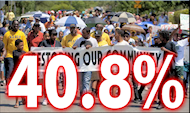
On Saturday, March 19th, at 12:00pm, the Kansas NAACP, the Topeka Center for Peace and Social Justice, Kansas Equality Coalition, the ACLU of Kansas and Western Missouri, Kansas National Organization for Women, and the Kansas League of Women Voters will stand together in an historic alliance to oppose the systematic dismantling of civil and equal rights protections in Kansas.

These organizations, their members, allies, and supporters, will meet at Monroe Elementary School in Topeka (the Brown Vs Board Historic site), and we will march to the Capitol Building. Put on your walking shoes and meet us at the Capitol!!!

Contacts:
Reverend Ben Scott, President, Topeka NAACP
785-266-5688 / naacptopeka1@att.net

Jim McCullough, Director, Topeka Center for Peace and Social Justice
785-232-4388 / topekacpj@aol.com

Thomas Witt, Chair, Kansas Equality Coalition
316-683-1706 / chair@kansasequalitycoalition.org

Holly Weatherford, Program Director, ACLU of Kansas and Western Missouri
816-756-3113 x 234 / hweatherford@aclukswmo.org

Kari Ann Rinker, State Coordinate, Kansas NOW
620-245-4904 / coordinator@ksnow.org

Ernestine Krehbiel, President, Kansas League of Women Voters
316-652-9229 / ekrehbiel@cox.net

Read more...

Sunday, February 27, 2011

Union Protests and Rallies make their way into Kansas


More than a thousand people rallied at the Kansas Statehouse on Saturday for a "Save the American Dream" rally on the south steps of the Statehouse. The rally was attended by Labor, and Advocacy, and Community organizations from around the State, all joining in solidarity to express support for organized labor.

This followed a demonstration inside the Capital last Thursday as the House passed HB2130. If it clears the Senate, the bill will eliminate a paycheck checkoff that allows workers to voluntarily have donations to their union's political action committee deducted directly from their wages. That protest drew nearly a hundred union workers to the Capital and gallery.

The Kansas State Conference of the NAACP stands in full support of the efforts of Organized Labor to maintain collective bargaining rights in Wisconsin and elsewhere. We believe that the right of workers to organize, to bargain as a group for fair wages and better working conditions, is in line with our best democratic traditions and should not be compromised. The organized Labor movement has afforded ordinary working class men and women the opportunity to fairly negotiate the true value of their goods and services. And at a time of pronounced fiscal uncertainties, now it not the time to start stripping away the rights or silencing the voices of everyday working people so as to protect and safeguard the interests of the wealthy and powerful.

In the late 90's, when the Wichita Branch of the NAACP was faced with serious financial challenges, it was organized labor that came forward and offered us meeting space and access to copies and fax machines so that we could rebuild our organization and continue to serve our community. Now, it is our turn to stand with you... And we do so Proudly.

Read more...

Monday, February 21, 2011

Kansas SB93 on Racial Profiling and the anatomy of a "Loophole"


For more than 8 years, local activists and Legislators in Wichita worked to craft a bill that would prohibit the practice of Racial Profiling in the State of Kansas. In 2006, Senate Bill 77, as introduced by then State Senator Donald Betts was passed and signed into law. But in the deliberation process, as the bill was worked through the legislature, language was included in the definition of Racial Profiling that community activists found onerous and unacceptable. The bill included a "Loophole" - language specifically designed to make an otherwise sensible bill legally unenforceable. The definition of Racial Profiling per current state statute in Kansas reads:
(d) "Racial Profiling" means the practice of a law enforcement officer or agency relying, as the sole factor, on race, ethnicity, national origin, gender or religious dress in selecting which individuals to subject to routine investigatory activities, or in deciding upon the scope and substance of law enforcement activity following the initial routine investigatory activity. Racial profiling does not include reliance on such criteria in combination with other identifying factors when the law enforcement officer or agency is seeking to apprehend a specific suspect whose race, ethnicity, national origin, gender or religious dress is part of the description of the suspect.

Local activists and members of the coalition of groups and organizations who came together to work for the passage of Racial Profiling legislation have been uniformly opposed to that language since its passage; and we have worked in each successive session to have the "Sole Factor" language stricken. The inclusion of that phrase, "as the sole factor" makes the statute virtually unenforceable, because all any Officer has to do in order to contest a charge of profiling is to proffer any additional reason, thought, or consideration. In fact, the only way, under existing statute, that you could clearly define a case of Racial Profiling would be if an Officer stopped you and when asked the reason for the stop, he or she would have to reply 'I stopped you because you're black'. Because the utterance of any other reasons or statements would technically clear them of the charge.

After years of deliberation and argument, two bills were introduced this session each with a revised definition of Racial Profiling, each without the "sole factor language" included. The two bills were recently consolidated and now SB82 has been incorporated into and will move forward as SB93. In the reconciliation of the two bills a NEW legal loophole was inserted to replace the former "sole factor" loophole. The newly proposed definition of Racial Profiling reads:
(d)    "Racial or other biased-based policing" means the unreasonable use of race, ethnicity, national origin, socio-economic status, gender or religion by a law enforcement officer in deciding to initiate an enforcement action. It is not biased racial or other biased-based policing when race, ethnicity, national origin, socio-economic status, gender or religion is used in combination with other identifying factors as part of a specific individual description to initiate an enforcement action

I was actually in the Senate chamber when Senator David Haley, one of the parties who has worked on this legislation from the very beginning, asked the question: "How do you define 'Unreasonable'?... and does this imply that there are "Reasonable" applications of racial or biased based policing?"

The response? - "Well that's something the Courts will have to decide"

Ladies and Gentlemen, THAT is a legal loophole. That is how they are deployed. Legal loopholes are used to thwart efforts to bring about fairness under law and to protect wrongdoers through the introduction of vague and subjective language that allows departments and courts to excuse bad behavior as simply matters of 'interpretation'.

"No Mr. Washington, you hadn't done anything wrong or illegal, and no there was no legitimate reason to stop you and search your vehicle, and we are terribly sorry about the professional embarrassment we caused you by having you sit out on the curb as we let our canine units climb through your car, and we're also sorry that we made you late for work... But, it is a very nice car, and you're a relatively young man, so under the circumstances, I don't think that's unreasonable..."
...

To my colleagues and friends in the legislature, particularly those who regularly read our blog and or our newsletter... With all due respect, it is insulting that we have to continuously repeat this same futile exercise. It would be better to have NO BILL AT ALL then to continue to foist hollow and vacuous bills that are as meaningless as they are unenforceable.

At the beginning of this most recent effort, Law Enforcement agencies stipulated the existence of Racial Profiling in Kansas. Our most recent study also confirms it. No one is contesting the fact that it is a real and determinable phenomena and that it occurs here in our State. But THIS language is carefully crafted to ensure that NO ONE is ever held accountable for it, and that is simply unacceptable.

Next, the bill will head to the House. As soon as the committee is assigned, we will post information here on the blog so that you can contact the members of the Committee and ask them to pass a Honest bill; one without gimmicks or loopholes, and one that specifically strikes the subjective qualifying term "unreasonable" from its definition.

Scan the QR Code for a mobile copy of SB93 - the Kansas Racial Profiling Act

Read more...

State President KMyles full testimony on HB2197 - Public Defenders

Chairman Colloton, Vice Chairman Kinzer, and members of the Committee on Corrections and Juvenile Justice,

My name is Kevin Myles and I am the President of the Kansas State Conference of the NAACP, representing more than 2,000 registered voters throughout the State of Kansas.

We are offering our qualified support to House Bill 2197. Our support is qualified because while we firmly support the intent of this bill to protect and safeguard the rights of criminal defendants, we do not believe the language is quite comprehensive enough to achieve this goal.

The language is section 1, parts A and B both speak to the rights of the Public Defender to withdraw from a case when they feel their caseload would preclude them from providing an adequate defense.

We wholeheartedly support any effort to ensure that all criminal defendants are afforded competent and adequate representation. We are therefore supportive of the language in Section 1 parts A and B in so far as it allows Defense Attorney’s who are unable to provide such a defense t o remove themselves so that other less burdened attorney’s may do so.

But while the bill clearly delineates the rights of public defenders, we believe it does not adequately speak to or protect the constitutionally guaranteed rights of defendants. We want to see the system address the issue of unmanageable caseloads. But we do NOT want to create a situation wherein defendants could find themselves unable to obtain representation because the caseloads in a given public defender’s office were too high.

The right to counsel is guaranteed to all citizens through the 6th amendment of the United States Constitution. But that right is diminished when Public Defenders are faced with large and unmanageable caseloads which prevent them from spending the necessary time it takes to provide an adequate defense. Allowing individual Defense Attorneys to remove themselves from a case solves only half of the problem. The larger and more pressing question is; How do we ensure that all defendants are allowed to exercise their right to counsel and to enjoy adequate representation when caseloads become excessive?

What we would ask of the Committee of Corrections and Juvenile Justice is that you amend this bill to strengthen the Public Defender and Indigent defense system by the provision of additional safeguards and resources.

We ask that you would amend this bill to provide guidelines for manageable caseloads, much as the American Bar Association did when it issued its guidelines that Attorneys should not handle more than 150 felony cases per year. We also ask that you stipulate that when caseloads are significantly higher than the guidelines you would set, that the State would allocate additional resources so as to ensure that all citizens were afforded the full measure of their rights under the constitution.

Respectfully,

Kevin Myles
President; Kansas State Conference of the NAACP
President; Wichita Branch NAACP

Read more...

Friday, February 18, 2011

Kansas HB2193 would change the definition of "At-Risk" students - Here's what that means to you!


House Bill 2193 would change the State’s definition of “At-Risk” and allow for the redistribution of scarce Title I Funds. Federal Title I Funds are allocated to the States and are intended to help school districts address the issues associated with urban poverty. They are distributed to the States based on the number of children within the districts who qualify for free or reduced lunches.

Title I funds are intended to compensate for the fact that children who grow up in poverty are far less likely to have an educational support system at home as parents who are struggling to provide basic necessities are often unable to spend much quality time with their children. Children who grow up in poverty are also far more likely to spend large amounts of time in poor quality daycare, a situation which is known to have a negative impact on a child's emotional health. Children who grow up in poverty also move more frequently and are far more likely to attend under-funded schools. And teenagers who live in poverty are significantly more likely to experiment with drugs, alcohol, and risky sexual behavior. Poor teens are also more likely to engage in unlawful acts, ranging from minor shoplifting to serious gang activity.

HB2193 would honor the intent of “At-Risk” funding only until the fourth grade. After the fourth grade, the bill would change the State’s definition of “At-Risk” to include any students who failed standardized tests. This would be a windfall for rural districts and districts without a significant number of poor or minority students, as they would be able to divert some of the federal dollars, that had been earmarked for combating the insidious effects of urban poverty, for use in their own facilities.

But a far greater concern is what this proposal could do to efforts to eliminate the academic achievement gap. This proposal, under the guise of distributing federal dollars to all students who need help, would directly tie school funding to the number of students who fail to meet proficiency standards on standardized tests. This legislation would de-incentivize efforts to eliminate the academic achievement gap by penalizing schools for improved outcomes. Why would districts continue to invest in improving minority student outcomes, if better test scores would lead to concomitant reductions in school funding?

The Kansas State Conference of NAACP Branches supports the original language and intent of Title I funding and we are fighting to defeat this bill.

Read more...

Thursday, February 10, 2011

State President K Myles full testimony against the proposed Kansas Voter ID Bill

Testimony regarding HB 2067 – Voter Photographic ID Requirements (February 9th, 2010)

Chairman Schwab, Vice Chairman Goico, and members of the Committee on Elections,

My name is Kevin Myles and I am the President of the Kansas State Conference of the NAACP, representing more than 2,000 registered voters throughout the State of Kansas.

We are here to voice our opposition to HB2067, the proposed Voter ID bill. To be clear, we are not opposed to efforts to ensure the integrity of our voting system in principle, we are opposed to the specific plans that the Secretary has put forth. You will hear testimony today regarding the cost of this measure, the fact that our current system has already proven secure, the fact that necessary changes and reforms to our current system could be handled administratively, and that the proposed consolidation of powers within the Secretary of State’s office is absolutely unwarranted. We will therefore direct our testimony to the issue of disenfranchisement, and how provisions in this current proposal would result in voter suppression.

This issue should be of grave concern to us all. For while we should be undoubtedly be concerned if even a single fraudulent vote is cast, we should be even more concerned if even a single legal voter is disenfranchised. And that is because voting is one of our most fundamental constitutional rights. No law, no tariff, and no ordinance should ever be imposed that would deprive any Legal, Law Abiding, American citizen of the franchise.

The Secretary's proposed bill requires that an Election Officer certify a person’s immigration status at the time of registration. Now that's not particularly onerous, but the language in Section 7, subparagraph L, parts 1 through 6; specifies that their status must be confirmed by submission of a physical drivers license, birth certificate, or passport, or by a photo‐copy of said documents. What this means is, if a group or organization such as the NAACP or the League of Women Voters wanted to set up a table to register people to vote at a fair or a community forum, as both organizations have done for more than 50 years, unless the unregistered prospective voters happened to have a photo copy of their license in their pockets, they could not be registered.

In 2008, the Wichita NAACP partnered with KDGS 93.9 Radio Station, Sunflower Community Action, Alpha Kappa Alpha Sorority, and Outback Steakhouse, to host a community Registration forum in a popular Wichita Park. We were joined in the park by Wichita Mayor Carl Brewer who even helped us register people to vote in that traditionally underserved area. We gathered more than 350 registrations in just a few short hours. But had this proposed bill been in effect at the time, ALL 350 LEGAL REGISTRATION APPLICATIONS WOULD HAVE BEEN REJECTED BY THE SECRETARY’S OFFICE.

Members of the Committee, please consider that there is NO additional information that could be gleaned from a photo copy of someone’s driver’s license that could not just as easily be obtained through a query of their driver’s license number, as is permissible under current statute. In fact, a folded and mailed photo copy of a drivers license, which could quite easily be forged or manufactured, could not itself serve as verification of citizenship. Instead, upon receipt of such a document, election officials would still have to verify a citizen’s voting credentials and citizenship through a query of their Drivers license number. Current statute allows for the submission of a Drivers License number with a Voter Registration application – but this proposed bill radically changes that process, and adds an obstacle for registration; one that provides NO net benefit in terms of information or ease of processing, but would instead virtually eliminate traditional get‐out‐the‐vote drives and door‐to‐door canvassing, and would authorize the outright rejection of registration applications from legal, law abiding, American citizens.

The intent of this newly included language becomes even more dubious when you consider that the bill also contains specific language that would ensure that other communities are not similarly disenfranchised. On page 18, in Section 7, subparagraph L, part 4; naturalized citizens would be allowed to submit the number of their certificate of naturalization without having to obtain and submit paper copies. Section 7, subparagraph L, part 6; allows Native Americans to submit their tribal enrollment number without having to obtain and mail in paper copies. – The use of a Document number is a uniform and common practice that facilitates on‐site registrations while still protecting people’s personal data ‐ But native born American citizens, low income persons who would typically be registered in a traditional get‐out‐the‐vote type drive or initiative will no longer be allowed to register using their driver’s license number as is currently permissible in EVERY STATE in the Nation. They will no longer be allowed to register at community forums or workshops after hearing and learning about the issues. This bill places an unnecessary bureaucratic obstacle in their path which would prevent on‐site registrations in most instances. Instead they will be required to go to Kinko’s to obtain paper copies of their personal documents just to prevent the Secretary’s Office from rejecting their Legal and Legitimate registrations.

On Monday, you heard testimony from our Secretary of State regarding the very foundation of our Nation, and I quote, "A constitutional republic rests on two foundations; one is the Constitution itself, the other is the trust of the citizenry that elections are free and that the will of the people is being conveyed securely through elections that are free from fraud." He went on to say that when “that trust begins to break down, the foundation of the republic erodes."

I would respectfully ask that we each reconsider that testimony today. For if the Secretary is to be believed, then one of the foundations of society is the trust of the citizenry that elections are FREE and THE WILL OF THE PEOPLE IS BEING CONVEYED.

But how are we to reconcile that foundational principle with the provisions in this bill that would allow for the rejection of Voter Registration applications; not for fraud, not for ineligibility, but for failure to comply with an newly created administrative hurdle; one that solves NO problems, one that serves no necessary purpose, and one that provides no additional information that is not already provided under current statute? How are we to trust that our elections are FREE and representative of the WILL OF THE PEOPLE, when this body is being asked to consider a bill whose newly inserted language would inhibit the legal and legitimate registration of American Citizens, who by circumstance find themselves poor or low income, through the unnecessary prohibition of traditional get‐out‐the‐vote activities?

We would also ask that you consider that the bill would require that ALL voters show their driver’s license or photo ID at their polling place. But, it does not instruct the election workers to examine the documents to determine citizenship or eligibility. Rather, it instructs election officials to compare the name and address as recorded on the photo ID with the information recorded in the Voter Registration database. And that if there is a discrepancy between their driver's license and the information contained in the Voter Registration records (such as a change of address, or change of last name due to marriage), that legally registered voter would be given only a provisional ballot. Their only other alternative, after having stood in line and waiting on a Tuesday afternoon, only to find out their status was being challenged by an administrative database discrepancy, would be to go home, grab a utility bill, go back to the polling station and start in the line all over again. Many people finding themselves in a similar situation would simply go back to work, and their votes would be lost.

Chairman Schwab and members of the committee, we ask that you seriously consider the fact that while these clear and foreseeable outcomes may be in fact be unintended, they are never‐the‐less very well known and well documented Voter Suppression tactics. The States of Colorado, Ohio, Nevada, and Florida have all faced legal or administrative action after implementing procedures and policies that created needless technical barriers to voter registrations as this bill would do. And the States of Ohio, Florida, and Wisconsin, have all faced legal action as a result of “no match – no vote” policies where citizens ballots were challenged as a result of typographical or database discrepancies (such as address changes, married names, and/or hyphenated names) as this bill would allow.

When you consider the costs of this proposal: When you consider the fact that the Secretary testified last week concerning 221 cases of voter fraud, yet a review of his submitted testimony shows that fewer than 5 of those cases could have been prevented through the implementation of this bill: When you consider the fact that the language in this bill will create unnecessary obstacles for legal and law‐abiding citizens and may prevent otherwise qualified voters from exercising their constitutional right to participate in our elections: we ask you to reject this bill.

Respectfully,
Kevin Myles
President; Kansas State Conference of NAACP Branches

Download a PDF Copy


Scan for Mobile Copy


Read more...

Sunday, February 6, 2011

Governor Brownback issues an ERO removing the independence of the Kansas Human Rights Commission


EROs (Executive Reorganization Orders) are provided for in the Kansas Constitution. They enable a Governor to transfer, abolish, consolidate, or coordinate agencies and functions within the executive branch of state government. An ERO becomes effective July 1 following its transmittal to the Legislature, unless within 60 calendar days either the Senate or the House adopts a resolution disapproving the ERO. After an ERO takes effect, it becomes like statute and the Legislature then has the option of amending or repealing an ERO in the same way it would amend any other legislation.

This year, in response to the looming budget issues, Governor Sam Brownback issued a number of ERO's that would eliminate or consolidate State Agencies. While no one could argue that a $550,000,000.00 dollar shortfall would not require significant reorganization, one ERO in particular will have a negative impact on the community that outweighs any potential cost savings.

Governor Brownback issued an ERO that eliminating several positions at the Kansas Human Rights Commission, and moving their investigations under the Attorney General's Office. While the move is planned to save $200,000.00, the real cost to citizens is the loss of the ONLY independent investigative body with statutory enforcement power in the State of Kansas. Now, as a consequence, persons wishing to file a complaint against a State Agency would have to file those complaints with the agency's Attorney of Record! This will remove any independent investigative authority, which is provided by statute, and will replace it with a system where the State will investigate and police itself.

We, as a body, oppose this ERO and we call upon Governor Brownback to rescind it, or the Legislature to block it through passage of a resolution, or to repeal it through the Legislative process.

I was recently copied in on a letter written by retired KHRC Chairman Emeritus James Butler regarding this particular ERO. I am posting it here with his permission...


Dear Senator Reitz:

I served the State of Kansas for many years as Chairman and Commissioner to the Kansas Human Rights Commission, from 1979 to 2005, when I retired as the Chairman. During my tenure, I served under five governors: former Governors John Carlin, Mike Hayden, Joan Finney, Bill Graves and Kathleen Sebelius.

I was informed recently that Governor Brownback made a proposal for the Kansas Human Rights Commission's fiscal year 2012 budget to transfer the Kansas Human Rights Commission (KHRC) to the Kansas Attorney General's office for operation. I was shocked when I read the proposal and I still am because the office of Attorney General is an elected office and, for the first time in the history of the Commission, the Commission would be under the direction of an elected state office and political influence, subject to whatever bias may exist at any particular time. This move would eliminate 58 years of independent decision making in the area of civil rights in the State of Kansas.

The history of the KHRC shows that this is a radical move. Since its establishment in 1953 and through the years, the Kansas Act Against Discrimination through K.S.A. 44-1003 has mandated that a commission direct and govern the KHRC, and not the governor, or any elective office, which might be subject to political influence and conflicts of interest in an area which could give rise to such issues. The Kansas Act Against Discrimination (KAAD) sets up a system of checks and balances in the selection of each Commissioner to establish the independence of the decision making process of the KHRC. The KAAD dictates how each memeber of the Commission is chosen or appointed by the Governor (the executive branch), but that selection must be confirmed by the Senate (the legislative branch). K.S.A. 44-1003 mandates that no more than four (4) members of the commission can be from the same political party and this is another recognition that political influence is an inherent issue in the decision making process of the KHRC. Governor Brownback's recommendation eliminates the Commission in favor of the Attorney General or his designee acting as the final decision maker in civil rights cases, which will be a first in Kansas government.

The rationale for the recommendation is saving money and efficiency in government, but the KHRC has been the most efficient and cost effective operation in Kansas government for the past few years. The Commission has been very prudent in spending money, not having excessive travel to national conferences and organizations, little on-site travel relying on telephonic, email and correspondence to obtain information from complainants and businesses. If the object is to save $231,000, there are other ways to save that amount of money without radically changing the structure of the KHRC. Furthermore, nothing is gained by moving into the Attorney General's office because the KHRC already has subpoena enforcement powers and an attorney who handles the legal issues.

This move would result in nullification of both the Commission's independence and its effectiveness in the enforcement of civil rights in the State of Kansas.

I strongly urge you to oppose this ill-conceived proposal and urge others under your influence to oppose same. Thank you.

James E. Butler
Chairman Emeritus, Retired, KHRC

Read more...

Saturday, January 22, 2011

Kansas Secretary of State Kobach responds to arguments against Voter ID Bill; calls them "ridiculous"


Last Wednesday, members of the Kansas Voter Coalition traveled to Topeka to speak out against the proposed Voter ID bill. Speakers included Kari Ann Rinker from the Kansas Chapter of the National Organization for Women, Ernestine Kreihbel - President of the Kansas League of Women Voters,  Holly Weatherford from the Kansas ACLU, and Kevin Myles from the Kansas State NAACP.

During the press conference, we (NAACP) raised the issue of Voter Caging and how that might be facilitated by this bill. Caging is an illegal voter suppression tactic that involves the challenging of voter qualifications on the basis of address and database discrepancies.

This is hardly a stretch, considering in December of 2007, then Chairman of the Kansas Republican Party, Kris Kobach sent out an email to his supporters that was forwarded to some members of the press and reported in more than a dozen online publications. In this email, it was reported that then Party Chairman Kobach bragged that, "Our voter identification system is up and running giving us the capability to effectively mobilize voters and turn them out to vote on Election Day. To date, the Kansas GOP has identified and caged more voters in the last 11 months than the previous two years!"

Secretary Kobach responded to reports of the Press Conference by saying that opponents should 'read the bill' and that our allegations were ridiculous.

To be clear, we are not opposed to efforts to ensure the integrity of our voting system in principle, we are opposed to the specific plans that the Secretary has put forth. In brief, I will highlight a few of the major issues with this proposal, then contrast the proposal against some simple low cost reforms that would accomplish the same goal.

  • The Current System is secure: According to Secretary Kobach, there have been 80 reports of voter fraud in Kansas over the last 10 years. But of those 80 reports, only 3 have been successfully prosecuted. That means that more than 96% of the cases reported in Kansas were investigated and deemed to be unfounded. In fact, there has been only 1 successful prosecution in the last 6 years and that person wasn't even an immigrant. In fact, the previous two Secretaries of State, one Democrat and one Republican, have each stated publicly that voter fraud is not a real issue in Kansas. 
  • Photo ID laws are ineffective: Photo ID laws are designed to protect against one very specific type of voter fraud, and that's Voter Impersonation. You have people produce a photo ID so that the officials can visually verify that the person is who they say they are and is not an identity thief. Kansas has NEVER prosecuted a voter impersonation case. The odds against an illegal immigrant coming into the country, then assuming some else's identity, then going to polls to vote under their name (after having mastered their signature), and risking arrest and prosecution if the person they're impersonating has already voted, are astronomical. The most common form of voter fraud is when a person votes multiple times. BUT, If a person were to try and vote multiple times, there is NOTHING in this current proposal that would change or strengthen any part of our system that would detect or preclude that type of fraud. In fact, we would still be reliant on the safeguards currently in place to deal with that scenario. Safeguards that have already proven secure - as evidenced by that fact that there is no plan to change them. All this bill would do is increase the penalties. 
  • The Cost: The Secretary has not publicly come out and discussed the costs of his proposal. But the State of Missouri has a law on it's books that is similar to what we are facing and I have obtained a copy of their fiscal note. Implementation cost the State of Missouri nearly 6 million dollars in the first year with costs near 4 million for each of the next two years! CLICK HERE to download a copy so you can see it for yourself. At a time when we have a $550,000,000 budget deficit, the Secretary would have us spend upwards of ten million dollars to strengthen a system that has already proved secure and to protect it against a nearly impossible hypothetical situation.
  • Voter Suppression/Reduction in Voter Turnout: This one should concern people the most. For while we should be concerned if even a single fraudulent vote is cast, we should be even more concerned if even a single legal voter is disenfranchised. And that is because voting is considered one of our most fundamental constitutional rights. No law, no tariff, and no ordinance should ever be imposed that would deprive any American citizen of the franchise. But in all of the states where they have Voter ID bills on the books, they each experience reductions in Voter turn-out. Why? Consider the provisions in this proposed bill. Door to door canvasing and traditional get-out-the-vote activities, practices which date back more than a hundred years, would be virtually eliminated. The Secretary's proposed bill requires that an Election Officer certify a persons immigration status at the time of registration. Now that's not particularly onerous, but the trick is the bill specifies that their status must be confirmed by submission of the actual drivers license (in person) or by a photo-copy of their license. Now that same information could be obtained if that person submitted the driver license number - but that would not be allowed under the Secretary's proposal. The language in Section 7, KSA 2010, Supp. 25-2309 subparagraphs L through Q (new additions to the statute) would disallow the submission of a driver's license number and would require a photo copy of the card.  Which would mean that if a group or organization wanted to set up a table to register people to vote at a fair or a community forum, the prospective voters would have to have brought a photo copy of their license with them or they couldn't be registered!  Also consider that the bill states that ALL voters will now show their drivers license at the polling place, and that if their is a discrepancy between their driver's license and the information contained in the Voter Registration records (such as an address change), you would only be able to vote on a provisional ballot unless you had a copy of your utility bill there with you. In the States with these laws on the books, they find that many people, after standing in line to vote, then finding out that they can't, simply can't or don't go home and come back to stand in line again with more paperwork and documentation. Their votes are just lost. BTW - the act of disqualifying voters based technical discrepancies such as address changes is known as caging, which is technically illegal, but would be permissible under this proposal.

Now if the goal is truly to ensure that only legally registered voters are allowed to participate in our elections, we could easily accomplish that goal without spending $10,000,000.00, without disenfranchising anyone, and without consenting to the power-grab requested by the Secretary of State who has requested new prosecution powers in his nearly 40 page bill. If this is really about securing our elections, consider these easy alternatives:

  • The State could require the inclusion of a full drivers license number on all registration applications, and require voters to produce their voter registration cards, which are produced and distributed by the SOS after verifying immigration status, at the polls.(no additional costs, no caging, and no reduction in registrations or turn-out)
  • The State could enforce the National Voter Registration Act and register people when the receive their Driver Licenses, then there would be no discrepancies between databases - no caging, and no loss of turn out.

What truly is ridiculous is that we are being asked to spend millions of tax-payer dollars, at a time when we are operating with a $550,000,000 budget shortfall, to implement a voter impersonation prevention program, despite the fact that we've never actually prosecuted anybody for voter impersonation. And that we are being asked to simultaneously consolidate brand new powers into the Secretary of State's Office despite the fact that we have no shortage of Attorneys in Topeka and that there is no reason why the Attorney General's office could not continue to perform its statutory role and function without the assistance of Mr. Kobach. And it is also ridiculous that the bill would hamper voter canvassing and get out the vote activities, and result in some legally registered voters being offered provisional ballots or being turned away at the polls, yet the Secretary and his supporters are incredulous when presented with the obvious implications of the language that they are publicly supporting. And it is truly ridiculous that we could easily secure our elections without the cost or risk of disenfranchising anyone yet the Secretary and his supporters continue the ruse, claiming that this bloated 40 page, multi-million dollar monstrosity is in our best interest.

Read more...

Video: KMyles and Sec of State Blowbach Voter ID debate Pt.2


Read more...

Sunday, January 2, 2011

The Kansas Voter Coalition to hold Press Conference at the State Capitol on Voter ID

Scan the graphic with your smartphone to add the event to your calendar

The Voter Coalition will hold a Press Conference to voice our opposition and provide information concerning the proposed Voter ID bill.

The Kansas Voter Coalition is made up of the Kansas State NAACP, the Kansas State League of Women Voters, the Kansas Chapter of the National Organization for Women, the Kansas Equality Coalition, the Kansas chapter of the ACLU, the Wichita chapter of Church Women United, the Sedgwick County Council of Elders, the Peace and Social Justice Center, and YOU...

The Kansas Voter Coalition has come together in opposition to the proposed Voter ID Legislation being offered by Secretary of State Kobach. We oppose this legislation on several grounds.

First, of the nearly 10,000,000 votes cast in the last six years throughout the State of Kansas, there have been only six reported cases of Voter Fraud and only 1 was successfully prosecuted. You statistically have a better chance of being stricken twice by lightning than of encountering an genuine act of Voter Fraud in Kansas. What does that mean? It means our system IS WORKING and there is NO concrete evidence to suggest otherwise.

Second, The Indiana Supreme Court has ruled, and Secretary Kobach has suggested, that the only way a Voter ID bill can pass muster, is if the State is willing to provide the ID's free of charge to those who can not afford one. This would require the creation of a new bureaucracy to manage the distribution of Voter ID cards to combat a problem that can not empirically be shown to even exist. As a State we have a $450,000,000 shortfall, so why in the world would we create a new bureaucracy with new salaries and FTE's to monitor and distribute ID cards that the State will foot the bill for, in perpetuity?

Third, there is a hidden government mandate. Each year, hundreds of Seniors reach a point in their lives where they may elect to stop driving. This bill states that even if a Senior decides to stop driving and no longer needs to maintain a current ID, they will be mandated to purchase one if they intend to exercise their Constitutionally guaranteed rights. The only exception would be if they could prove to the new bureaucracy that it would pose a financial hardship; in which case the State would foot the bill.

and lastly but perhaps most profoundly, this bill; a solution to problem whose existence can NOT be demonstrated empirically, would have the likely impact of reducing voter turnout among legal registered voters. In fact recent studies by Brown University and the Brennan center have clearly provided the type of empirical data that this bills proponents lack. In States that have Voter ID Bills on the books, there is a demonstrable reduction in Voter turnout, and that reduction is most profound in the African American community and among Seniors.

Join us as we call on our elected officials to just say NO. We just don't need Secretary Kobach using tax dollars to radically experiment with our electoral system, in an effort to solve a problem that can not be shown to exist.

If you would like to become a part of this effort, you can begin by joining with us on January 19th at the State Capitol Building!

What: The Kansas Voter Coalition hosts a Press Conference to discuss our opposition to the proposed Voter ID Bill
When: January 19th 11:30am - 1:00pm
Where: Room 144 South in the State Capitol Building
Who: This event is open to the public.

Read more...

Thursday, December 23, 2010

The Kansas State NAACP files employment discrimination complaint against the City of Nickerson Kansas

The Kansas State Conference of the NAACP has sent a formal request that an investigation be conducted into the hiring and employment practices of the City council and Mayor of Nickerson Kansas. The complaint stems from a case filed with the Hutchison Branch of the NAACP by April Addis, the former Police Chief of Nickerson Kansas.

Through our investigation we have discovered what we believe to be a clear pattern and practice of racial discrimination. We affirm Chief Addis' assertion that she was directed to fire a newly hired and qualified Officer (Officer Bembry) because of his race. Further, we believe that the firing of Officer Bembry solely on the basis of his race was a clear violation of Title VII of the Civil Rights act.

We attempted to address this case through the Mayor's office, who referred us to the City's Attorney. We met with the City Attorney and again relayed our concerns, and he stated he would have to go back and talk to the Mayor. We waited a reasonable amount of time to allow the City to effectively address the issue, but no direct action was taken.

The case has now been filed with the EEOC.

Read more...

Monday, November 15, 2010

The 2011 Kansas State Conference Legislative Agenda


The 2011 Kansas State Conference Legislative Agenda:

CINC Code – We support changes to the Child in Need of Care (CINC) code that would extend 'Interested Party' status to family and kin. Currently Interested Party status is extended to the Foster parents and is available to the Grandparents only if specifically requested in writing.

Kinship Care – We support changes to the definition of kin that would allow the parents to designate persons to be regarded as kin and to expand family notifications in child welfare and child in need of care cases to family members and kin as designated by the parents.

Racial Profiling – We support revising the definition of Racial Profiling to include pretext stops as an act of racial profiling and to prohibit the use of race in determining which citizens would be subjected to routine investigatory activities except in cases where race is a part of a description of a person the Police Department is seeking to question or apprehend.

Kansas Open Records Act – The Kansas Open Records Act currently has more than 40 exemptions. These exemptions make little distinction between personal and personnel information. We support revisions to the Kansas Open Records Act to eliminate excessive exemptions and to properly distinguish between Personal information and personnel information

Wrongful Termination – We support legislation that would require employers to provide written notification to terminated employees of the reason for their termination

Public Defenders – We support legislation that would cap the number of felony cases that could be handled by a single public defender at 150 as recommended by the American Bar Association. When case loads are in excess of 150, additional funding should be provided for the hiring of additional public defenders

Ballot Initiatives – We are opposed to any proposed constitutional amendment that would allow ballot initiatives

Juvenile Justice/Child Welfare – Currently, juveniles in the child welfare system can not take advantage of services that are available within the Juvenile Justice system and vice versa. A child in the child welfare system would have to be placed in the Juvenile Justice system in order to qualify for those services, and similarly, a child in the Juvenile Justice system would have to be placed in the child welfare system in order to qualify for those services. We support legislation that would make youth services portable and would eliminate the barriers to providing services across populations.

Officer Discretion – KSA 38-2330 the revised Kansas Juvenile Justice code mandates that any time a Juvenile is taken into custody by a Law Enforcement Officer, they must be taken without unnecessary delay to an intake facility. The effect of this statute is that it eliminates the discretion of Officers to release youth to their parents in the event of minor offenses or issues that the Officer does not see as rising to the level of requiring an intake into the Juvenile Justice system. We support changes in the Kansas Juvenile Justice Code to restore the discretion of Officers to determine whether or not youth should be arrested and taken into the system

Standards for Mandatory Reporters – We support policies and/or legislation that would develop and institute uniform standards for mandatory reporters in Child Welfare/CINC cases

Voter ID – We oppose any bills or amendments that would require registered voters to produce or purchase Government Issued Photo ID to vote

Read more...

Saturday, August 28, 2010

Charges filed with the Justice Department concerning the treatment of inmates at ElDorado State Correctional Facility


The Kansas State NAACP has filed formal charges with the US Department of Justice concerning the treatment of inmates within the ElDorado Correctional facility. The charges are based on an incident that occurred in July where officers can be seen on camera using an inmates head to open a door, then dragging him to a blind-spot where a more severe altercation took place.

The case is now being reviewed in the Criminal and Special Litigation Sections both as an individual case and as a possible indicator of a more systemic problem. We will keep you all posted on the progress of the case here on the blog...

Read more...

Friday, August 27, 2010

Allegations of Racial Profiling surface in Junction City Kansas

Yesterday, we received a racial profiling complaint from a woman named Andrea Hall. Mrs. Hall is the wife of a deployed soldier who was driving her car in the Junction City area when she was pulled over by an Officer for speeding. Mrs. Jones has provided the details of the incident in writing and has requested that we make it public.

While sitting at the traffic light of the Grant Avenue and Washington Road intersection, I, Andrea S. Hall, heard a loud thumping on my trunk. Looking out of the rear-view mirror, I noticed a police officer proceeding towards my driver-side door. Disturbed and perplexed by this, I lowered my window, as the officer furiously yelled, “When we get through this traffic light, I want you to PULL OVER into that parking lot (pointing at the parking lot of a liquor store adjacent to the traffic light)!!!” Despite my apprehensiveness of his demeanor and tone, I managed to say, “Ok.”

After arriving and parking in the aforementioned parking lot, the officer came back to my driver’s side window, just as irate as before, yelling, “Is there any reason why you’re speeding?!!”. I replied, “Well, I was sitting at the traffic light so…” Interrupting, the officer said, “Just give me your license and registration.” I nervously fumbled for the requested items, wondering why this officer was so upset. Once I handed him the items, he returned to the patrol truck and he and another officer (who was also in the same patrol truck) interacted for about 6 to 7 minutes. At this point, the other officer came to my car to serve me the traffic citation, asking me to sign it. Noticing that they had written a heavy “N” on the citation, in order to indicate my ethnicity, I said, “What’s this?” Completely disregarding my question, the officer said, “Just sign it. It doesn’t mean that you did it or not.” I scribbled over the entire signature area, now upset and offended by their conduct, but not wanting to get into a debate with the officer. I waited for him to tear the ticket, and then I pulled off.

I called the Junction City Municipal Court and when the clerk answered the phone, I said, “What is the protocol for indicating race and ethnicity, here, in Junction City because when I was stopped by a couple of your officers they’ve written a heavy “N” on the citation for my ethnicity.” Ironically, this clerk also seemed irritated, as she rudely responded, “M’am, we use “N” for Non-Hispanic and “H” for Hispanic. Are you Hispanic?” I said, “Well, no, but if that is all Junction City can see, Hispanic and Non-Hispanic, that’s racial profiling in itself. How would he have really known that anyway? That makes no sense, and I don’t believe that you guys only have two abbreviations to use for race.” She said, “Well, it is M’am, have a nice day.” She then hung up the phone.

At that time, I resolved that I would simply go to court and speak with the judge about the matter. So, on Tuesday, August 10, 2010, I went to the Junction City Municipal Courthouse. I called attorney Steve Rosel (who since then, has committed to supporting me with this case), along the way, discerning that I would need some legal advice and support. Once I arrived to the clerk’s desk, she asked me if I just wanted to pay the ticket. I told her that I was actually there to speak with the judge about the citation, due to the officer’s misconduct. I then showed her the ticket through the glass window, asking her to look closely at what the officer had written for my ethnicity. The clerk said, “What’s the problem?” I then explained to her that I did not believe that Junction City would find it acceptable to use the letter “N” for an African-American’s race. I then said as a matter of fact, I want to hear what the judge has to say, because I was repulsed and very offended. She said, “Well, I don’t know what he’s going to say, but you can talk with him.” I said, “Well, M’am, when I called and spoke to your office, one of you guys told me you ‘only use ‘N’ for Non-Hispanic and ‘H’ for Hispanic. I beg to differ, and I will tell him that. In fact…” (Pausing to ask a Caucasian male (service member) for his traffic citation, who had just entered the lobby, I looked at his citation and showed the clerk (again through the glass window) that his traffic citation had the letter “W” annotated for his ethnicity, which is obviously because he is white. Wanting to make sure that she and I both understood that the previous explanation for the “N” on my ticket was preposterous, I then asked an African-American male for his traffic citation, and after looking at it, I showed her that even he had the letter “B” for Black. Speechless, the clerk said, “M’am, just have a seat and I’ll get you on back.”

Joining the other citizens waiting to appear before the judge, I waited patiently for my time to explain this to the judge. When it was finally my turn, the judge stated that I was cited for speeding, and asked me what was my intentions for coming to court that day. I began to explain to him all of the aforementioned information, but was interrupted by the courtroom attorney, who said that was not the time to explain the situation because it was not a trial. I said, “Well, I just want to know how the judge feels about his officers writing the letter “N” for an African-American’s ethnicity.” The judge (and the other court officials) chuckled and said, “M’am, what do you want to do? Do you want to pay the ticket or contest it? I’ll hear what you have to say in a continuance, but the attorney’s right, we can’t go into discussion about this right now. I will not proceed to try to explain what the city has done, without the officer being here. So, do you want a continuance?” I said, “Yes.” After explaining a few other legalities to me, he then set my court date for September 29, 2010, at 6:00 p.m. I thanked them and exited the courtroom.
Mrs. Jones' case is now being filed with the Kansas Human Rights Commission (the agency with the statutory authority to investigate profiling cases and request relief). We will be attending the hearing with Mrs. Jones and I will keep you all posted here on the blog...

Read more...

Tuesday, August 17, 2010

Save the Date: NAACP Chair Roslyn Brock to address the Wichita NAACP Legacy Awards Banquet 10-30-10


On October 30th, NAACP National Chairman Roslyn McCallister Brock will address the Wichita Branch NAACP's 90th Anniversary Legacy Awards Banquet. This is the first time a sitting NAACP Chairman has visited our city in the 90 year history of the Branch.

Roslyn M. Brock made history in February 2010 when she became the youngest ever and fourth woman to serve as Chairman of the National Board of Directors.

Over the past twenty five years, Brock has served the NAACP in several leadership roles. She is a Diamond Life Member of NAACP and joined the Association as a freshman at Virginia Union University where she was elected President of the Youth and College Division from the Commonwealth of Virginia. One year later, she was elected as a Youth Board Member from Region 7 - representing the District of Columbia, Maryland and the Commonwealth of Virginia. During her tenure as a Youth Board Member and Vice Chairman of the NAACP Board Health Committee, Brock led the policy debate to recognize access to quality health care as a civil rights issue that resulted in the National Board's ratification and inclusion of a Health Committee as a Standing Committee in its Constitution.

In 1989, under the leadership of Rev. Dr. Benjamin Lawson Hooks, Brock wrote her Master's Thesis on "Developing a NAACP Health Outreach Program for Minorities." Brock is a skilled grant writer and has secured more than $2.7 million dollars in grants since 1991 for NAACP programs that initiated the Health Symposiums held annually at NAACP National Conventions; publication of more than 200,000 copies of "HIV/AIDS and You" educational materials distributed to NAACP Units; research and media work associated with documenting the history of the NAACP; support for ACT-SO and the NAACP Law Fellows programs; and commissioned the 2007 NAACP Perceptions Survey just to name a few.

In 1999, Brock was appointed Chair of the Board Convention Planning Committee. In this role, she led the Committee to institute fiscal policies that resulted in the Convention becoming a profit center for the Association with average net revenues of $1 million dollars a year.

In 2005, Brock created the Leadership 500 Summit with several other young adult members of the NAACP. The Summit's goal is to recruit, train and retain a new generation of civil rights leaders aged 30 - 50 to the NAACP. Since its inception, Leadership 500 has contributed more than $650,000 to the NAACP National Treasury to support 2009 Centennial activities.

As Chairman of the Board Centennial Committee, Brock provides oversight for publication of Centennial calendars and paraphernalia; commission of Centennial artwork; and creation of the Centennial logo and theme for marketing and public relations.

Brock is member of the Board of Trustees for the Catholic Health Association of the United States of America and the NAACP Special Contributions Fund Board of Trustees. She's served on the boards of community mental health; family and children's services; senior services and faith based community ministries. She's also a member of several professional and civic organizations including the American Public Health Association; American College of Health Services Executives; American Hospital Association's Disparities in Healthcare Task group; Association of Healthcare Philanthropy; Alpha Kappa Alpha Sorority, Inc., and The LINKS, Inc.

A recipient of numerous healthcare, community service and leadership awards, Brock's leadership skills have been recognized by several national publications and organizations. In April 2008, Brock participated in the United States Department of Defense's 75th Joint Civilian Orientation Conference (JCOC) reserved for American leaders interested in expanding their knowledge of the military and national defense. She toured U.S. Southern Command, responsible for providing contingency planning, operations and security cooperation for Central and South America, the Caribbean, Cuba and the Bahamas, and their territorial waters.

She was a guest lecturer on "Alleviating Global Poverty" in Rome, Italy at the 2007 Martin Luther King, Jr. Conflict Resolution Conference co-sponsored by the Lott Carey Foreign Missions and the Baptist Union of Italy.

From 2003-2005, Brock served as a Young Leaders Fellow for the National Committee on U.S. - China Relations to build cross-cultural understanding and professional networks with young Chinese leaders while exploring substantive issues and developing enduring friendships.

Other highlights include: Wrote the Foreword for the 2008 Edition of Who's Who Among African-Americans Directory; Featured in December 2007 Forbes Magazine article on Diversity and Economic Parity for African Americans; Recipient of the Network Journal's "40 Under Forty Achievement Award"; Martin Luther King, Jr. Medal for Human Rights, the George Washington University; Outstanding Alumna, Virginia Union University; Honorary Chairperson, National Black Family Summit; Ebony magazine's "Future Leader Award"; and Good Housekeeping's "100 Young Women of Promise."

Brock is employed as Vice President, Advocacy and Government Relations for Bon Secours Health System, Inc., in Marriottsville, Maryland. Prior to working at Bon Secours, Brock worked 10 years in Health Programs at the W. K. Kellogg Foundation in Battle Creek, Michigan.

She graduated magna cum laude from Virginia Union University; earned a master's degree in health services administration from George Washington University, an MBA from the Kellogg School of Management at Northwestern University and a Master of Divinity degree from the Samuel DeWitt Proctor Theology at Virginia Union University.

Brock's goal in life is embodied in an African proverb "Care more than others think is wise, Risk more than others think is safe, Dream more than others think is practical and Expect more than others think is possible."

Read more...

Friday, August 13, 2010

"...if you can not afford an attorney, one will be provided for you"

The right to remain silent and the right to an attorney are guaranteed to all citizens in the 5th and 6th amendments of the constitution. In 1963, Ernesto Miranda was arrested and interrogated, and during that interrogation he confessed to the commission of a crime. Upon review, the Supreme Court ruled that in order for his statements to be admissible, he had to be aware of his rights under the 5th and 6th amendments, and he had to make a knowing, intelligent, and voluntary waiver of those rights. His first conviction was thrown out, and since then the "Miranda Warning" has an integral part of our system of our criminal justice system.

But despite its ubiquity, buried within the Miranda warning is a concept that we mistakenly take for granted: That we are all guaranteed a right to counsel. That guarantee is rooted in our Adversarial system of jurisprudence which presupposes that in any criminal proceeding, both the plaintiff and the defendant should be afforded equal access to the courts and each allowed to present their most vigorous and spirited argument. It is through this process of reasoned argument between two equal platforms that we aspire to arrive at the truth.

That is the noble system we've drafted, but is that the system we have?

The reality is that in counties all across the nation, Public Defenders offices find themselves dramatically under-staffed and under-funded compared to their colleagues in local District Attorney's offices and private firms. This is not a bureaucratic or budgetary problem. These disparities challenge the integrity of our criminal justice system. Chronic under-funding contributes to high turnover rates, which result in Public Defenders offices disproportionately relying upon recent college graduates who lack real world trial experience. Chronic under-staffing results in Public Defenders being forced to manage impossible caseloads, significantly limiting the amount of time attorneys can spend reviewing any given case or preparing effective defenses. The cumulative outcome of these structural inequities is that poor and largely minority defendants, who are constitutionally guaranteed a right of equal participation and access to our adversarial system, too often enter courtrooms with inadequate, inexperienced, and or under-prepared counsel.

Right here, in the fair city of Wichita, attorneys in our Public Defenders office are each managing an average of almost 250 cases per year. And with nearly 4,800 annual cases, they are staffed with only ONE investigator! That is more than a travesty, that is a rolling civil rights violation designed into the very structure of the system; a system in drastic need of reform. The Kansas State Conference of the NAACP will be lobbying for changes to the system in the upcoming legislative session. We'll post details on this initiative here on the blog.

Read more...

Saturday, June 12, 2010

NAACP supports legislation to help States reduce prison populations


THE ISSUE:
The United States is the world's leader in incarceration with 2.3 million people currently in the nation's prisons or jails -- a 500% increase over the past thirty years. These trends have resulted in prison overcrowding and state governments being overwhelmed by the burden of funding a rapidly expanding penal system, despite increasing evidence that large-scale incarceration is not the most effective means of achieving public safety. This over-reliance on incarceration has also had a disproportionately serious impact on communities of color: 57% of incarcerated inmates are racial or ethnic minorities and 88% of inmates are male. Specifically, as of mid-year 2009, whites represented 42.5% of all incarcerated inmates; African Americans, 39.2%; and Hispanics, 16.2%. These percents have remained nearly stable since midyear 2000. Furthermore, prisons aren't the only area within the criminal justice system that has seen a huge growth over the past three decades. Our society's increasing over-reliance on the criminal justice system is even more apparent when you add in the number of Americans on parole or probation: one in 31 adults in America is in prison or jail, or on probation or parole. Twenty-five years ago, the rate was 1 in 77.

In addition to the extreme human toll this is taking on our Nation, the financial costs are staggering: The National Association of State Budget Officers estimates that states spent a record $51.7 billion on corrections in FY2008, or 1 in every 15 general fund dollars. Adding local, federal and other funding brings the national correctional spending total to $68 billion. This is money that cannot be spent on education, health, transportation, or other projects that benefit society as a whole.

Clearly, we as a nation need to take some new approaches to effectively reduce the number of people we put into prison each year. We have found, however, is that incarceration reduction programs that are very successful in one state are sometimes much less so in another. The only true common factor in all 50 states right now is that they are all struggling under the weight of enormous burdens in terms of human as well as monetary resources as a result of a dysfunctional criminal justice system.

To help address the problem, Congressmen Adam Schiff (CA) and Dan Lungren (CA), along with Senators Sheldon Whitehouse (RI) and John Cornyn (TX) have introduced H.R. 4080 / S. 2772, the Criminal Justice Reinvestment Act. This legislation devotes grant funding for intensive analysis of criminal justice data, policies, and the cost-effectiveness of current spending on corrections, in order to develop data - driven policy options that can address this. The bill then provides resources for the implementation of solutions and for reinvesting averted prison costs to bolster such initiatives. The NAACP strongly supports H.R. 4080 / S. 2772, and urges its immediate enactment.

This is of particular importance here in Kansas where the Legislature's flat funding of alternatives to incarceration programs may lead to significant cuts in services and increases in recidivism. This is because while the funding for such programs remains flat, the number of people incarcerated who would qualify for these programs has increased. This is further compounded by the fact that the lagging job market makes it increasingly difficult to find stable employment for former inmates, so those who are in the programs tend to stay longer. Without adequate funding, many evidence based programs will either reduce the number of clients they serve (leading to increases in the prison and jail populations) or scale back the services and supervision they provide, which evidence suggests would lead to increased rates of recidivism.

Read more...

Thursday, May 27, 2010

Branch member Mildred Edwards appointed to the Kansas Board of Regents

Gov. Mark Parkinson has appointed Wichita Branch NAACP member Mildred Edwards to the Kansas Board of Regents.

"This past legislative session we made a renewed commitment to our regents institutions, acknowledging that the Kansas economy is only as strong as the higher education opportunities that prepare our workforce for the future," Parkinson said. "These newest members of the Board of Regents share that belief and remain committed to seeing our universities and community colleges succeed."

Edwards, of Wichita, is the executive director of the Kansas African Americans Affairs Commission. Prior to her appointment, she was the project director for STAND TOGETHER Coalition at their Regional Prevention Center of Wichita/Sedgwick County. She holds a master's in public health and a doctorate in psychology from Wichita State University.

The Board of Regents is a nine-member body which governs the state's six universities, and supervises and coordinates 19 community colleges, six technical colleges, and Washburn University.

Read more...

wibiya widget


About This Blog

About This Blog

Jung/Myers Briggs

INTJ - "Mastermind". Introverted intellectual with a preference for finding certainty. A builder of systems and the applier of theoretical models. 2.1% of total population.
Free Jung Personality Test (similar to Myers-Briggs/MBTI)

  © Blogger templates Newspaper III by Ourblogtemplates.com 2008

Back to TOP