

NAACP At 100: Needed Now More than Ever
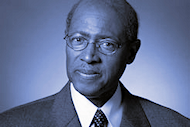
by Dr. Ronald Walters
NNPA Columnist
Originally posted 7/8/2009
 I admit that, like most of us, I am an NAACP baby. Born in the struggle to desegregate the Dockum Drug Store in Wichita, Kansas in 1958 two years before the Greensboro sit-in, as a leader of the NAACP Youth Council. Over the years, as a political analysts, I have been asked whether the organization “is still relevant.” On its 100th birthday, I am clear that it is still relevant, even though we have a Black president sitting in the White House, because I know that at some point, they will have to use their access to that House to ask President Obama to do something for Black folks.
Whether he responds is a different story, but to be in the position to make the demand is important because in 2009 we are still not yet free. Well, some of us believe that we are free because we have achieved the material trappings of success. But I remember billionaire Bob Johnson wanting to start up an airline only to have mysterious problems and I remember his wife, Sheila, also a billionaire, having problems opening up a spa in hunt country, Virginia. But most of all I remember Michael Jackson in this hour, a heroic but also a tragic figure who eventually became a captive of the success he engendered to the point that it killed him. In all of his success, because of the lack of a normal upbringing and a distorted cultural self-image, even Michael was not free.
In this economic recession, I most often wonder about those who were broke and busted before it began; they are now at the back of the line once again, facing the prospect of having to start the game of life way back behind the newly poor, the newly unemployed, and the newly un-housed. With an unemployment rate approaching 20 percent, many Blacks will have to climb a long way back to achieve economic parity with the rest of the nation.
Then, those in our community who were attracted by subprime mortgages because they didn’t quite have the standard resources are, in many cases, worse off now and will be for some time to come. I worry about the tortuous fight for health care and the fact that Blacks constitute 20 percent of the 47 million uninsured and whether the eventual plan will retain a mandate for employers to insure workers. Moreover, since George Bush didn’t do anything to help close the health care gaps, what will there be in a generalized health care program that has special relevance to blacks.
I also worry about the state of public education for the working class and whether they will be able to obtain jobs in an economy that is growing more technologically sophisticated. We are bailing out on public education with no clear strategy in mind except charter schools that do not serve the masses.
Who will carry the fight to achieve the unfinished business of equality in these and other sectors of American life? Of course, there will be Rev. Sharpton, Rev. Jackson and others who are vitally needed to raise questions that others – sometimes even the NAACP – won’t, or may be late getting to. But there is no substitute in my mind for the fact that over the years the NAACP has built the institutional image and local strength to continue to be a major resource in whatever battles rage.
I mention the locals because I always have to remind journalists who ask the question of relevance – “which NAACP are you talking about?” Many of the questions have come because of problems at the National office, but the work of the organization predominantly takes place in cities and hamlets where leaders, like Kevin Myles of Wichita, Kansas (who has won two consecutive Thalheimer Awards for chapter excellence) create innovative programs that serve youth and maintain challenges to racial discrimination for adults.
This is the place where local citizens cry out for help and although most of the calls, letter and emails never seen by National, this chapter system constitutes the core of the vibrancy and the ser vice of the organization.
The National office is important because it serves politics and policy and many of the problems I have referred to need policy solutions and even when the NAACP may not be the prime sponsor of a measure, legislators check with Hillary Shelton, the organization’s expert on the Hill, to see if the language of a bill makes sense. That office also produces a Report Card that acts as a standard of accountability for votes in the House and Senate on issues that are favorable to African-Americans. It is a useful resource when it comes times for citizens to vote, or for some of us to analyze a political record.
So, I want to send a hearty “Happy Birthday” to the NAACP and cudos to its new President Ben Jealous who is bringing the kind of fire I believed that he would in igniting a new generation of leadership for the organization.
But the “relevance” of the organization is vested in our continued lack of equality and so, we will need the NAACP for a long, long time.
Ronald Walters is Professor Emeritus at the University of Maryland College Park.